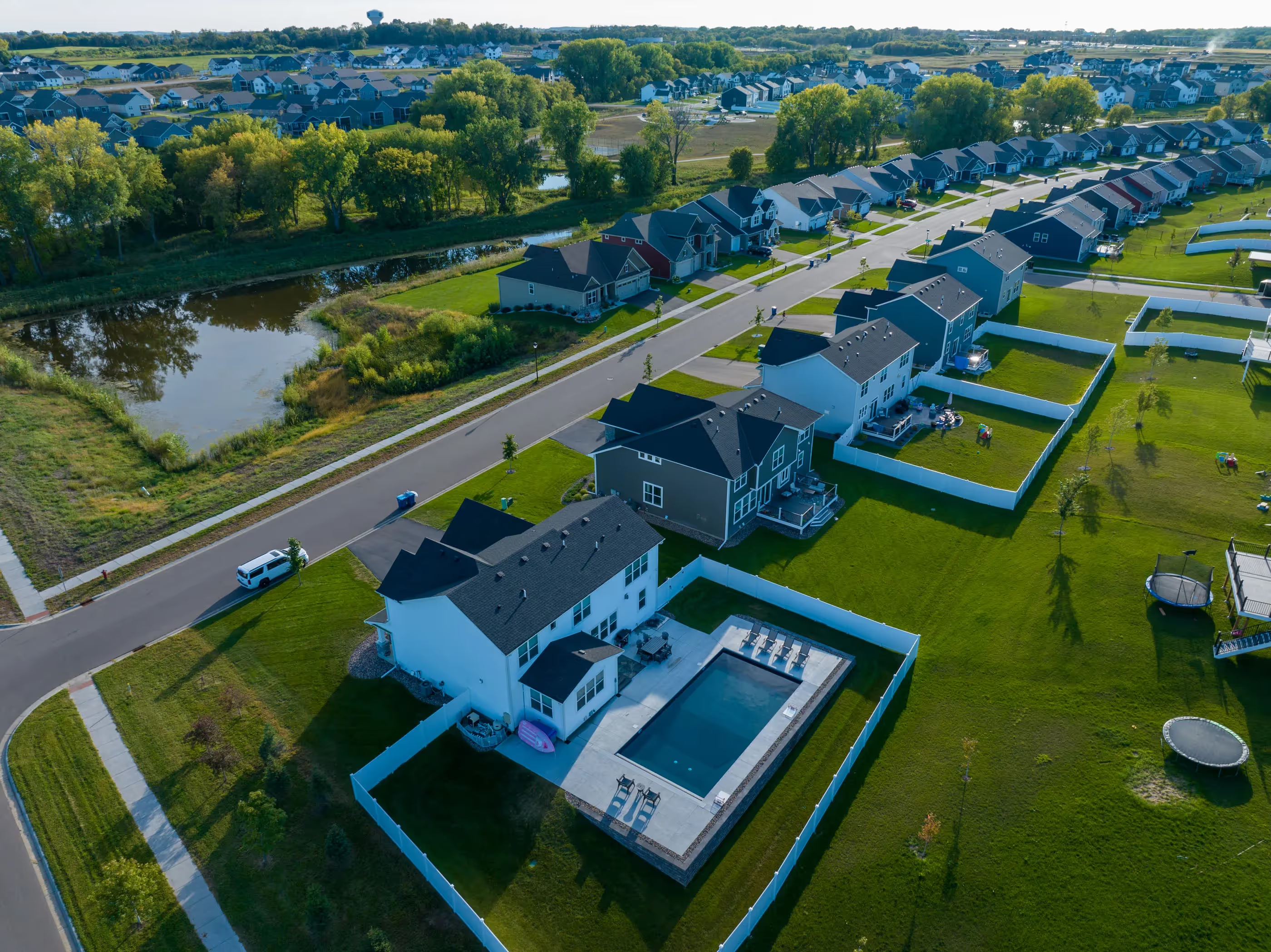
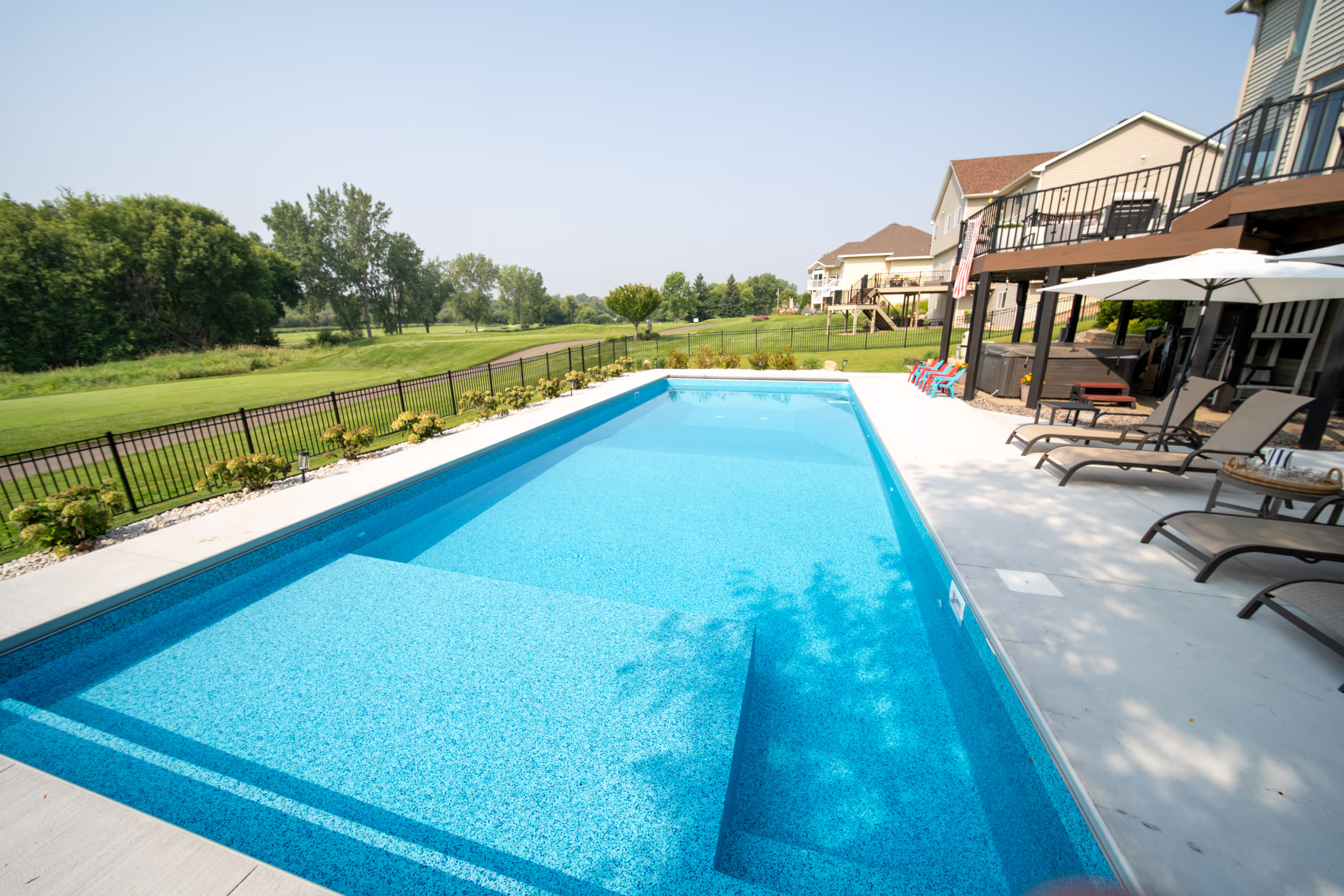
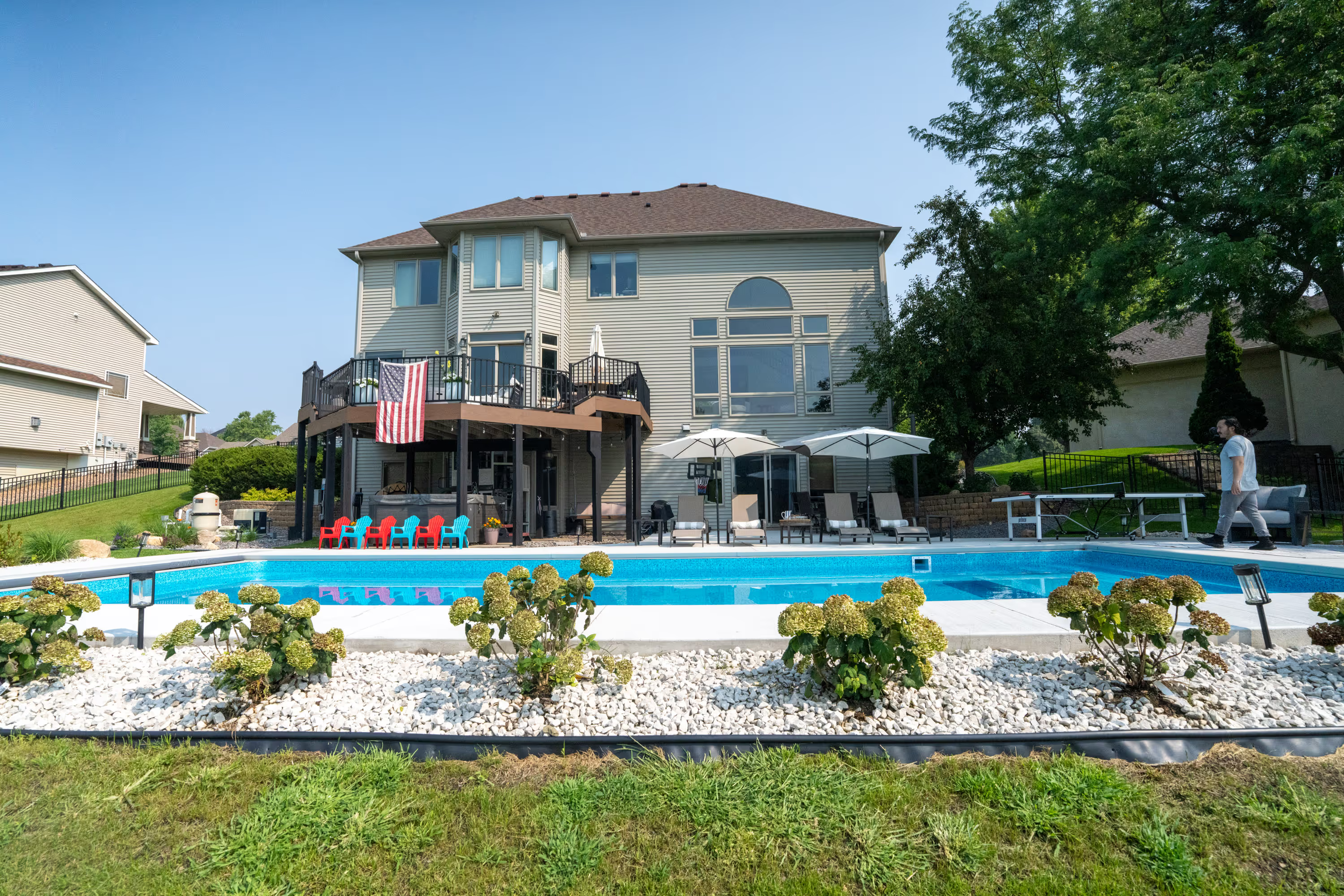
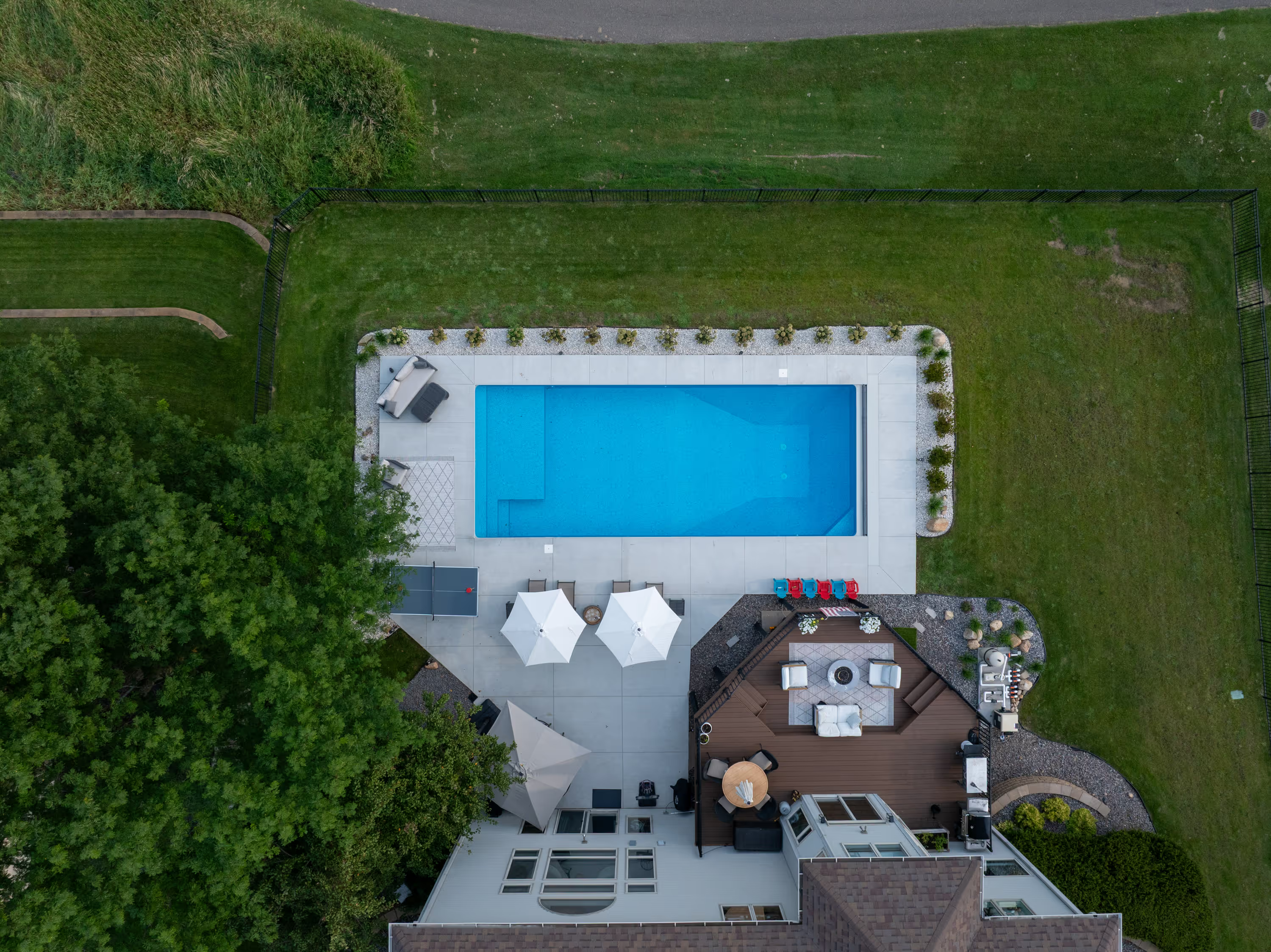
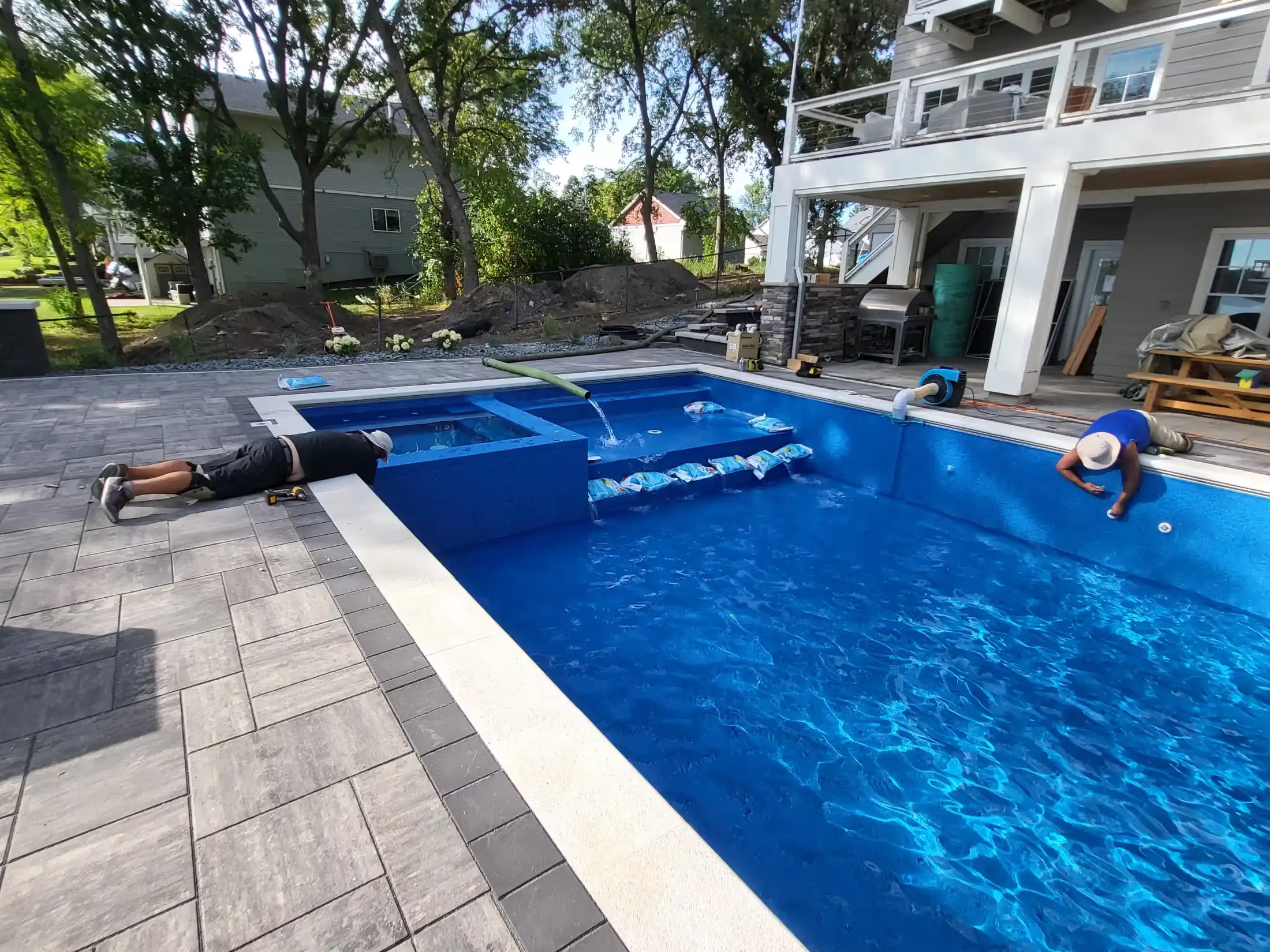
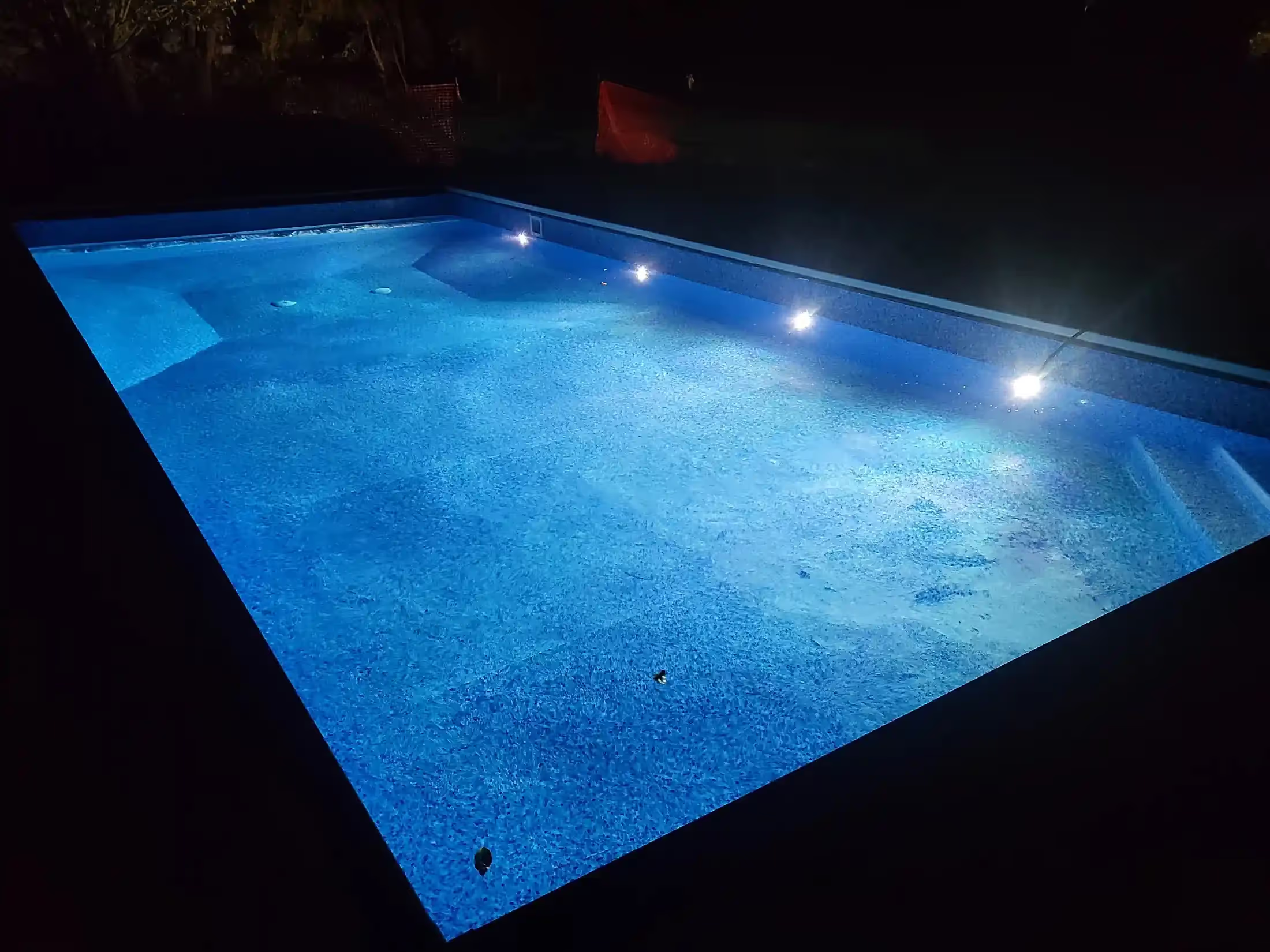
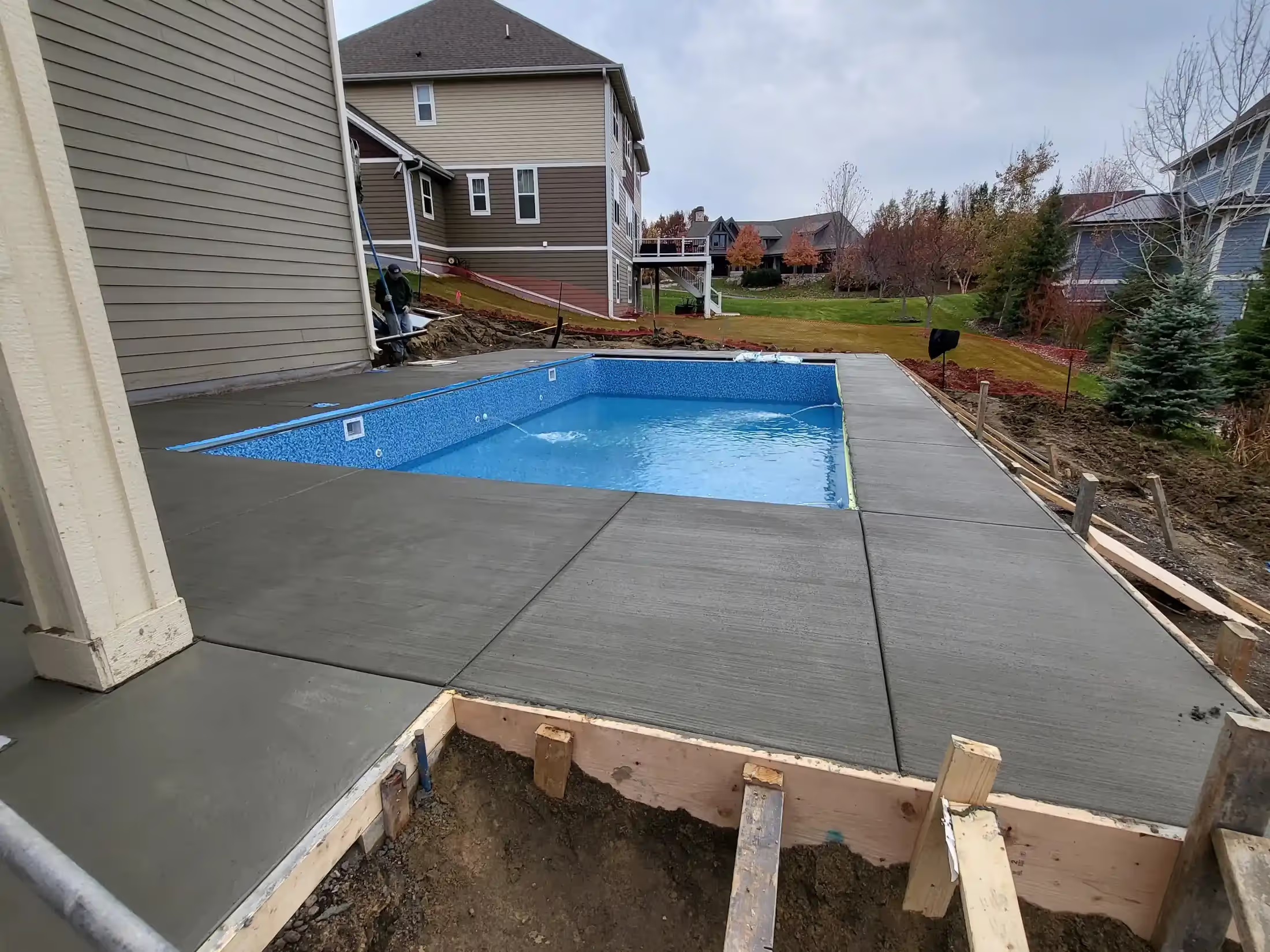
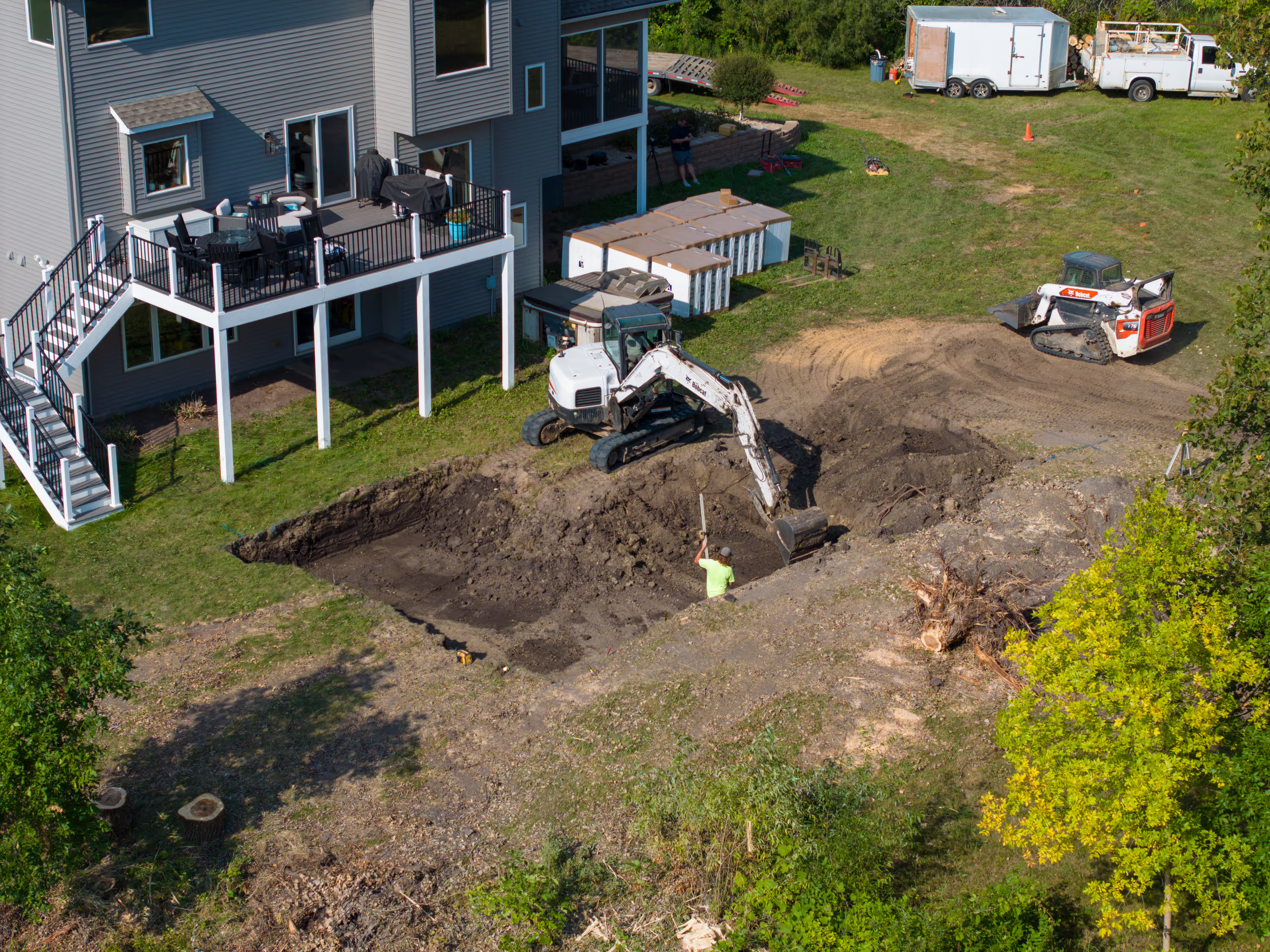
Learn how installing an ICF pool over a fiberglass pool can save you money in heating costs.
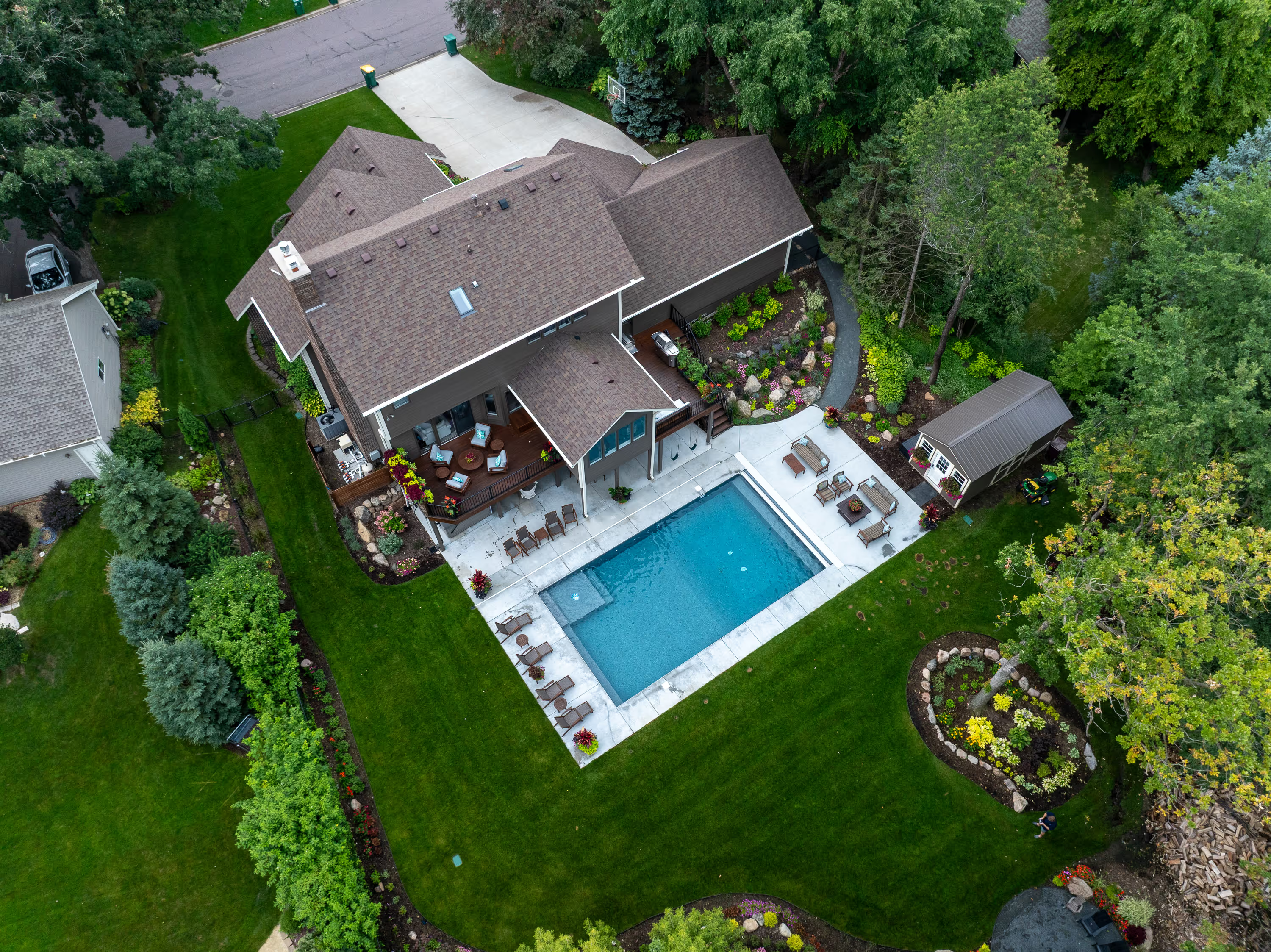
Are you searching for swimming pool contractors near Prior Lake who understand that operating costs matter just as much as installation costs? If fiberglass pool salespeople have told you "all pools cost about the same to heat," they're either misinformed or deliberately misleading you about one of the biggest ongoing expenses of pool ownership in Minnesota.
At Plan Pools, we provide Prior Lake homeowners with complete transparency about long-term operating costs because we know that energy-efficient pool construction pays for itself many times over through decades of reduced heating bills. While fiberglass pool manufacturers focus marketing on "quick installation" and "smooth surfaces," they're conspicuously silent about the energy efficiency gap between fiberglass and ICF (Insulated Concrete Form) construction.
The difference is dramatic: ICF pools reduce heating costs by 60% compared to uninsulated pools and 40-50% compared to fiberglass pools. For a typical Prior Lake family, that translates to $400-$600 annual savings—savings that accumulate to $8,000-$12,000 over 20 years.
This comprehensive guide explains exactly why ICF construction delivers such superior energy efficiency, how Minnesota's climate amplifies the importance of proper insulation, and why choosing energy-efficient pool construction from Plan Pools is one of the smartest investments Prior Lake families can make.
Whether you're in Prior Lake, Savage, Shakopee, Jordan, or anywhere in the Twin Cities metro area, understanding pool energy efficiency will save you thousands of dollars and extend your swimming season by weeks.
Minnesota's cool climate makes pool heating essential rather than optional. Unlike southern states where solar gain alone keeps pools comfortable, Minnesota families need reliable heating systems to maintain swimmable temperatures from late spring through early fall.
Even summer nights are cool in Minnesota. July and August nights—the heart of swimming season—typically drop to 55-65°F. This 20-30 degree temperature differential between day and night creates continuous heat loss from pool water.
Spring and fall are worse. May nights often dip to 40-50°F. September nights similarly cool. Maintaining comfortable 80-82°F pool temperatures against these temperature differentials requires substantial energy input.
Extended darkness during Minnesota's long summer days means more hours of potential swimming—but also more hours when heat loss occurs. From 8pm until morning, pools continuously lose heat to cool night air and surrounding soil.
Ground temperatures lag air temperature but still cycle seasonally. Minnesota soil at pool depth (3-8 feet) ranges from 45-50°F in spring to 60-65°F in peak summer. Your 80°F pool water constantly loses heat to this cooler surrounding soil through conduction.
Wind exposure accelerates heat loss through evaporation and convection. Prior Lake's open spaces and proximity to lakes create wind conditions that strip heat from pool surfaces more rapidly than sheltered urban locations.
Let's examine real heating costs for a typical 16' x 36' pool in Prior Lake, heated to comfortable 82°F from Memorial Day through Labor Day (approximately 100 days):
Uninsulated Steel Wall Pool:
Fiberglass Pool with Minimal Insulation:
ICF Pool with Superior Insulation (Plan Pools):
The annual savings:
Over 20 years of ownership:
These aren't theoretical calculations—they're based on real-world energy monitoring of pools throughout Prior Lake and the Twin Cities metro area.
Energy efficiency delivers another massive benefit: affordable season extension. When heating costs are reasonable, Prior Lake families actually USE their heaters throughout extended swimming seasons.
ICF pool owners report swimming:
Fiberglass and uninsulated pool owners report:
The value difference: ICF pool owners enjoy 8-10 additional weeks of swimming per year because heating feels affordable. That's 50% more swimming time translating to dramatically better return on your pool investment.
Prior Lake family with ICF pool: "We open our pool in mid-April and swim into mid-October. Our heating costs are so reasonable that we keep the pool at 82°F all season. Friends with fiberglass pools are shocked at how affordable our energy bills are—and envious of our extended swimming season."
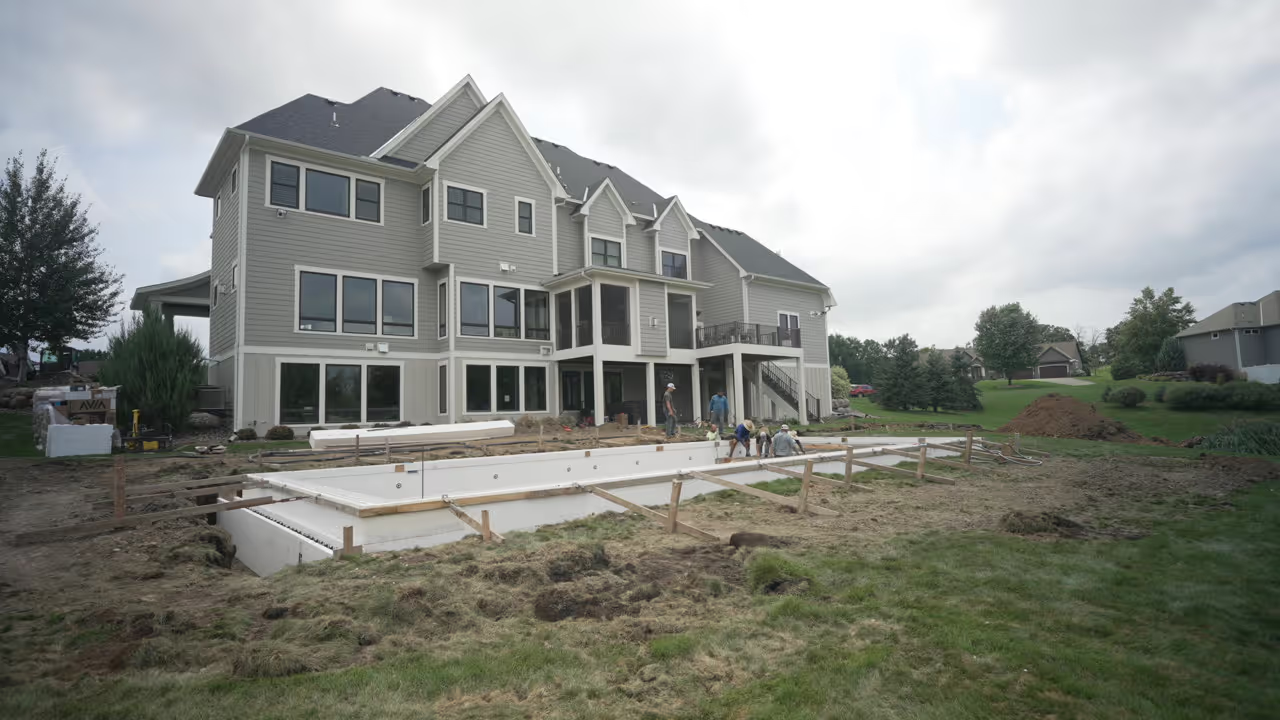
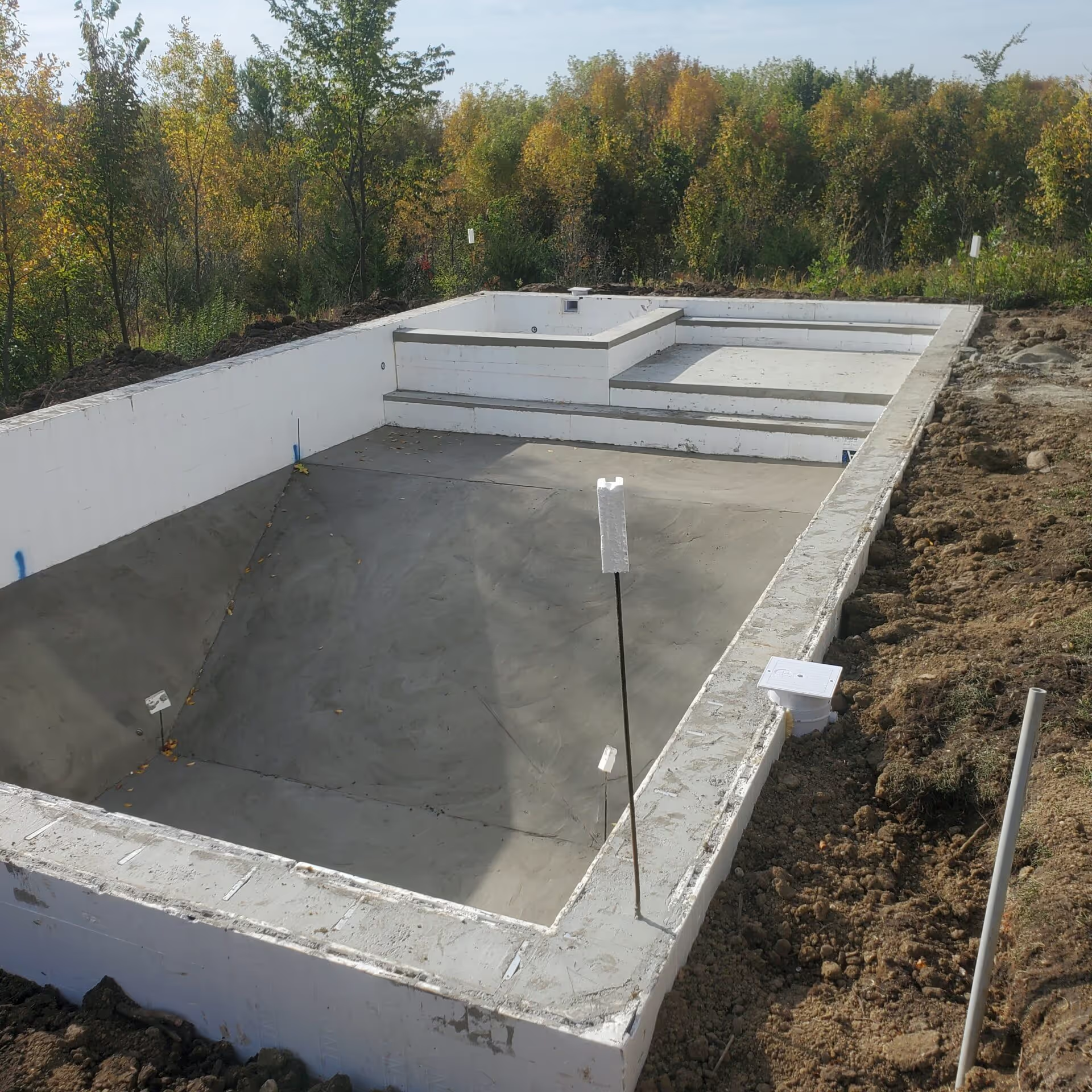
ICF (Insulated Concrete Form) pool construction delivers superior energy efficiency through a fundamental design difference: permanent double-sided foam insulation that creates a complete thermal envelope around pool water.
Permanent foam forms remain in place after concrete curing, unlike temporary forms that get removed. These high-density EPS (Expanded Polystyrene) foam blocks provide R-value of 22-25—exceptional insulation that dramatically reduces heat transfer.
Double-sided insulation means foam on BOTH interior and exterior of concrete walls. This creates a thermal sandwich: interior foam insulates pool water from concrete mass, exterior foam insulates concrete from surrounding soil. Heat has to cross TWO insulation barriers to escape.
Continuous thermal envelope without gaps, seams, or thermal bridges. The interlocking foam forms create unbroken insulation around the entire pool structure—floor, walls, and steps. There are no weak points where heat can escape preferentially.
Concrete thermal mass in the center of the sandwich provides thermal storage. Once heated, concrete retains warmth and moderates temperature swings. Combined with insulation on both sides, this mass becomes an asset rather than a heat sink.
Reinforced concrete strength allows proper soil compaction around the pool, which improves the ground's insulating properties. Well-compacted soil has fewer air gaps and water channels that would otherwise accelerate heat loss.
ICF Pool Wall Assembly:
Fiberglass Pool Shell:
The difference: ICF provides 2.5X to 6X better insulation than fiberglass pools. This enormous advantage directly translates to heating cost savings.
Fiberglass manufacturers sometimes claim their pools are "naturally insulating" because fiberglass itself has modest insulating properties. These claims mislead Prior Lake homeowners:
Thin fiberglass provides minimal R-value. At 0.375-0.5 inches thick, even the best fiberglass provides only R-1 to R-2. This is essentially negligible for preventing heat loss.
Exterior foam backing is inconsistent. Some manufacturers offer exterior foam, but it's typically only 1-2 inches thick (R-4 to R-8), installed inconsistently during manufacturing, and still leaves the pool floor uninsulated.
Ground contact everywhere means the thin fiberglass shell sits directly against Minnesota soil with minimal thermal barrier. Heat conducts continuously from pool water through the shell into surrounding soil.
No thermal mass benefits because fiberglass shells are too thin to store meaningful heat energy. Temperature swings are larger and more frequent than with ICF construction.
Marketing vs. physics: Fiberglass marketing emphasizes "smooth surfaces" and "quick installation" because they can't credibly claim energy efficiency. The physics simply don't support it.
Understanding how pools lose heat helps explain why insulation matters so much and why ICF construction delivers such superior performance in Minnesota's climate.
Evaporation (50-70% of heat loss): When water molecules evaporate from the pool surface, they carry heat energy away. Evaporation rates increase with wind, low humidity, and temperature differentials between water and air. This is why uncovered pools on windy Minnesota nights lose so much heat.
Radiation (10-15% of heat loss): Pool water radiates infrared energy to the cooler night sky. This is the same phenomenon that causes frost to form on car windshields even when air temperature is above freezing. Radiation losses increase with clear skies and low humidity—common conditions in Minnesota.
Convection (10-15% of heat loss): Air moving across the pool surface carries away warm air from just above the water, replaced by cooler air that absorbs more heat. Wind dramatically accelerates convection losses. Prior Lake's open spaces and lake proximity create persistent wind exposure.
Conduction through pool structure (10-20% of heat loss): Heat conducts from warm pool water through pool walls and floor into cooler surrounding soil. This is where insulation makes a MASSIVE difference—and where ICF construction excels while fiberglass falls short.
You can address other heat loss mechanisms with covers, windbreaks, and strategic landscaping. But conduction through pool structure is permanent and continuous—unless you build with proper insulation from the start.
Uninsulated and poorly insulated pools lose 30,000-50,000 BTUs daily through conduction alone. Over a 100-day swimming season, that's 3-5 million BTUs—equivalent to 30-50 therms of natural gas or 880-1,465 kWh of electricity.
ICF pools reduce conduction losses by 80-90% compared to uninsulated pools. That 30,000-50,000 BTU daily loss drops to just 3,000-10,000 BTUs—savings of 25,000-40,000 BTUs every single day.
The math over 20 years:
This is JUST the conduction savings—not including reduced heat loss from other mechanisms that ICF pools' stable temperatures help minimize.
Plan Pools has monitored energy consumption for dozens of ICF pools throughout Prior Lake, Savage, and surrounding communities. The data conclusively proves ICF's superior energy efficiency.
Pool specifications:
Energy monitoring results (2023 swimming season):
Owner's perspective: "Our extended family was shocked when we showed them our gas bills. They assumed heating a pool all season would cost $800-$1,200. We're paying less than $350 for nearly six months of comfortable 82-degree swimming. The ICF insulation makes this possible—and makes our pool an investment we actually use rather than an expensive yard ornament we avoid heating."
Pool specifications:
Energy monitoring results (2023 swimming season):
Owner's perspective: "We're frustrated that our pool costs so much to heat. We try to keep it at 80°F but often accept 76-78°F to avoid huge gas bills. Even at lower temperatures and a shorter season than we'd like, we're spending $650+ on heating. Friends with ICF pools pay half as much for longer seasons and warmer water. We wish we'd understood these differences before choosing fiberglass."
ICF pool outperforms fiberglass by every measure:
The ICF pool costs less for the season DESPITE:
This isn't theory—this is real-world energy monitoring proving ICF's dramatic efficiency advantage.
The financial benefit of ICF construction extends beyond direct energy savings. Lower heating costs enable affordable season extension that dramatically improves your pool investment's return.
Minnesota climate supports extended seasons with proper heating and insulation:
Total potential season: Mid-April through mid-October = 26 weeks
Reality varies by pool type:
ICF Pools (Plan Pools owners report):
Fiberglass Pools (competitor customers report):
The difference: 6-8 additional weeks of swimming for ICF pool owners—a 40-50% longer season.
What's a swimming week worth? Consider what Prior Lake families pay for seasonal activities:
Your backyard pool's value per week: If you invested $100,000 in your pool with 20-year expected enjoyment, each summer represents $5,000 of that investment. At 14 weeks (fiberglass typical season), each week represents $357 of value. At 22 weeks (ICF typical season), each week represents $227 of value—better value per dollar invested.
ICF's 8 extra weeks deliver approximately $2,900 additional annual value. Over 20 years, that's $58,000 in additional enjoyment and value from your pool investment—all made possible by ICF's energy efficiency making season extension affordable.
Prior Lake ICF pool owner: "We used to take the family to the waterpark 8-10 times per summer at $150 per visit. Now we swim at home from April through October instead. The energy efficiency makes this possible—we're saving money compared to waterpark visits while having a private pool in our backyard. The extended season completely changed the economics of pool ownership for our family."
Pool covers dramatically reduce heat loss from evaporation, radiation, and convection—but they do NOTHING for conduction through pool structure. This is why pool covers complement but don't replace proper insulation.
Automatic safety covers reduce evaporation, radiation, and convection losses by 70-90% when closed. This is significant and Plan Pools includes automatic covers in our ICF pool packages for exactly this reason.
Overnight covering maintains 10-15°F warmer water temperatures than uncovered pools. Over a season, this saves substantial energy by reducing the temperature recovery needed each morning.
Extended season enabler because covers trap solar gain during the day and retain heat overnight, making spring and fall swimming more comfortable and affordable.
Covers only work when closed. During actual swimming—when family and guests are in the pool—covers are off and providing zero benefit. Conduction through pool structure continues 24/7 whether covered or not.
Morning recovery energy is where insulation shines. After overnight covering, uncovered ICF pools maintain temperature better during the day than covered fiberglass pools. The structural insulation never stops working.
The synergy effect: ICF insulation + automatic covers deliver better performance than either feature alone. Plan Pools pairs superior insulation with quality covers to maximize efficiency.
The false choice: Some fiberglass salespeople suggest "just use a good cover and insulation doesn't matter." Real-world energy monitoring proves this wrong. Prior Lake families with fiberglass pools AND covers still pay 40-50% more for heating than ICF pool owners with covers.
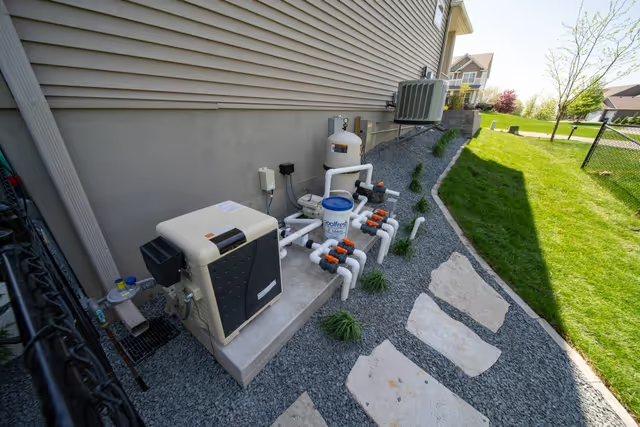
Pool heating equipment efficiency matters, but starting with energy-efficient construction amplifies equipment performance. Plan Pools pairs ICF construction with premium heating equipment optimized for Minnesota conditions.
High-efficiency gas heaters (85-95% thermal efficiency) provide rapid heating and reliable performance in cool Minnesota weather. Gas heaters work well even when outdoor temperatures drop to 40-50°F—important for spring and fall season extension.
Plan Pools installs Rheem heaters with copper-nickel heat exchangers specifically chosen for Minnesota's hard water and salt chlorination system compatibility. These heaters deliver:
Why gas heaters work better with ICF pools: ICF's superior insulation means heaters run less frequently and for shorter durations. This reduces wear, extends equipment life, and maximizes efficiency. Fiberglass pools' constant heat loss keeps heaters running longer, increasing maintenance and reducing lifespan.
Electric heat pumps can achieve 400-600% efficiency (4-6 COP) by moving heat from air to water rather than creating it through combustion. In Prior Lake's moderate summer temperatures (70-80°F), heat pumps operate at peak efficiency.
Limitations in Minnesota: Heat pump efficiency drops dramatically when outdoor temperature falls below 50°F. This makes them less suitable for aggressive season extension but excellent for peak summer season and shoulder season support.
The ICF advantage: Heat pumps work more efficiently with ICF pools because they're not fighting constant conduction losses. The heat pump adds energy to the pool; ICF insulation keeps it there. With fiberglass pools, heat pumps add energy but conduction losses through the shell waste much of it.
ICF pools require smaller heaters than fiberglass pools of equal size because superior insulation reduces heating requirements. A 16' x 36' ICF pool performs well with a 300,000 BTU heater; the same fiberglass pool needs 400,000 BTU for equivalent performance.
Equipment cost savings: Smaller heaters cost $800-$1,500 less and consume less energy. This is ANOTHER hidden advantage of ICF construction—equipment savings that add to direct energy savings.
Prior Lake example: "Our pool contractor recommended a 300,000 BTU heater for our 18' x 38' ICF pool. I was skeptical—that seemed small for a pool this size. But the ICF insulation means we don't need massive heating capacity. Three years in, the heater maintains perfect 82°F temperatures easily, even on cool May evenings. Our neighbor's smaller fiberglass pool has a 400,000 BTU heater and still struggles to maintain temperature. Proper insulation changes everything."
Solar pool heating systems collect free energy from the sun to warm pool water. While solar works with any pool type, ICF's superior insulation dramatically improves solar system performance.
Solar collectors (panels or mats) circulate pool water through sun-heated surfaces. On sunny Minnesota days, properly sized solar systems can raise pool temperature 5-10°F without using any gas or electricity.
ROI depends on heat retention. Solar panels collect free heat, but if your pool loses that heat quickly through poor insulation, the benefit diminishes. ICF pools retain solar-gained heat far longer than fiberglass pools.
Prior Lake solar example: Two identical solar systems on similar-sized pools:
ICF pool: Solar panels raise temperature 8°F on sunny day. Overnight with cover, temperature drops 3°F. Net gain: 5°F. Over three sunny days, solar alone can raise pool from 70°F to 85°F.
Fiberglass pool: Solar panels raise temperature 8°F on sunny day. Overnight with cover, temperature drops 6°F due to conduction losses. Net gain: 2°F. Three sunny days raise temperature from 70°F to 76°F—not warm enough, requiring gas heating anyway.
The synergy: ICF insulation makes solar heating dramatically more effective by retaining the free energy collected. Fiberglass pools waste much of what solar panels collect.
Prior Lake ICF pool with solar heating:
Results: Pool maintains 80-82°F from May through September using primarily solar energy. Gas heater activates only during extended cloudy periods or for rapid temperature recovery after cool stretches. Total annual heating cost: $150-$250.
This represents 75-85% reduction in heating costs compared to fiberglass pools without solar—achieved through the powerful combination of ICF insulation, solar collection, and automatic covers working synergistically.
The energy efficiency advantage of ICF pool construction delivers compelling financial benefits that grow more valuable every year.
These benefits stem from fundamental physics: double-sided foam insulation creating a complete thermal envelope around pool water. This isn't marketing—it's building science applied correctly to Minnesota's climate challenges.
Prior Lake families in established neighborhoods around Fish Point, Lakefront, Sand Point, and throughout Prior Lake have trusted Plan Pools for ICF construction that delivers superior energy efficiency. We'd be honored to earn your business and show you exactly how much energy-efficient construction can save.
Contact Plan Pools today to schedule your free consultation including energy cost projections specific to your pool size and heating preferences. Text Joe at 952-994-6032 or visit our website to explore energy-efficient ICF pool projects throughout Prior Lake.
Read what Prior Lake customers say about their energy bills and extended swimming seasons with ICF construction. Learn more about ICF technology and discover why energy efficiency should be your top priority when choosing Minnesota pool contractors.
Your family's swimming enjoyment shouldn't be limited by energy bills. Choose ICF, choose efficiency, choose Plan Pools.
Plan Pools serves Prior Lake, Savage, Shakopee, Jordan, Credit River Township, Spring Lake Township, and the entire Twin Cities metro area. We're Minnesota's energy-efficient ICF pool specialists, delivering 60% heating cost reductions and extended swimming seasons through superior insulation technology.