Do you need a pool automation system? See if it's worth it.
Ten years ago, operating a pool meant walking outside multiple times daily—adjusting the heater, turning lights on, setting filtration schedules, and checking equipment. Today's pool automation systems have transformed pool management into a smartphone task you can handle from anywhere: your office, your bed, or even vacation halfway around the world.
But are these sophisticated control systems worth the investment for Minnesota pool owners? At Plan Pools, we've installed automation in hundreds of pools throughout the Twin Cities metro area, and we've tracked how customers actually use (or don't use) these features years after installation.
Here's everything you need to know about pool automation to make an informed decision for your Minnesota pool.
Temperature Control: Monitor and adjust pool temperature from your smartphone. Set desired temperature, schedule heating times, switch between modes (maintain temp, warm up, or standby), and receive alerts when temperature falls outside parameters.
For Minnesota pool owners, this means starting your pool heating Thursday afternoon for weekend use, maintaining optimal temperature during vacation, or letting temperature drop during the week when you're not using the pool.
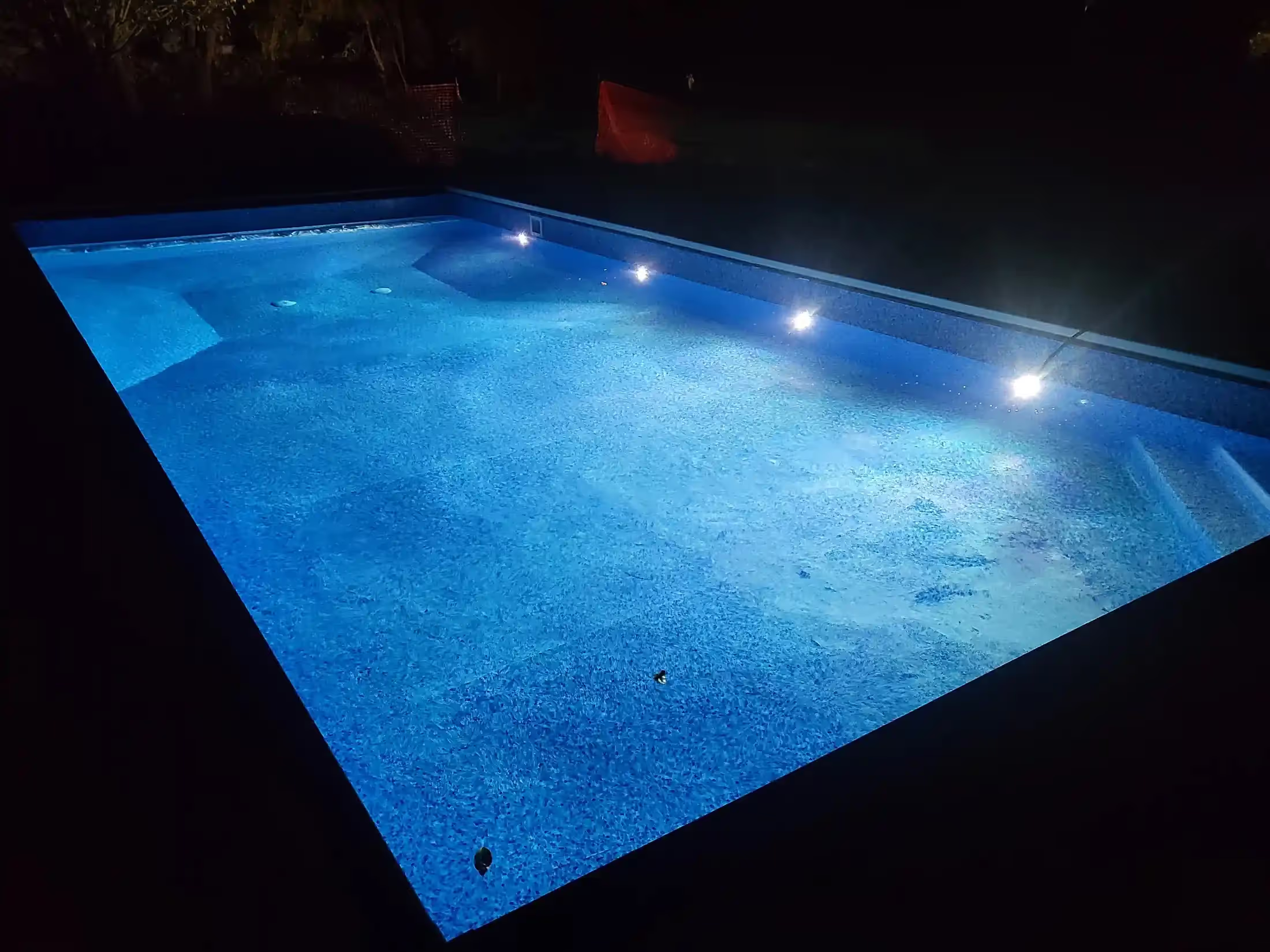
Lighting Control: Turn pool lights on/off, change colors, select light shows, create custom scenes, schedule automatic lighting, and adjust brightness—all from your device.
The convenience of turning on pool lights from inside your house when guests arrive unexpectedly or scheduling lights to automatically illuminate at sunset can't be overstated.
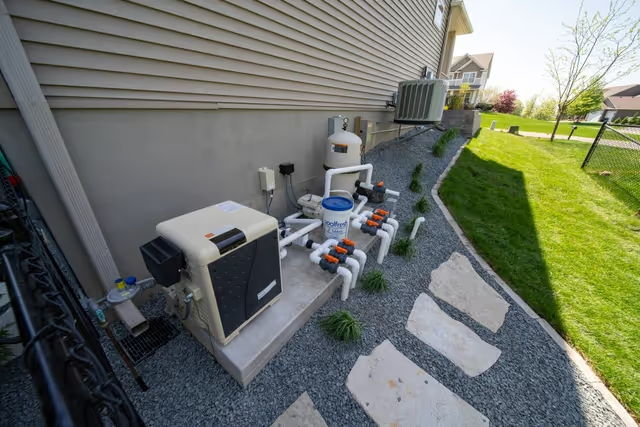
Filtration Management: Control pump operation, adjust pump speeds (with variable-speed pumps), set complex filtration schedules, monitor pump status, and receive maintenance alerts.
This allows optimization of filtration for energy efficiency—running pumps at lower speeds during off-peak electricity hours and boosting during day when solar panels (if you have them) provide power.
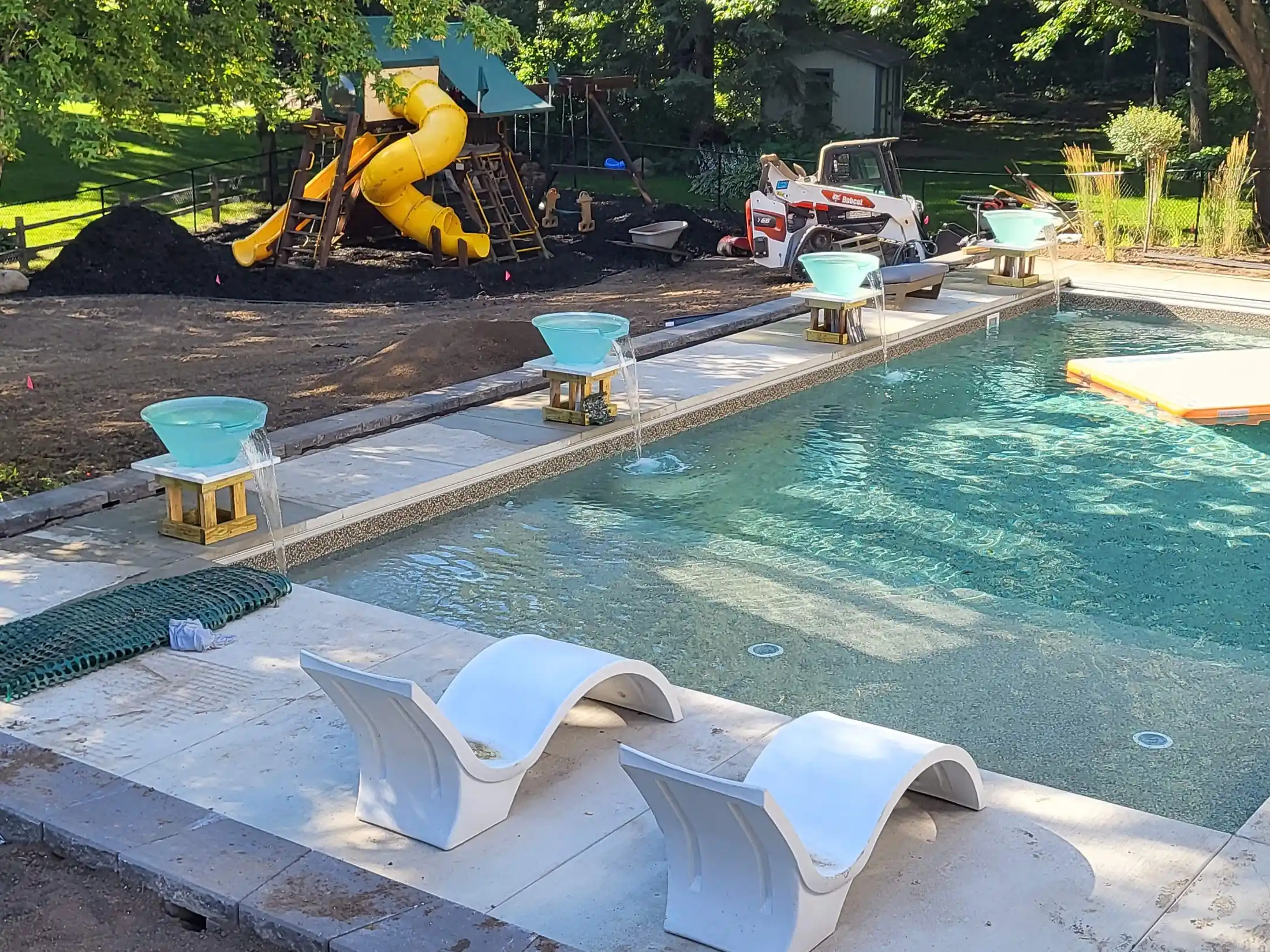
Water Feature Control: Operate waterfalls, fountains, deck jets, and other features independently or in combination. Create "scenes" that activate multiple features simultaneously (party mode: lights to blue, fountain on, waterfall running, heating boosted).
Chemistry Monitoring (Advanced Systems):Track pH, chlorine, alkalinity, salt level, and temperature. Some systems automatically dispense chemicals to maintain parameters. Receive alerts when manual intervention needed.
For Minnesota's challenging hard water conditions, automated chemistry monitoring can be particularly valuable, catching problems before they become expensive issues.
Valve Control: Operate valves to direct water flow (pool vs. spa, different water features, different returns). In combination spa-pool installations, automation seamlessly switches between modes.
Premium automation systems integrate with broader smart home ecosystems:
Voice Control: "Alexa, set pool temperature to 82 degrees" "Hey Google, turn on pool lights" "Siri, run the waterfall"
Home Automation Platforms: Integration with Control4, Savant, Crestron, or other whole-home systems creates unified control of pool, lighting, audio, security, and climate systems.
Geofencing: Automation can detect when you're approaching home and automatically activate pool heating, turn on lights, or prepare the pool for use.
Vacation Modes: Single button activates energy-saving schedules, reduces chemical dispensing, and maintains minimal operations while you're away—then automatically returns to normal operation on your scheduled return date.
This is where automation delivers quantifiable ROI:
Variable-Speed Pump Optimization: Modern variable-speed pumps can run at different speeds depending on need. Automation allows complex schedules:
Result: 50-70% reduction in pump electricity costs compared to single-speed pumps running constantly.
For typical Minnesota pool:
Heating Schedule Optimization: Rather than maintaining 82°F constantly (expensive) or manually adjusting daily (inconvenient), automation allows sophisticated strategies:
Weekend Use Strategy:
With ICF construction from Plan Pools (which retains heat exceptionally well), this strategy dramatically reduces heating costs while ensuring perfect temperature when you actually use the pool.
Annual heating savings: $300-$600 depending on heater type and usage pattern
Lighting Optimization: Schedule lights to turn on only during evening use rather than burning all night. Small savings, but they add up over a season.
Total Annual Energy Savings: For typical Minnesota pool with automation: $500-$950 annually
Automation system cost: $2,500-$4,500Payback period: 3-6 years
Lifetime value (20 years): $10,000-$19,000 in energy savings
The energy savings justify automation financially, but convenience is the real value:
Remote Access: You're at work on Friday afternoon. Weather forecast shows perfect weekend. Open your phone, boost pool temperature, and it's ready when you get home Saturday morning. No planning required.
Spontaneous Use: Neighbors drop by unexpectedly on summer evening. Turn on lights from inside house, activate waterfall, and your pool area is instantly ready for entertaining.
Effortless Season Management: As September arrives and temperatures cool, adjust entire system for shoulder-season operation with a few taps rather than multiple trips outside to adjust equipment.
Vacation Management :Instead of asking neighbor to check pool or worrying about equipment, monitor and control everything remotely. Adjust heating if needed, verify pump is running, check water temperature—all from your hotel.
Weather Response: Storms predicted? Lower temperature setpoint remotely to avoid wasting energy heating water that's about to get chilled by rain.
Here's a subtle but important benefit: when controlling your pool is easy, you use it more.
Without automation, heating pool for shoulder-season swimming requires:
Result: Many people simply don't bother with early-May or late-September swimming because the hassle isn't worth it.
With automation:
Result: Extended swimming season because managing temperature is effortless.
For Minnesota pool owners fighting to maximize our compressed season, this convenience translates directly to more swimming days.
Automation systems monitor equipment performance and alert you to problems:
Flow Rate Monitoring: Alerts when flow drops (dirty filter, pump problem)Temperature Alerts: Notification if temperature drops unexpectedly (heater failure)Run Time Tracking: Monitors actual equipment operation
Maintenance Reminders: Reminds when filter cleaning, chemical testing, or equipment service is due
Catching problems early prevents minor issues from becoming expensive repairs.
Some automation systems integrate with safety features:
Cover Status: Monitors automated safety cover position
Lighting Automation: Ensures pool is lit during evening hours for safety
Temperature Limits: Prevents water temperature from exceeding safe levels (especially important if you have spa)
Flow Monitoring: Detects main drain blockage (safety risk)
This is the primary barrier:
Basic Automation: $1,200-$2,500 installed
Mid-Range Systems: $2,500-$4,500 installed
Premium Systems: $4,500-$8,000+ installed
For budget-conscious projects, this represents significant additional investment.
However: As shown earlier, energy savings often pay for automation within 3-6 years. After that, it's pure value.
Despite being "user-friendly," automation systems require learning:
Initial Setup: Programming schedules, setting parameters, understanding options
App Navigation: Learning where functions are located, how to adjust settings
Troubleshooting: When things don't work as expected, figuring out why
Most customers master basic functions within a week, but advanced features may remain unexplored.
Plan Pools Solution: We provide comprehensive training at installation and ongoing support. Most customers find systems intuitive once they've used them a few times.
Automation systems depend on WiFi connectivity and functioning electronics:
WiFi Dependence: If your WiFi is down, remote access doesn't work (equipment still operates on programmed schedules, but you can't adjust remotely)
Software Updates: Occasional app updates or system firmware updates required
Electronics Failure: Like all electronics, control boards can fail (though quality systems are very reliable)
Minnesota Weather: Extreme cold can affect equipment electronics if not properly protected
Reality Check: Quality systems from major manufacturers (Pentair, Hayward, Jandy) are quite reliable. Equipment is designed for outdoor use and rated for temperature extremes.
When repairs are needed:
Specialized Knowledge: Not all pool technicians are equally familiar with all automation systems
Diagnostic Tools: Troubleshooting automation requires specific expertise
Parts Availability: Replacement parts must be ordered (not always stocked locally)
Plan Pools Advantage: We service everything we install and maintain relationships with equipment manufacturers for fast parts and support.
Typical Features:
Best For:
Brands/Examples:
Cost: $1,200-$2,000 installed
Typical Features:
Best For:
Brands/Examples:
Cost: $2,500-$4,500 installed
Plan Pools Standard: This is the level we recommend most often. Provides excellent functionality without unnecessary complexity or cost.
Typical Features:
Best For:
Brands/Examples:
Cost: $4,500-$8,000+ installed
Automation systems must be properly winterized in Minnesota:
Fall Winterization:
Spring Startup:
Concern: Automation adds complexity to winterization. Improper winterization can damage expensive control boards.
Plan Pools Solution: We handle winterization and spring opening for customers who opt for our seasonal service packages, ensuring automation systems are protected through Minnesota winters.
Touchscreen displays can be sluggish in cold weather. Some automation panels include heating elements to protect electronics and maintain display functionality even in sub-zero temperatures.
Mobile apps work great year-round since your phone isn't exposed to weather—monitor and control from warm house during winter.
As mentioned earlier, automation's ease of use encourages shoulder-season pool use in May and September—exactly when Minnesota pool owners need encouragement to heat and use their pools.
With automation + ICF construction from Plan Pools: Extended season becomes genuinely practical and affordable. Effortless temperature management + superior heat retention = more swimming days without excessive cost.
New automation users explore every feature:
Usage: Multiple interactions daily
Users identify most valuable functions:
Less-used features fade into background.
Usage: 3-5 interactions daily, focused on practical functions
Automation becomes invisible infrastructure:
Usage: 1-3 interactions weekly, mostly monitoring and minor adjustments
Yes, but differently than expected. The value isn't constant tweaking—it's having sophisticated schedules running automatically while retaining ability to make adjustments effortlessly when situations change.
Users appreciate automation most when:
Equipment:
Annual Operating Costs:
Convenience:
Equipment:
Annual Operating Costs:
Annual Savings: $940
Payback Period: 4.5 years
20-Year Value:
For pool owners who will use their pool regularly and maintain it properly, automation delivers strong ROI through energy savings plus substantial convenience benefits.
Best candidates:
During Pool Construction: Plan Pools installs automation infrastructure during pool construction:
After Pool Completion:
Timeline: 1-2 hours for basic training, additional time for advanced features if desired
Plan Pools provides:
Manufacturer support: Most major brands offer:
Yes, but it's more expensive than installing during construction. Retrofitting requires running new wiring to equipment, installing control panels, and potentially upgrading equipment for compatibility. Cost is typically 50-75% higher than new installation.
Automation systems continue operating on programmed schedules. You lose remote access and monitoring, but equipment continues functioning. Once WiFi returns, remote access resumes.
Yes, as long as you have internet access on your device and your pool system has internet connectivity. Customers regularly monitor and adjust pools while traveling internationally.
Modern systems are quite intuitive—similar to smartphone apps you already use. Basic functions (temperature adjustment, lights on/off) are very simple. Advanced features require more learning, but most users stick with basic functions anyway.
Quality systems are reliable, but failures can occur. Most components can operate manually if automation fails. For example, heater can be controlled manually, pumps have manual switches, etc. Plan Pools provides service for automation systems we install.
Most modern equipment from major manufacturers is automation-compatible. Some older or off-brand equipment may not integrate. During design, Plan Pools selects compatible equipment to ensure full automation functionality.
Strongly Recommend:
Consider Carefully:
Our typical recommendation: Mid-range automation system ($3,000-$4,000 installed) with:
This provides 90% of the benefit at 60% of the cost of premium systems.
Skip: Advanced chemistry automation unless you have specific needs. Manual testing 2-3 times weekly isn't burdensome and saves $1,000-$2,000.
Phased Approach: Install automation-compatible equipment from the start, but begin with basic manual controls if budget is tight. Add automation control panels and software later when budget allows—equipment is ready for upgrade.
Pool automation isn't a frivolous luxury for Minnesota pool owners—it's a practical investment that pays for itself through energy savings while dramatically improving pool ownership experience.
The difference between manually managing your pool and using automation isn't just convenience—it's the difference between pool ownership feeling like a chore and feeling effortless. It's the difference between hesitating to heat your pool in September (too much hassle) and confidently extending your season (one phone tap).
Combined with Plan Pools' ICF construction—which provides the superior insulation that makes heating optimization truly valuable—automation delivers both maximum comfort and minimum operating costs.
Ready to build a pool that's as smart as it is beautiful? Contact Plan Pools today. We'll design an automation system tailored to your equipment, usage patterns, and budget—backed by ICF construction that makes every automation feature more effective.
Because the best pools aren't just well-built—they're intelligently controlled, efficiently operated, and effortlessly enjoyed. That's what we create at Plan Pools, throughout Lakeville, Prior Lake, Eden Prairie, Maple Grove, Stillwater, and the entire Twin Cities metro area.