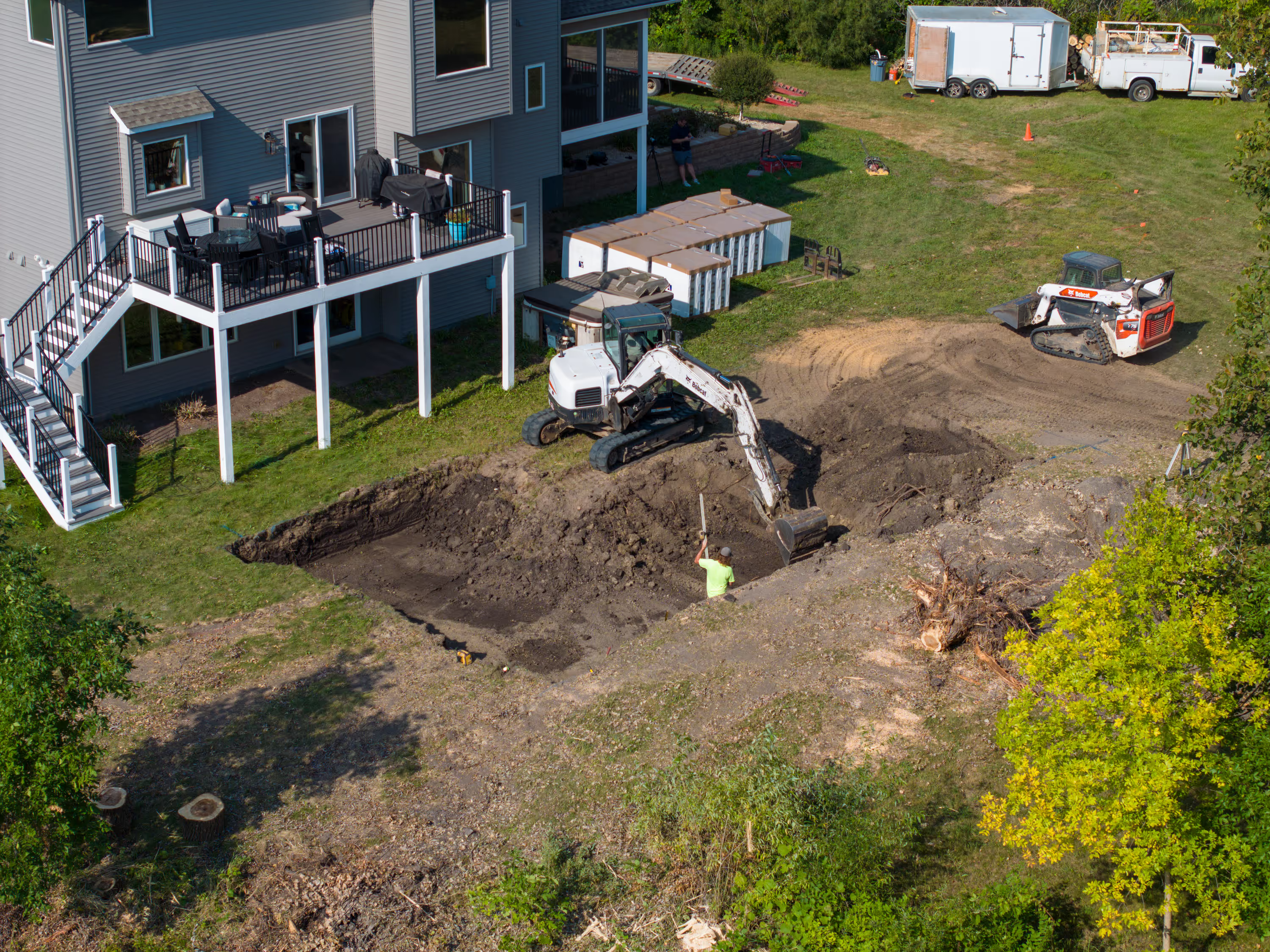
Is your pool safe during Minnesota's winter weather?
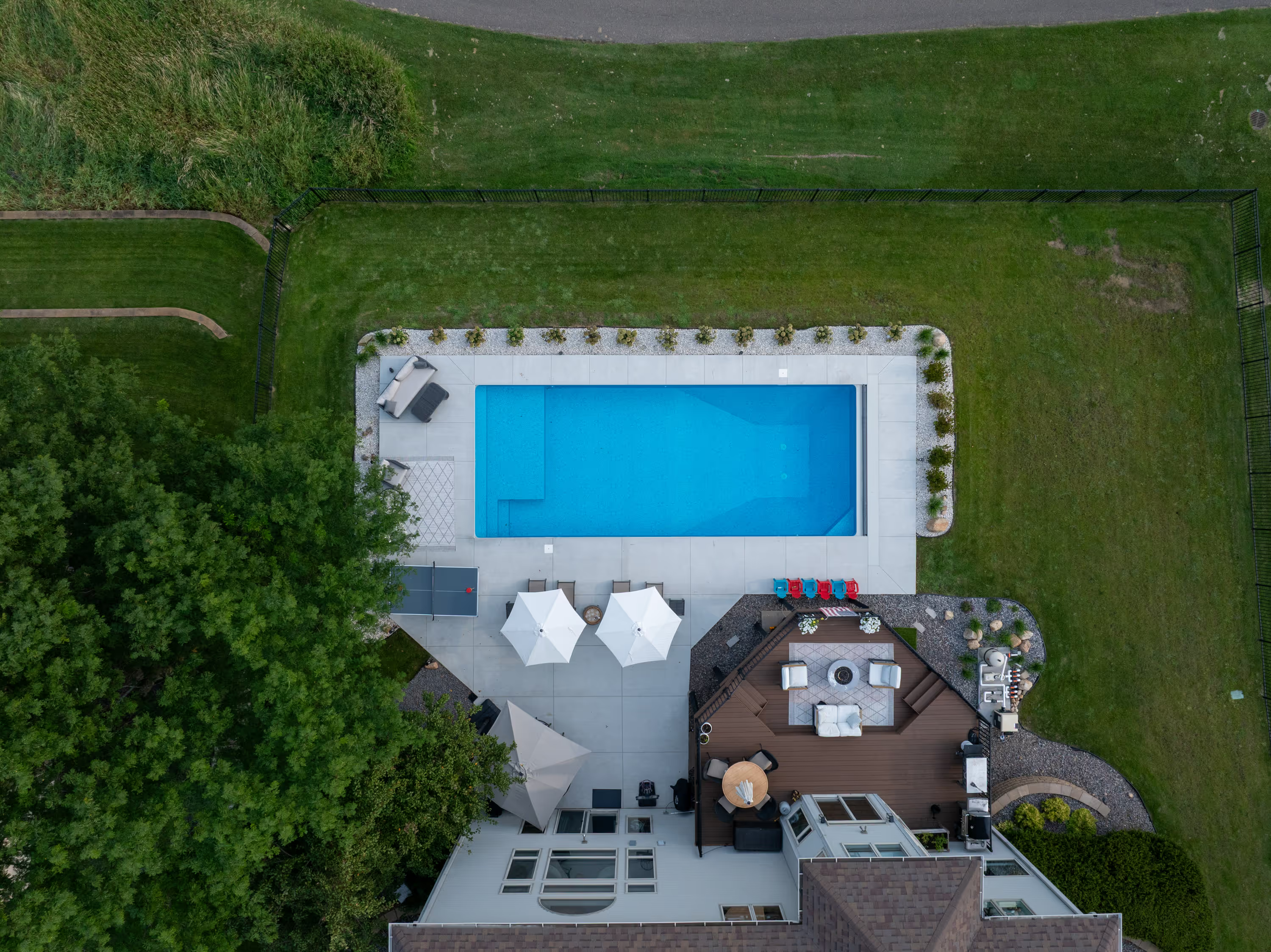
If you're considering building an inground pool in Minnesota, understanding how our extreme climate affects pool construction isn't just helpful—it's essential. Minnesota's notorious freeze-thaw cycles pose unique challenges that can make or break your pool investment, literally.
At Plan Pools, we've built hundreds of pools across the Twin Cities metro area, and we've seen firsthand how construction methods determine whether a pool thrives or struggles through Minnesota winters. The difference between ICF (Insulated Concrete Form) construction and traditional steel wall pools becomes dramatically clear when freeze-thaw cycles hit.
Minnesota experiences some of the most extreme temperature fluctuations in the continental United States. Our winters regularly push temperatures well below zero, with frost penetration typically reaching 3-6 feet deep into the ground. But it's not just the cold that damages pools—it's the constant cycle of freezing and thawing.
When temperatures hover around freezing, water in the soil repeatedly freezes and thaws. This creates enormous pressure as ice expands by approximately 9% when water freezes. That expansion force can exert thousands of pounds of pressure against pool walls, surrounding soil, and hardscaping.
Late winter and early spring are particularly brutal. Bright February and March sun can create daily freeze-thaw cycles, where temperatures swing from below freezing overnight to above freezing during sunny afternoons. This repeated expansion and contraction stresses pool structures in ways that homeowners in warmer climates never experience.
Frost heave occurs when water in the soil freezes, expands, and literally lifts the ground upward. This creates uneven pressure against pool walls and can cause shifting, cracking, and structural failure over time. The soil behind and around your pool doesn't freeze evenly, creating pressure points that push against the pool structure.
When spring arrives and the ground thaws, the soil settles—but often not in the same configuration as before. This seasonal movement repeats every single year, creating cumulative stress on pool walls, surrounding decking, and hardscaping.
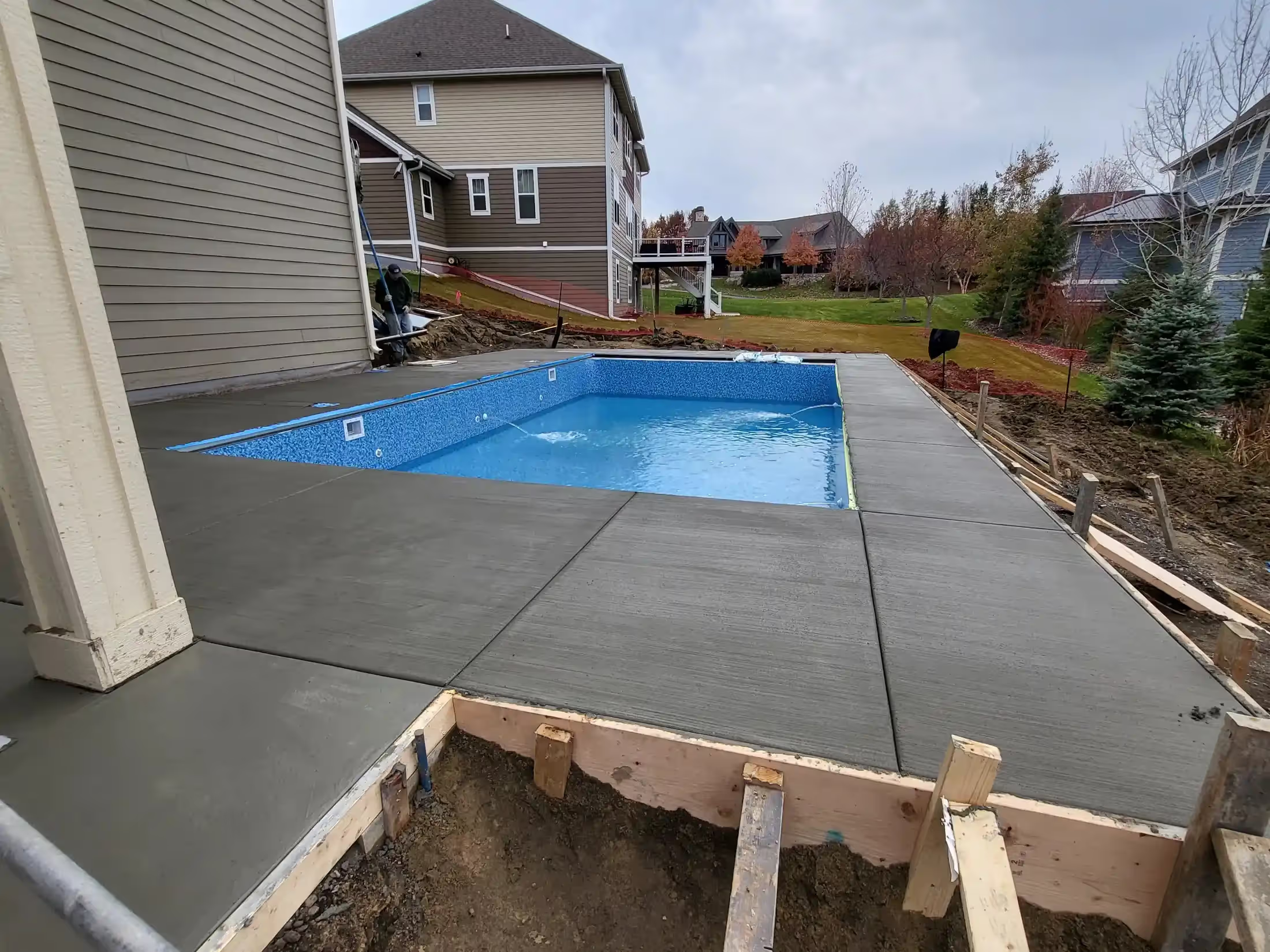
Your concrete pool deck isn't immune to freeze-thaw damage either. Water seeps into tiny cracks in concrete, freezes, expands, and widens those cracks. Over time, this leads to spalling, cracking, and eventual structural failure of the deck surface.
The connection between your pool structure and surrounding hardscape is particularly vulnerable. If the pool walls shift or move due to freeze-thaw pressure, that movement transfers to the deck, creating cracks and dangerous tripping hazards.
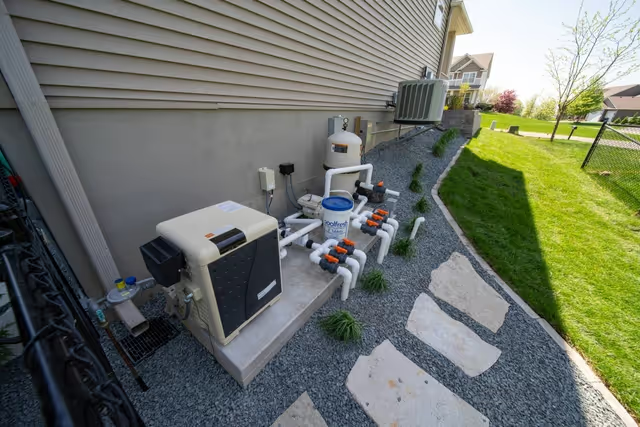
Underground plumbing lines are at risk when soil shifts. Even minor ground movement can stress connections, causing leaks that may not appear until spring thaw reveals the damage. Equipment pads can heave and shift, throwing pumps and heaters out of alignment.
Traditional steel wall pools face several critical disadvantages when confronting Minnesota's freeze-thaw cycles:
Steel wall pools require support braces behind the walls to hold their shape during backfilling. These braces create voids that prevent proper soil compaction. When soil isn't thoroughly compacted, water can accumulate in these spaces, freeze, and create pressure that pushes against the pool walls.
Poor compaction also means the soil is more prone to settling and shifting as freeze-thaw cycles occur. This creates an unstable foundation for both the pool and surrounding hardscaping.
Steel expands and contracts with temperature changes. While this expansion is minimal, it occurs at a different rate than the surrounding concrete or soil. Over dozens of Minnesota winters, this differential movement stresses connections and can create gaps where water infiltrates.
Steel wall pools are inherently more flexible than concrete structures. While some flexibility can be beneficial, in Minnesota's extreme conditions, this flexibility allows the walls to bow inward or outward as soil pressure changes with freezing and thawing. Over time, this can lead to structural deformation that's difficult or impossible to correct.
Steel wall pools can shift during winter months when frost heave is most active. This shifting affects the entire pool system—from plumbing connections to the vinyl liner fit to deck alignment.
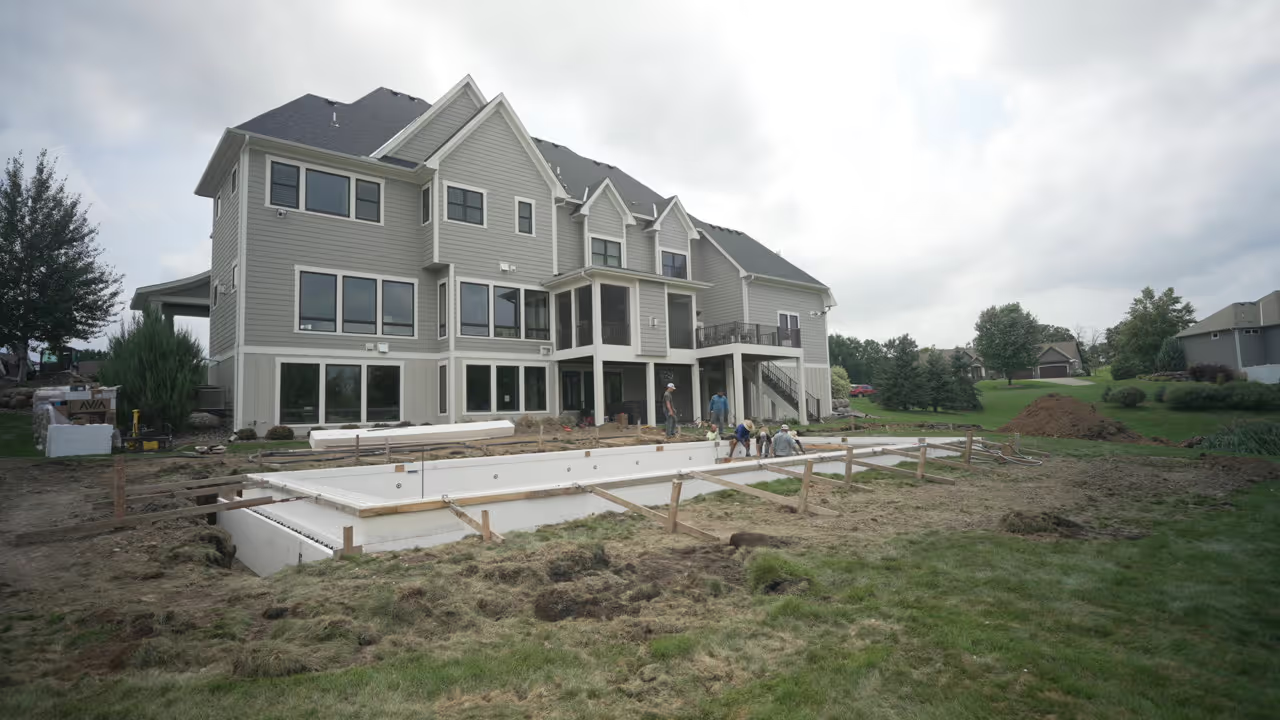
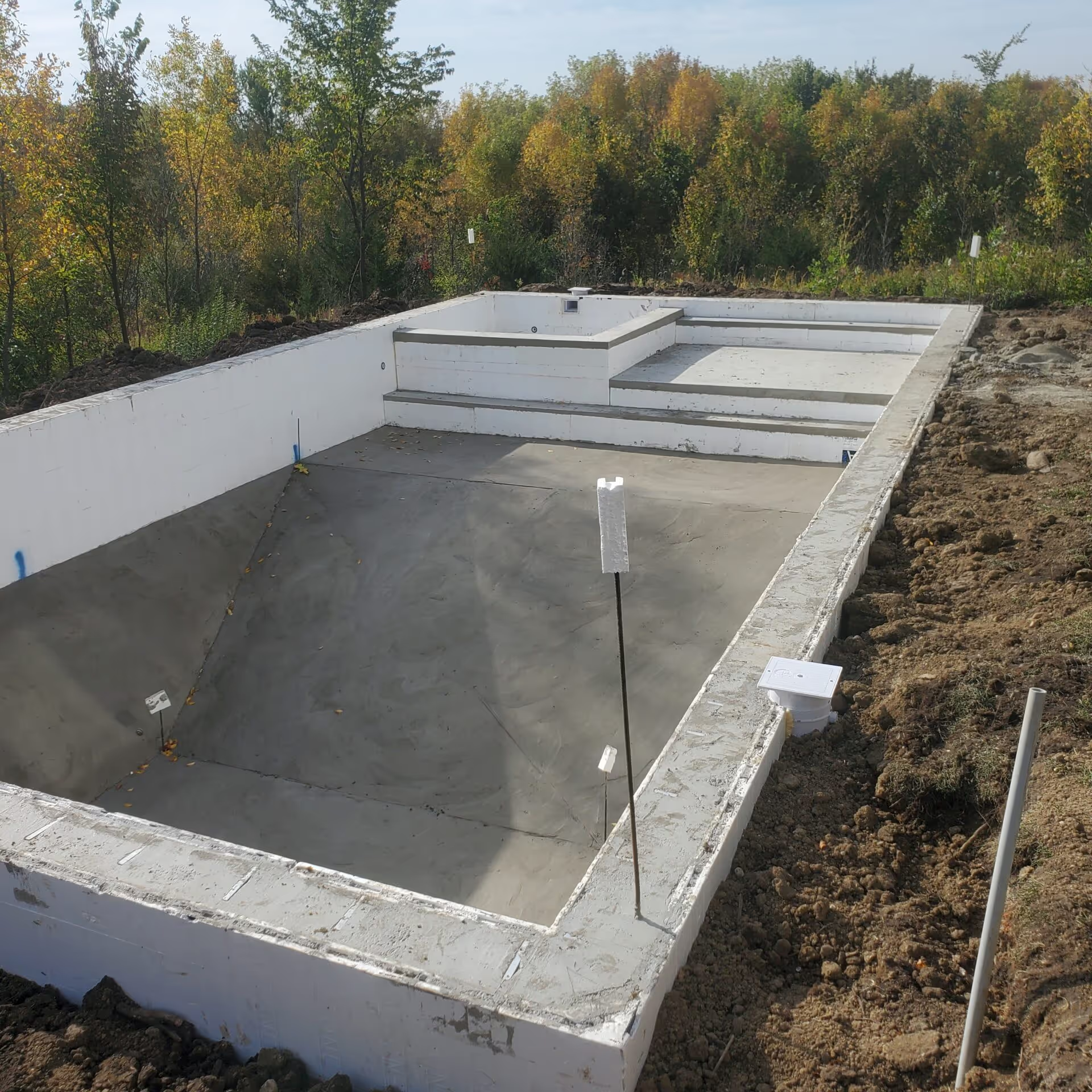
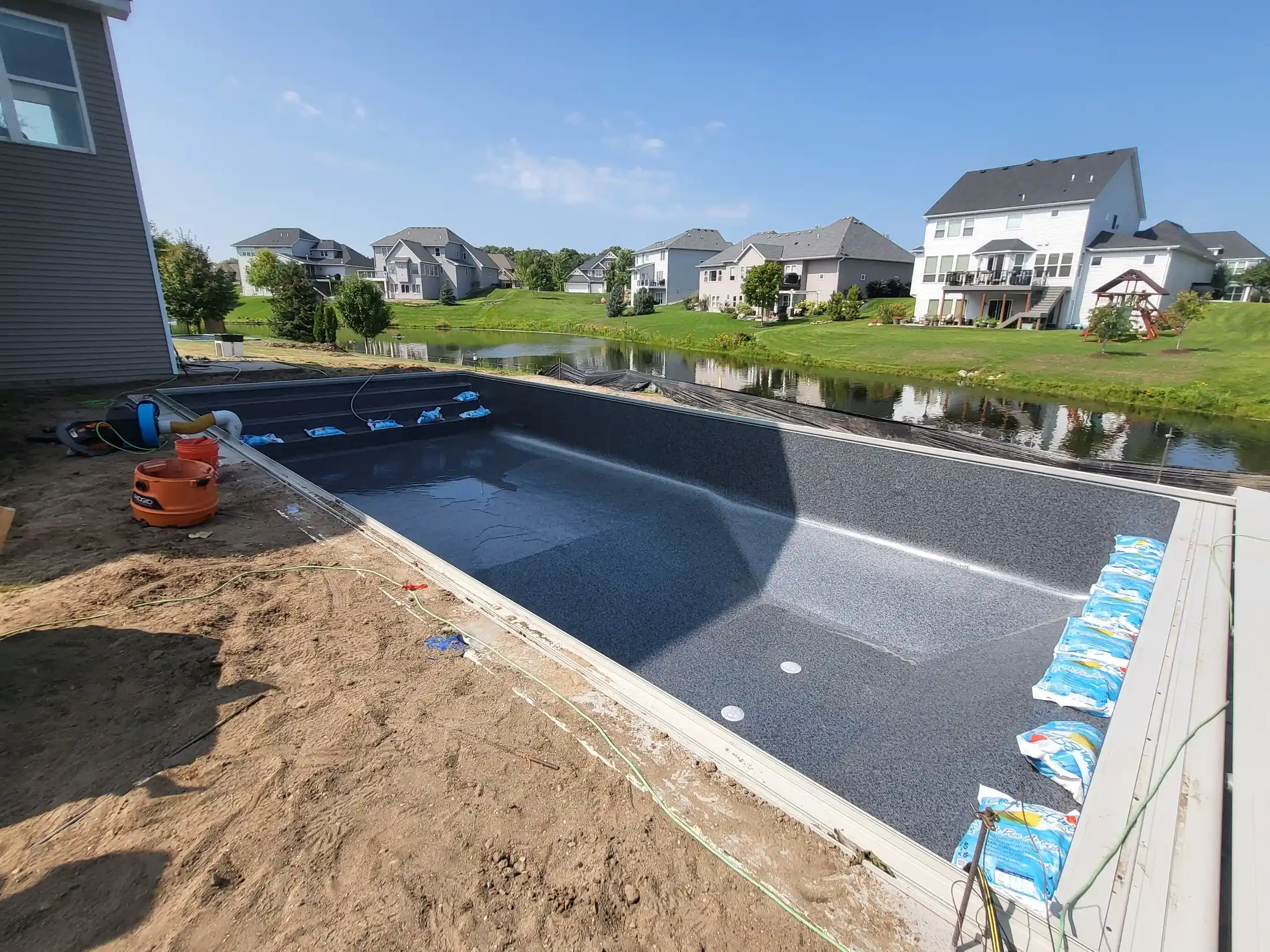
ICF pools utilize rebar-reinforced concrete contained within two layers of rigid foam insulation. This creates a monolithic structure that's exponentially stronger than steel walls. The concrete forms a continuous, unified wall that resists movement and distributes pressure evenly.
At Plan Pools, our ICF pool walls are thicker than most house foundations—typically 6-8 inches of reinforced concrete. This substantial structure simply doesn't move when soil freezes and thaws around it.
Because ICF pools don't require support braces, we can achieve thorough, uniform compaction of backfill material. This dramatically reduces the amount of water that can accumulate near the pool walls, minimizing freeze-thaw damage to both the pool and surrounding hardscape.
Proper compaction means the soil moves as a more unified mass rather than creating pressure points. When spring thaw arrives, well-compacted soil settles minimally, preserving the integrity of your pool deck and landscaping year after year.
The insulation in ICF construction provides a remarkable secondary benefit during freeze-thaw cycles. The rigid foam insulation on both sides of the concrete wall acts as a thermal break, reducing the temperature fluctuation that the concrete experiences.
This means the concrete doesn't undergo the same expansion and contraction cycles as uninsulated structures. Less expansion and contraction means fewer micro-cracks, better long-term durability, and minimal maintenance over the pool's lifespan.
When properly installed with adequate footings below the frost line, ICF pool structures become nearly immovable. The mass and strength of reinforced concrete surrounded by insulation creates a structure that resists the forces that cause steel wall pools to shift and move.
Understanding the true cost of pool ownership in Minnesota means looking beyond initial installation prices to lifetime durability and maintenance costs.
When poor soil compaction around steel wall pools leads to settling and movement, the surrounding deck often cracks and fails. Replacing a concrete pool deck can cost $15,000-$30,000 or more. With ICF construction and proper compaction, your deck should last decades without major repairs.
Repairing a steel wall pool that has shifted or bowed from freeze-thaw cycles is complex and expensive. In severe cases, the entire pool may need replacement. ICF concrete pools with their lifetime structural warranties eliminate this risk entirely.
Pools that move and shift require constant attention—releveling equipment, repairing plumbing connections, patching cracks, and addressing liner issues caused by wall movement. ICF pools maintain their structural integrity, dramatically reducing ongoing maintenance costs.
Plan Pools has installed ICF pools throughout the Twin Cities metro area, from Lakeville and Prior Lake to Maple Grove and Stillwater. Our customers consistently report that their pools and surrounding hardscaping look as good after five or ten Minnesota winters as they did on day one.
We've seen the contrast firsthand. When homeowners contact us about replacing failing steel wall pools, the damage patterns are predictable: cracked decks radiating from pool walls, uneven coping, and shifted equipment pads. These are preventable problems that result from inadequate construction methods for Minnesota's climate.
When investing $90,000-$125,000 or more in a backyard pool, choosing construction methods that will withstand Minnesota's freeze-thaw cycles isn't optional—it's essential. The difference between steel wall and ICF construction becomes more pronounced with each passing winter.
At Plan Pools, we've perfected our ICF pool construction process specifically for Minnesota conditions. Our approach accounts for frost depth, soil types throughout the metro area, and the unique challenges our climate presents.
Frost penetration in Minnesota typically reaches 3-6 feet deep, depending on snow cover, soil type, and the severity of the winter. This is why proper footing depth and structural integrity are so critical for Minnesota pools.
Absolutely—when properly constructed. ICF pools with thorough soil compaction and appropriate structural engineering routinely last 40+ years in Minnesota with minimal maintenance. The key is choosing construction methods designed for our climate from the start.
Minor surface cracks can often be repaired, but significant cracking that results from pool wall movement or poor soil compaction usually requires deck replacement. This is why proper construction and compaction are so important—prevention is far less expensive than correction.
ICF pools are engineered specifically to withstand freeze-thaw cycles. With proper installation and routine maintenance, freeze-thaw damage is not a concern. Plan Pools offers lifetime structural warranties on our ICF pool walls, demonstrating our confidence in this construction method for Minnesota conditions.
Well-compacted soil has less air space for water to accumulate. Less water means less ice formation, which means less expansion pressure against your pool walls. Compaction also creates a more stable base that resists movement as temperatures change.
Minnesota's freeze-thaw cycles are a fact of life that can't be ignored when planning a pool installation. The construction method you choose will determine whether your pool becomes a decades-long source of enjoyment or an ongoing maintenance headache.
ICF construction offers superior resistance to freeze-thaw damage through stronger structural integrity, better soil compaction, thermal insulation benefits, and resistance to ground movement. When combined with 60% lower heating costs and extended swimming seasons, ICF construction represents the clear choice for Minnesota pool owners who want lasting value.
Ready to build a pool that will thrive through Minnesota winters? Contact Plan Pools to schedule your consultation. We'll show you exactly how our ICF construction methods protect your investment against freeze-thaw cycles and deliver the reliable, long-lasting pool your family deserves.