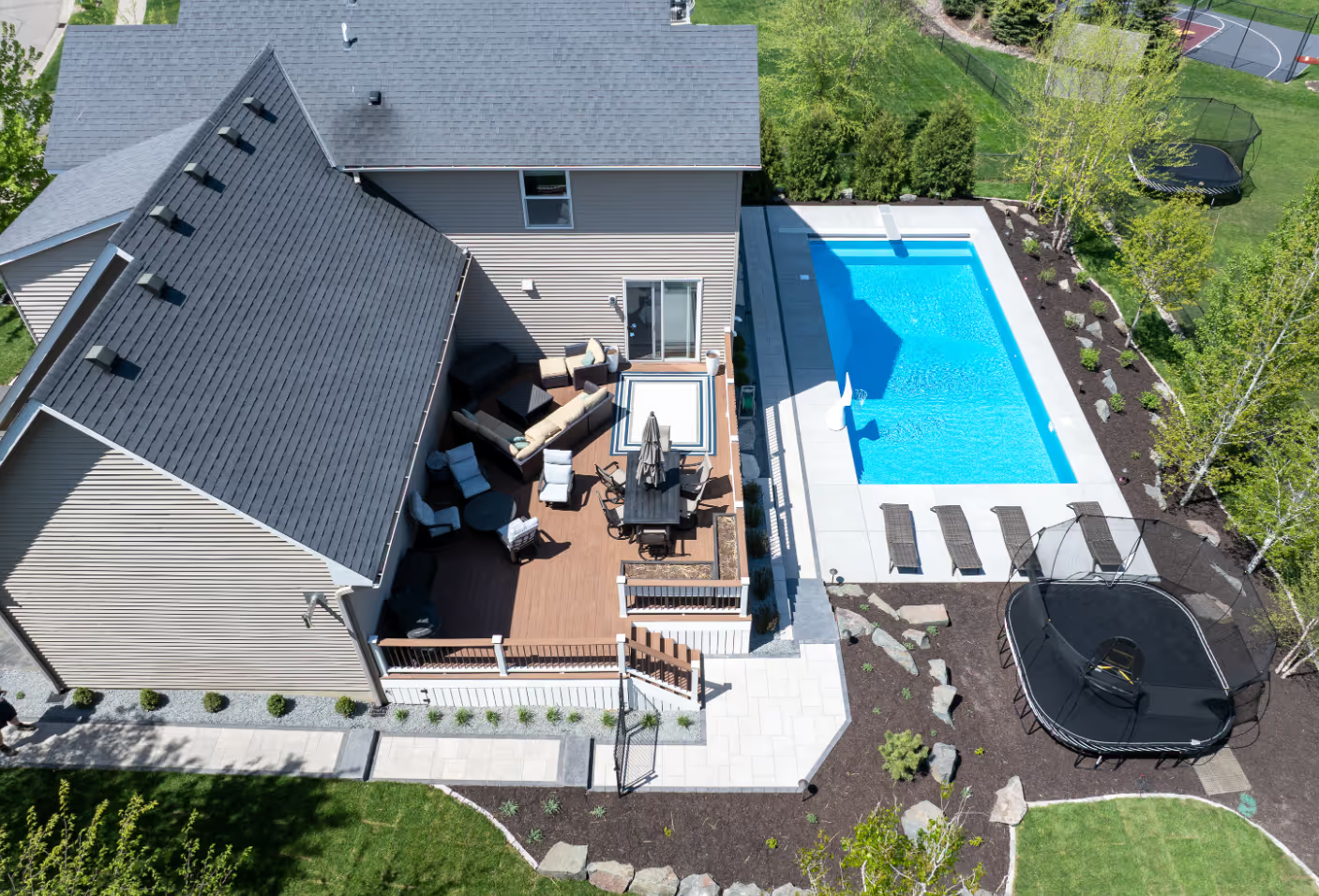
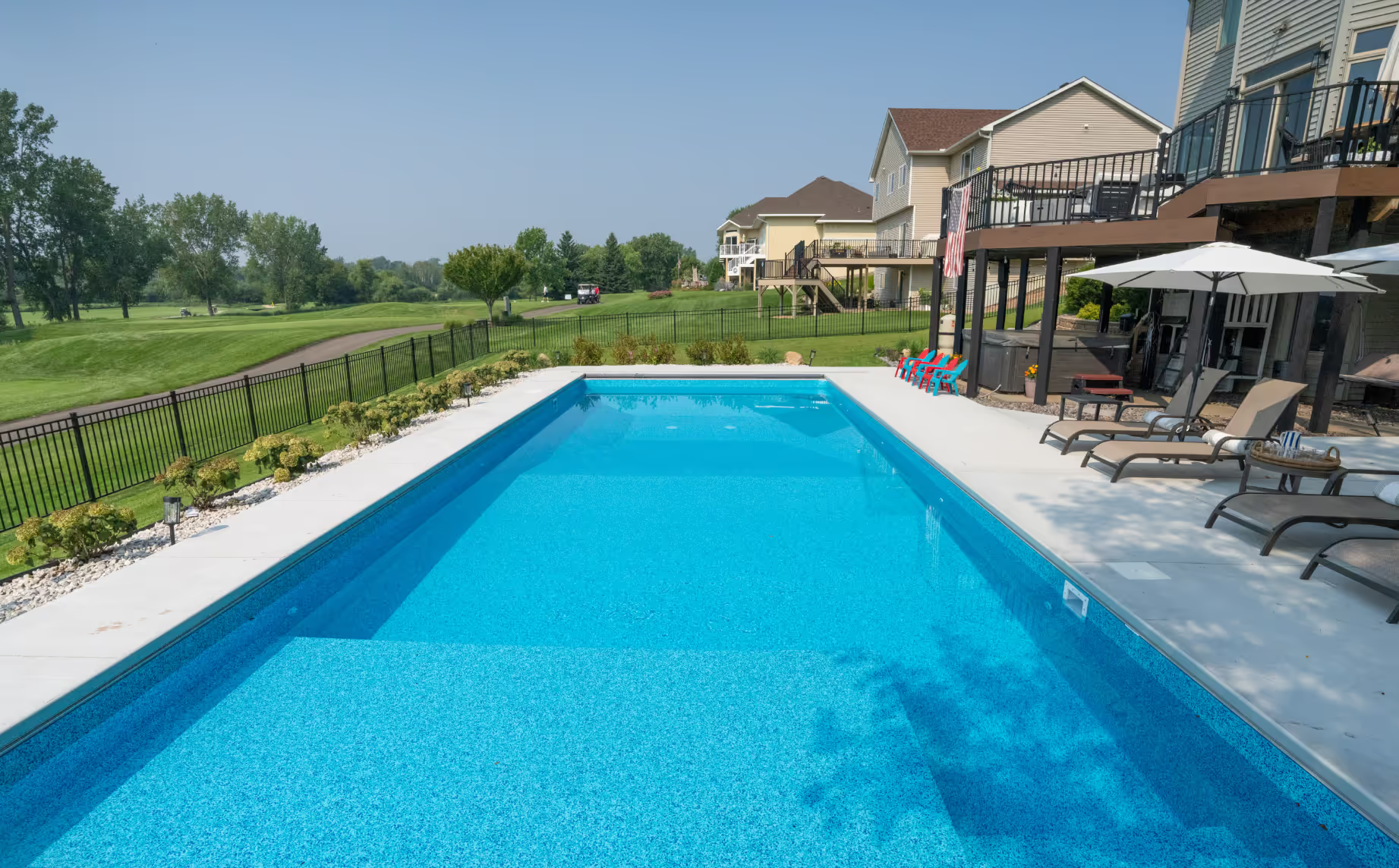
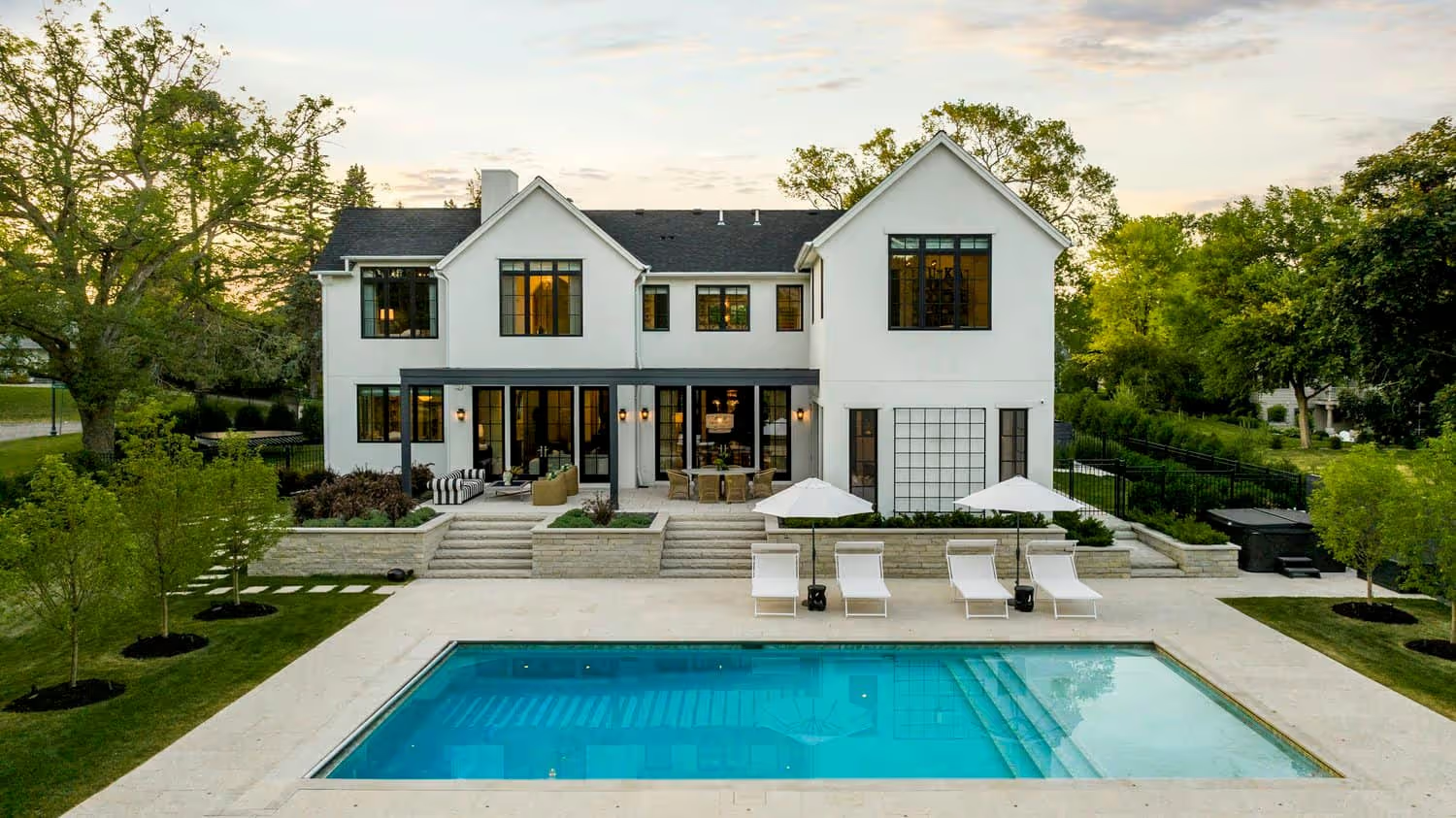
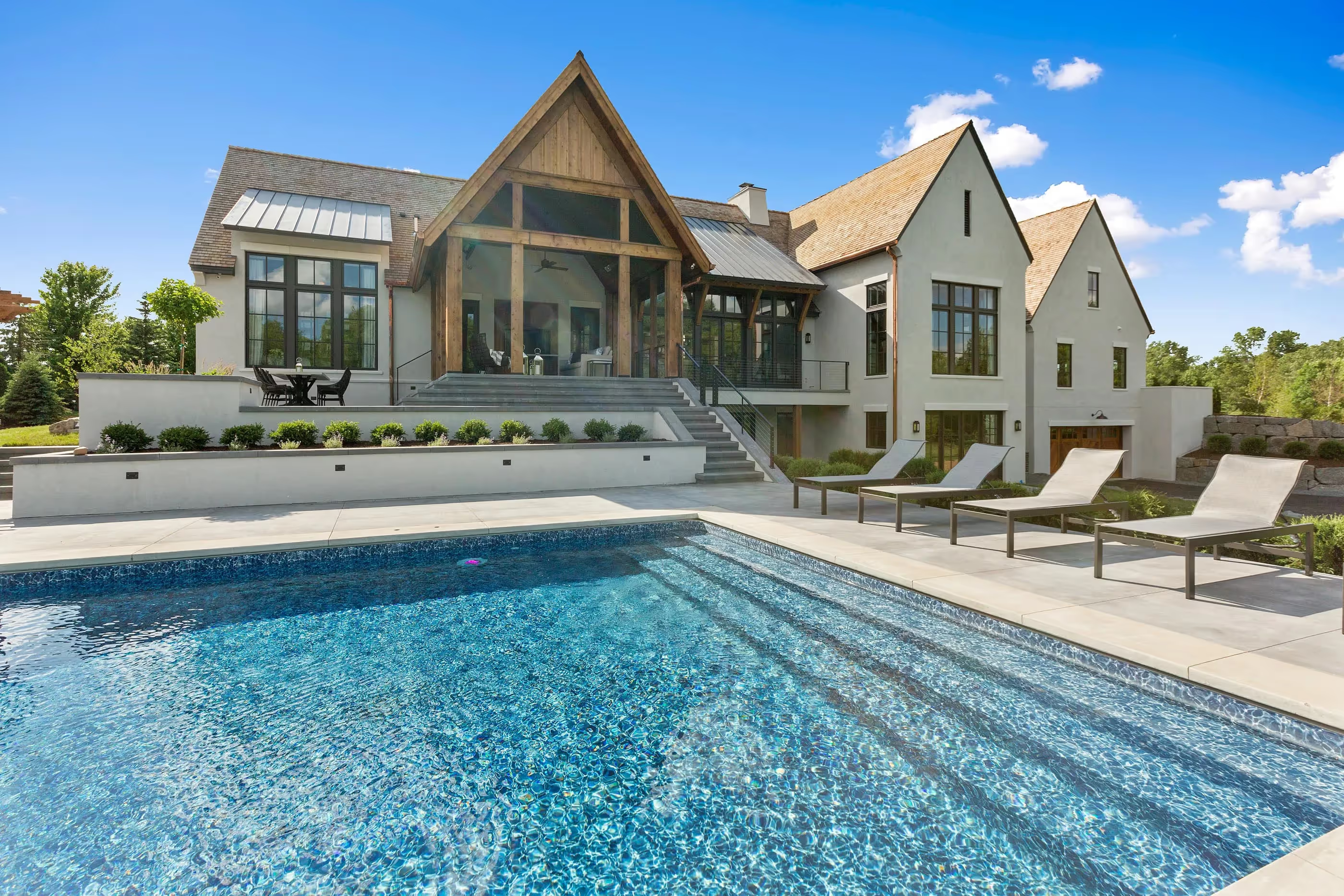
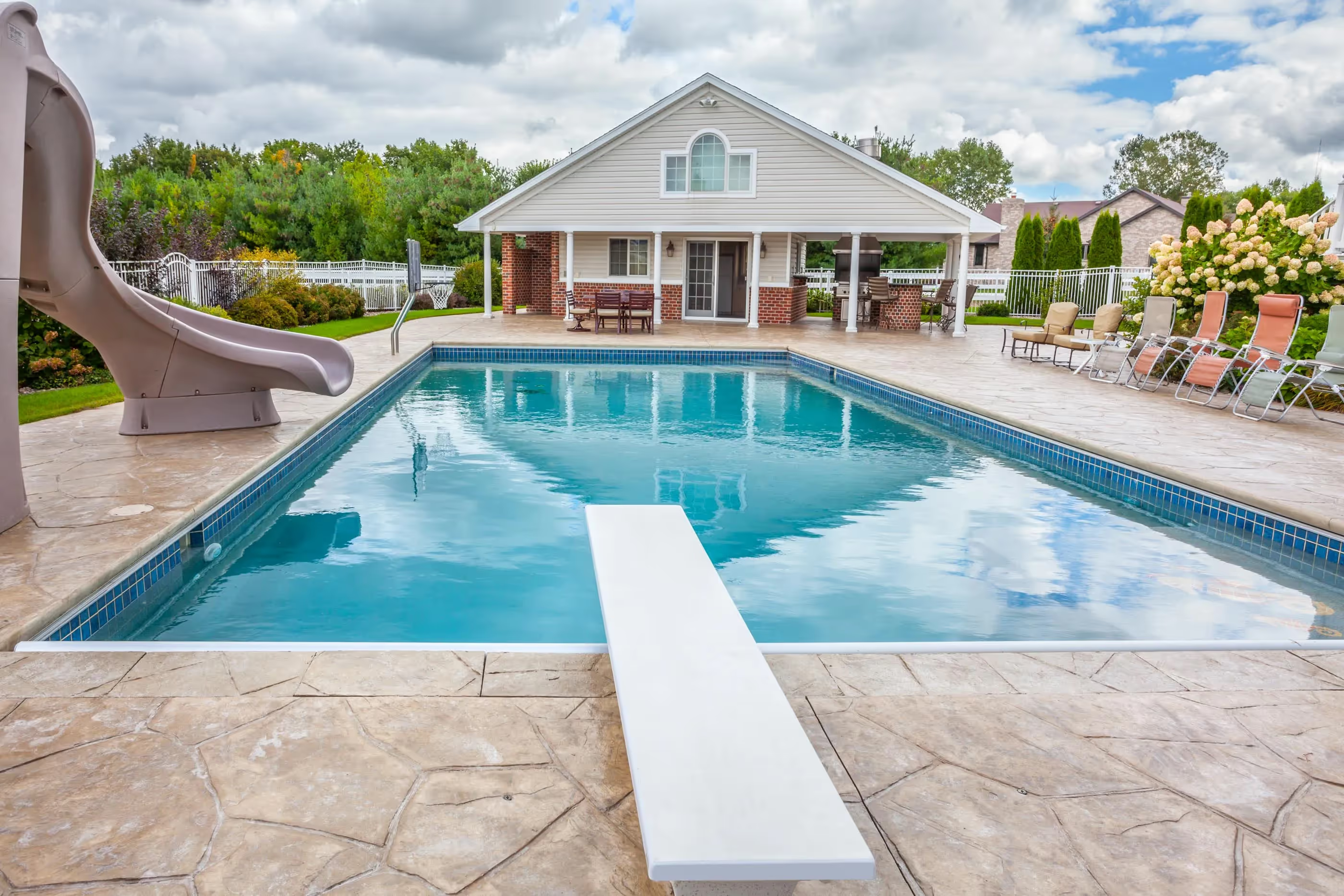
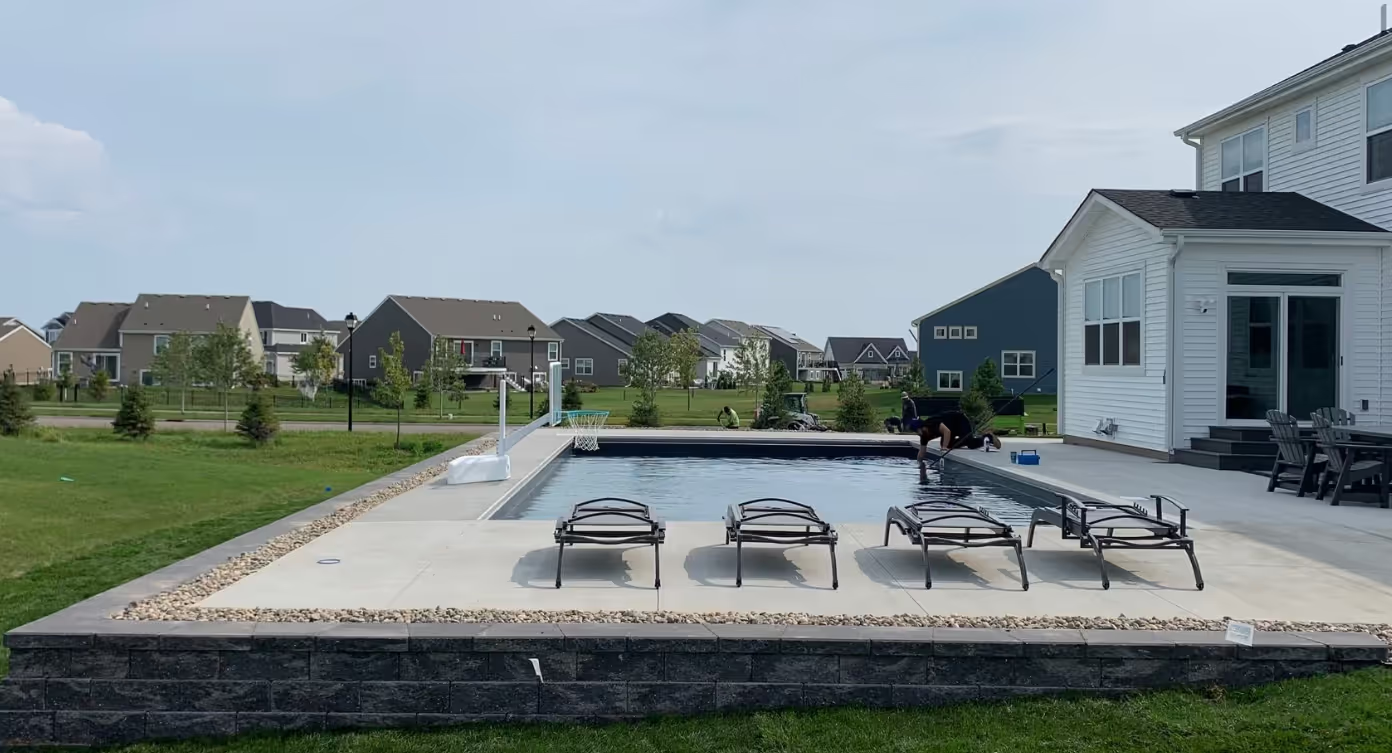
Why are ICF pools better than fiberglass? Learn about the key differences.

Are you searching for the best pool contractor in Minnesota and weighing your options between ICF pools and fiberglass pools? You're making one of the biggest investments in your home and family's future, and choosing the right pool construction method will impact your enjoyment, maintenance costs, and property value for decades to come.
At Plan Pools, we've built hundreds of ICF (Insulated Concrete Form) swimming pools across the Twin Cities, and we've seen firsthand how Minnesota homeowners benefit from choosing ICF construction over fiberglass alternatives. While fiberglass pool contractors promise "no maintenance" and quick installation, the reality for Minnesota families is quite different. The harsh freeze-thaw cycles, high water tables, and extreme temperature swings in our state create unique challenges that fiberglass pools simply weren't designed to handle.
This comprehensive guide will walk you through everything you need to know about ICF pools versus fiberglass pools in Minnesota. We'll cover the real costs, the long-term performance differences, and why swimming pool contractors near Minneapolis who specialize in ICF construction are increasingly becoming the smart choice for Twin Cities homeowners.
Whether you're in Eden Prairie, Lakeville, Prior Lake, Shakopee, Eagan, or Maple Grove, understanding these differences will help you make the right choice for your family's backyard oasis.
Minnesota families deserve swimming pools that work WITH our climate, not against it. The choice between ICF pools and fiberglass pools isn't just about upfront cost—it's about decades of enjoyment, energy savings, and avoiding costly repairs that fiberglass owners often face.
Minnesota presents unique challenges for swimming pool construction that simply don't exist in warmer climates. Our state experiences temperature swings of over 140 degrees Fahrenheit between summer highs and winter lows. We face:
Brutal freeze-thaw cycles that can shift, crack, and damage improperly constructed pools. Every spring, Minnesota soil expands and contracts with frost heaves that can lift structures, shift foundations, and crack rigid materials. Fiberglass pools, being pre-molded rigid shells, are particularly vulnerable to these forces.
High water table areas throughout the Twin Cities region, especially near Lake Minnetonka, the Chain of Lakes, and throughout Minnetonka, Orono, and lakeside communities. A high water table creates hydrostatic pressure that can literally push fiberglass pools up and out of the ground—an expensive catastrophe that costs $50,000+ to fix.
Short swimming seasons that make energy efficiency crucial. Minnesota pool owners typically enjoy their pools from late May through early September—barely 3.5 months. Every degree of water temperature you can maintain efficiently extends your season and maximizes your investment. This is where ICF construction truly shines.
Harsh winter conditions that test every pool's structural integrity. Snow loads, ice expansion, and ground movement during Minnesota winters separate quality construction from shortcuts that lead to expensive spring repairs.
Let's talk numbers. Fiberglass pools in Minnesota typically cost $30,000 to $40,000 MORE than comparable ICF vinyl liner pools from Plan Pools. That's not a small difference—that's a new truck, a year of college tuition, or enough landscaping budget to transform your entire backyard into a resort-style retreat.
The fiberglass industry markets these pools as "low maintenance" and "quick installation," but Minnesota homeowners quickly discover the hidden costs:
Higher upfront investment with limited customization options means you're paying premium prices for a pre-molded shell that may not fit your yard optimally. Fiberglass pools come in predetermined sizes and shapes—if your yard has unique dimensions, slopes, or features, you'll compromise your design or pay even more for earth moving and site preparation.
Limited repair specialists in Minnesota mean when your fiberglass pool cracks (and they do crack, especially during shipping or from ground movement), you'll wait weeks or months for one of the handful of qualified technicians to schedule repairs. Unlike vinyl liner replacement or concrete repairs that hundreds of local contractors can perform, fiberglass gel coat repair requires specialized training and equipment.
Refinishing requirements every 15-20 years that fiberglass companies conveniently forget to mention. That "maintenance-free" surface? It fades, becomes porous, and requires professional gel coat refinishing that costs $8,000-$15,000. Compare that to a vinyl liner replacement at $4,000-$6,000.
Transportation risks that Minnesota buyers absorb. Your fiberglass pool shell travels hundreds of miles from manufacturing facilities in Iowa or Wisconsin. During transport, shells can develop stress fractures, gel coat spider cracks, or structural damage. Even small shipping damage can lead to major leaks years later.
What could you do with that $30,000-$40,000 price difference between fiberglass and ICF pools? Smart Minnesota pool contractors recommend investing it where it actually enhances your enjoyment:
Premium landscaping and hardscaping that transforms your entire backyard, not just the pool area. Work with partners like Minnesota Landscapes or Country Creek Builders to create outdoor living spaces with custom concrete pool decks, seating walls, fire pits, outdoor kitchens, and lush plantings.
Extended pool decking and entertainment areas with stamped concrete, pavers, or natural stone that give you space for lounging, dining, and gathering. The pool is just the centerpiece—the surrounding hardscape creates the resort experience.
High-end pool features like built-in spas, tanning ledges, beach entries, bubblers, deck jets, LED color-changing lighting systems, and advanced automation that lets you control everything from your smartphone.
Superior pool covers and automation including automatic safety covers that protect your investment, reduce heating costs by 70%, minimize water evaporation, and keep debris out. Quality automation systems manage temperature, filtration, cleaning, and chemical balance with minimal effort.
Complete yard transformation including fencing, landscaping, outdoor lighting, irrigation systems, and property improvements that increase your home's value far beyond just adding a pool.
The math is simple: Would you rather pay $120,000 for a basic fiberglass pool with limited options, or invest $90,000 in a fully customizable ICF pool and $30,000 in landscaping and features that create a true backyard resort?
ICF (Insulated Concrete Form) construction represents the most advanced pool building technology available to Minnesota homeowners. After building hundreds of pools across the Twin Cities, we've proven that ICF pools deliver measurable advantages in energy efficiency, durability, customization, and long-term value.
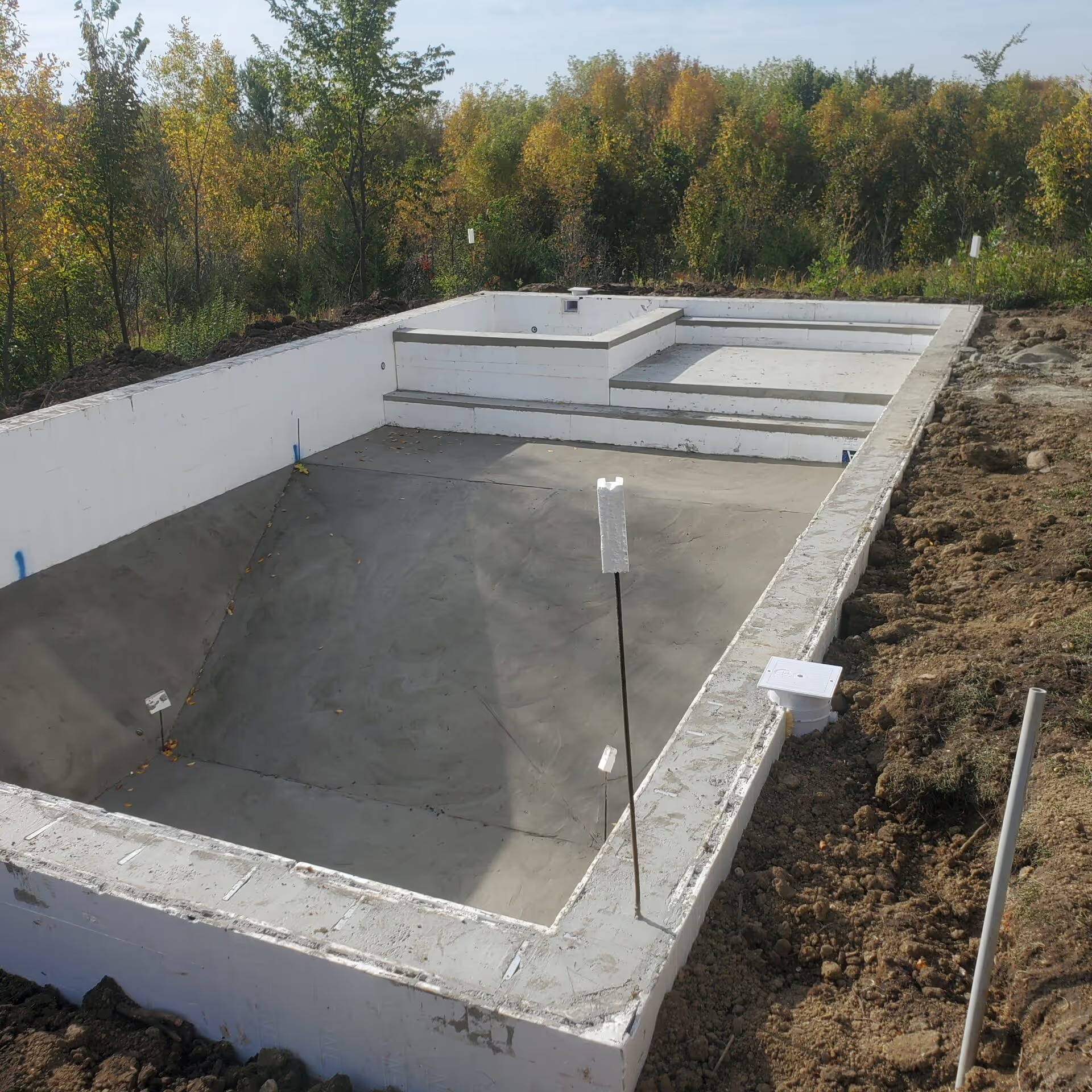
The single biggest advantage of ICF pools over fiberglass pools in Minnesota is energy efficiency. ICF pools feature two layers of thick, hardened foam insulation on both sides of reinforced concrete walls. This double-insulation system creates a thermal barrier that dramatically reduces heat loss.
The numbers tell the story: ICF pool owners in Minnesota report heating cost reductions of 60% compared to steel wall pools, and 40-50% compared to fiberglass pools. For a typical Minnesota pool owner heating their pool from May through September, that translates to:
These aren't marketing claims—they're real savings reported by Plan Pools customers throughout Lakeville, Eden Prairie, and across the Twin Cities metro area.
Why does insulation matter so much in Minnesota? Our state's cool nights, even in summer, constantly draw heat from pool water. A typical summer night in Minnesota drops to 55-65°F. Without proper insulation, your pool loses heat continuously to the surrounding soil. With ICF insulation, that heat stays where you want it—in your pool water.
Extended swimming season becomes possible with ICF construction. Minnesota ICF pool owners regularly open their pools in mid-April and keep them comfortable into October. That's 5.5-6 months of swimming compared to 3.5-4 months for poorly insulated alternatives. More swimming time means more family memories, more value from your investment, and more justification for the pool project.
Lower heating costs mean you'll actually USE your heater. Many pool owners with high heating bills avoid turning on their heaters except for special occasions. With ICF pools, heating becomes affordable enough for everyday use, maintaining comfortable 82-84°F temperatures throughout the season.
Fiberglass pool manufacturers emphasize the "smooth gel coat surface" and "low maintenance," but they conveniently downplay energy efficiency—an area where fiberglass underperforms in cold climates like Minnesota.
Fiberglass conducts heat efficiently—which sounds good until you realize that means heat transfers OUT of your pool water INTO the surrounding soil. Unlike ICF's continuous insulation barrier, fiberglass shells have minimal insulation value. Some manufacturers have attempted to add foam backing, but it's typically only 1-2 inches on the exterior and doesn't create the complete thermal envelope that ICF provides.
Ground contact everywhere means constant heat loss. A fiberglass shell sits directly against Minnesota soil, creating a massive heat sink. During cool nights, heat flows continuously from your 80°F pool water through the thin fiberglass shell into 60°F soil. Your heater runs constantly trying to keep up.
Higher ongoing costs that never end. That $30,000-$40,000 premium you paid upfront? You'll pay it again over the years in higher heating bills, higher electricity costs, and reduced pool usage because heating it properly feels too expensive.
Chemistry challenges in cold water. When your pool runs cooler because heating costs too much, chemical balance becomes more difficult. Chlorine effectiveness decreases in cooler water, algae growth patterns change, and you'll spend more on chemicals trying to maintain proper water quality.
One of the most overlooked advantages of ICF pool construction is the superior soil compaction it enables—a critical factor for long-term durability in Minnesota's freeze-thaw climate.
Steel wall pools require support structures behind the walls that prevent proper backfilling and compaction. Those steel walls are relatively thin and flexible, requiring bracing to maintain their shape during installation. These support systems create voids and gaps that prevent proper soil compaction behind the pool.
Fiberglass pools create compaction challenges because the rigid shell must be carefully backfilled to avoid point loading and potential cracking. Fiberglass installers use special backfill materials (often sand or pea gravel) that don't compact as well as properly tamped native soil or engineered fill.
ICF pools enable complete, thorough compaction because the reinforced concrete walls are strong enough to handle proper compaction equipment and techniques. This means:
Why Minnesota homeowners care about compaction: Drive through Twin Cities neighborhoods and look at 10-15 year old pools. You'll notice many fiberglass and steel wall pools have settled decking, cracked concrete, and gaps between the pool coping and deck surface. These problems stem from inadequate compaction during installation. ICF pools built by Plan Pools maintain their structural integrity and deck quality for decades because we can achieve proper 95%+ compaction around the entire structure.
Fiberglass pools come in predetermined sizes, shapes, and depths—typically 8-10 models per manufacturer. If your yard doesn't perfectly match one of those templates, you have three options: compromise your design, pay significantly more for earth moving, or choose a different pool type.
ICF pools offer unlimited customization because we're building your pool on-site from the ground up. Every Plan Pools ICF pool is custom-designed for your specific:
Lot dimensions and constraints: Narrow yards, odd-shaped properties, sloped lots, easements, setbacks, tree locations, and existing landscape features all influence pool design. With ICF, we design around YOUR yard's unique characteristics.
Depth preferences: Want a shallow play area for young children AND a deep end for diving? ICF pools can transition from 3 feet to 8 feet with custom slope transitions. Fiberglass pools are limited to factory-molded depth profiles—typically 3.5 feet to 6 feet maximum.
Shape and style: Kidney-shaped, L-shaped, geometric, naturalistic, curved, straight—ICF construction accommodates any design. We can incorporate benches, tanning ledges, swim-outs, beach entries, integrated spas, and custom features that express your vision.
Entry and exit points: We position stairs, ladders, and entry areas where they make sense for YOUR backyard traffic patterns and landscape design—not where a fiberglass mold dictated.
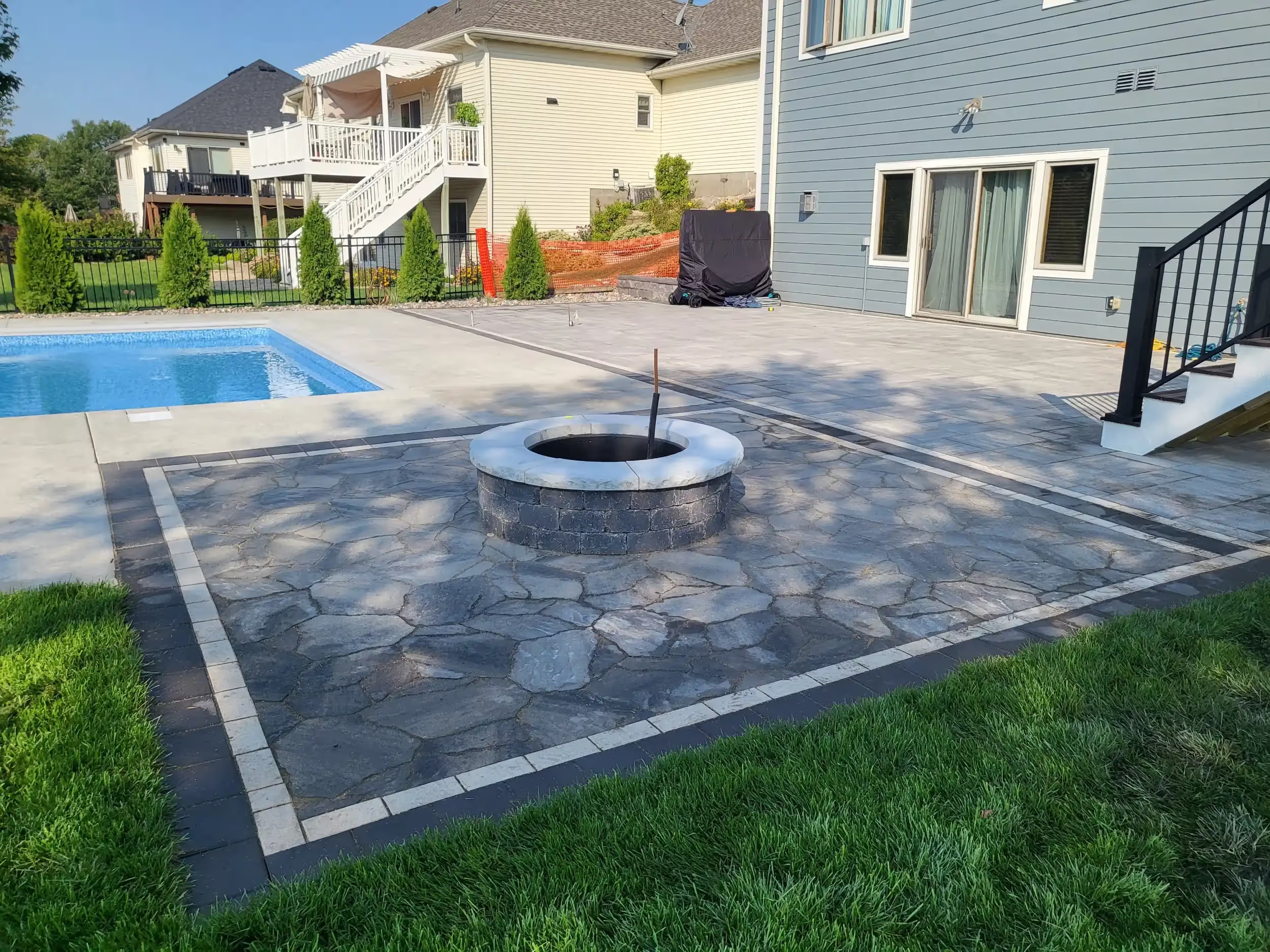
Integration with landscape design: ICF pools coordinate perfectly with planned landscaping and hardscaping, allowing us to create seamless transitions between pool, deck, patios, fire pits, outdoor kitchens, and plantings. We work closely with partners like Minnesota Landscapes to ensure your entire backyard functions as a cohesive outdoor living space.
Walk into any fiberglass pool showroom in Minnesota and you'll see 8-12 pool models on display. They might have different names ("Lagoon," "Resort," "Family Fun"), but you're choosing from a limited catalog of predetermined designs.
Size limitations are real: Most fiberglass pools max out at 16 feet wide and 40 feet long. Why? Because that's the maximum size that can be transported on highways without special permits and escort vehicles. Need something larger? You're out of luck—or you'll pay a premium for a two-piece pool (which introduces seam integrity concerns).
Shallow depth is standard: Fiberglass pools typically range from 3.5 to 6 feet deep. Diving? Not safely. Deep water volleyball? Challenging. The structural limitations of fiberglass molding make deeper pools exponentially more expensive and rare.
Shape means compromise: See a fiberglass pool shape you like? Now try to fit it into your yard with proper setbacks from property lines, existing trees, utilities, easements, and your home. Often that perfect showroom pool doesn't quite fit your real-world lot without expensive earth moving or landscape removal.
Features are limited: Want a tanning ledge on the northwest corner where afternoon sun is perfect? Too bad if your fiberglass model puts it on the south side. Built-in spa? Only if you buy the specific model that includes it, in the configuration the manufacturer designed.
Minnesota homeowners deserve better. Your backyard is unique. Your family's needs are unique. Your budget priorities are unique. Choosing a custom ICF pool from Plan Pools means getting exactly what you want, designed specifically for your property and lifestyle.
Minnesota's extreme climate separates quality pool construction from shortcuts that lead to expensive repairs. Let's examine how ICF pools and fiberglass pools hold up over 20-30 years of Minnesota freeze-thaw cycles, ground movement, and temperature extremes.
Plan Pools offers a lifetime structural warranty on our ICF pool walls. We can make this commitment because properly constructed ICF pools are stronger than your home's foundation. Here's why:
Reinforced concrete strength: ICF pool walls consist of steel rebar grids encased in 6-8 inches of concrete, sandwiched between two layers of high-density foam insulation. This creates a composite structure with incredible compressive and tensile strength—far exceeding the requirements for residential foundation walls.
Continuous structure: Unlike segmented steel wall pools or two-piece fiberglass pools, ICF pools create a monolithic concrete structure with no seams, joints, or weak points where stress concentrates.
Freeze-thaw resistance: Properly placed and cured concrete with adequate air entrainment resists freeze-thaw damage indefinitely. Minnesota's seasonal cycles don't compromise structural integrity.
Ground movement tolerance: The mass and strength of reinforced concrete walls resist the shifting and settling that damages lighter structures. Minor ground movement doesn't create stress fractures or leak points.
No rust or corrosion: Unlike steel wall pools, ICF concrete pools won't rust, corrode, or deteriorate from salt water systems, chemicals, or environmental exposure.
Thicker than necessary: Our ICF pool walls are actually THICKER than residential foundation walls, even though they face less structural loading. This over-engineering ensures decades of trouble-free performance.
Fiberglass pool manufacturers tout their product's durability, but Minnesota conditions reveal weaknesses that warmer-climate buyers never experience:
Shipping damage is common: Your fiberglass pool travels 300-500 miles from the factory to your yard. During transport, the rigid shell experiences road vibrations, loading/unloading stress, and potential impacts. Even minor stress cracks in the gel coat—invisible during installation—become leak points years later.
Gel coat spider cracking: Minnesota's freeze-thaw cycles cause micro-movements in soil and pool structures. Fiberglass, being rigid rather than flexible, develops spider cracks in the gel coat surface. These start small but propagate over time, creating rough spots where algae colonize and eventually allowing water penetration into the fiberglass laminate layers.
Osmotic blistering: When water penetrates the gel coat and reaches the fiberglass layers beneath, it begins dissolving water-soluble materials in the resin. This creates blisters (called osmotic blistering) that progressively worsen and require extensive repair—often involving grinding down the entire pool surface and re-gel coating.
Shifting and floating: Minnesota's high water table areas create hydrostatic pressure under pools during spring thaws and heavy rain periods. Fiberglass pools, being relatively light, can actually float up and out of the ground if groundwater pressure overcomes their weight. This catastrophic failure requires complete pool removal and reinstallation at a cost of $50,000+.
Limited repair options: When fiberglass pools crack, leak, or need gel coat repair, you'll discover that very few technicians in Minnesota have the specialized training and equipment required. You'll wait weeks or months for repairs, and pay premium rates for the limited expertise.
Structural shifting: Minnesota soil expands and contracts with freeze-thaw cycles. Fiberglass pools can shift within their excavation, creating stress points where the shell contacts hardscape or plumbing penetrations. Over time, these stress points become crack initiation sites.
Talk to Minnesota pool owners who've lived with their pools for 15-20 years. The ICF owners report minimal maintenance beyond normal vinyl liner replacement every 8-12 years (a planned maintenance item). The fiberglass owners tell different stories:
Gel coat refinishing surprise: "Nobody told us the gel coat would need refinishing. After 18 years, our fiberglass pool surface became rough and porous. The gel coat refinishing cost $12,000 and required draining the pool for three weeks during peak summer."
Cracking and leaking: "We noticed the water level dropping faster than normal evaporation. After months of trying to locate the leak, we discovered spider cracks in the gel coat allowing water to seep into the fiberglass layers. Repair required draining the pool, grinding down the affected area, and patching with new gel coat. Total cost: $8,500."
Floating pool nightmare: "After an extremely wet spring, we noticed our pool had risen up about 2 inches at one end. The hydrostatic pressure from groundwater had literally floated our fiberglass pool up. We had to completely remove it, improve drainage, and reinstall. Cost: $55,000."
Limited customization regret: "We chose fiberglass for the 'quick installation,' but 5 years later we regret the limited size. Our kids are teenagers now and the pool feels cramped. We wish we'd built a larger ICF pool from the start."
Compare these experiences to ICF pool owners in Lakeville, Prior Lake, and Eden Prairie who report decades of trouble-free enjoyment, with planned maintenance limited to liner replacement and equipment updates.
Minnesota pool contractors increasingly recommend salt water chlorination systems for their superior water quality, reduced maintenance, and lower long-term chemical costs. But not all pool types work equally well with salt systems.
Plan Pools installs Pentair salt chlorination systems on the majority of our ICF pools. Here's why they're the perfect match:
No corrosion concerns: ICF pool walls consist of concrete, steel rebar (protected by concrete cover), foam insulation, and vinyl liner. None of these materials corrode from salt exposure. You enjoy all the benefits of salt water chlorination without any structural concerns.
Lifetime compatibility: Your salt system can run for 20-30 years without creating any deterioration in your pool walls. When you eventually replace your liner, the salt hasn't caused any underlying damage.
Optimal performance: Salt chlorinators work best in pools that maintain stable temperatures and chemistry. ICF pools' superior insulation helps maintain consistent water temperature, improving chlorinator efficiency and reducing electricity costs.
Lower salt concentration: Salt water pools use significantly less salt than ocean water (3,000 ppm vs 35,000 ppm). The salt level is barely noticeable to swimmers—less than the salt in a teardrop—but it provides continuous, automatic chlorination that keeps water crystal clear with minimal effort.
Reduced maintenance: Salt systems convert pool salt to chlorine through electrolysis, then convert it back to salt in a continuous cycle. You add salt once or twice per season and let the system maintain proper chlorine levels automatically. No more storing, handling, or adding chlorine pucks or liquid chlorine.
Better water feel: Salt water pools feel softer and silkier on skin and don't create the red eyes, bleached swimsuits, or chlorine smell of traditionally chlorinated pools. Minnesota families with sensitive skin especially appreciate the difference.
Cost savings: While salt systems cost $1,500-$2,500 upfront, they save $300-$500 annually in chemical costs. Over a 20-year period, that's $6,000-$10,000 in savings—far exceeding the initial investment.
Fiberglass pool manufacturers have a complex relationship with salt chlorination systems. While they'll sell you one, the fine print reveals concerns:
Gel coat degradation: Salt water can accelerate gel coat deterioration, particularly if pH and alkalinity aren't maintained perfectly (which is challenging in real-world conditions). The salt increases the rate at which gel coat becomes porous, requiring earlier refinishing.
Warranty concerns: Many fiberglass pool warranties have clauses limiting coverage if salt chlorination systems are used, or requiring specific maintenance protocols. Read the fine print carefully before assuming your warranty remains intact with a salt system.
Water chemistry challenges: Fiberglass pools are more sensitive to pH and alkalinity swings than vinyl liner pools. Salt chlorinators can cause pH to rise over time, requiring vigilant monitoring and more frequent adjustments—exactly the opposite of the "low maintenance" promise.
Staining potential: Certain minerals in salt (particularly calcium) can create staining on fiberglass gel coat surfaces, especially in Minnesota's hard water areas. These stains are difficult to remove without damaging the gel coat.
Equipment corrosion: While the fiberglass shell itself resists salt, the metal components around the pool (ladders, rails, light fixtures, skimmer trim) can corrode more rapidly with salt systems. Fiberglass pool manufacturers often use lower-grade metals that don't stand up to long-term salt exposure.
Manufacturer hesitancy: Talk to fiberglass pool manufacturers honestly about salt systems and you'll often hear careful language about "proper maintenance," "monitoring requirements," and "warranty considerations"—subtle warnings that salt systems aren't an ideal match.
Minnesota pool owners want salt water systems for the same reasons homeowners nationwide prefer them: better water quality, less maintenance, lower long-term costs, and healthier swimming experience. ICF pools deliver those benefits without compromise or concern. Fiberglass pools introduce complications and limitations that undermine the salt system advantages.
Fiberglass pool salespeople emphasize "fast installation" as a key selling point. Let's examine whether that advantage is real for Minnesota homeowners.
Manufacturing lead time: 8-16 weeks. Your fiberglass pool doesn't exist when you sign the contract. It must be manufactured, which takes 2-4 months depending on the manufacturer's backlog and your model's complexity. During Minnesota's peak construction season (April-August), lead times extend even further.
Transportation scheduling: 1-3 weeks. Once manufactured, your pool must be scheduled for transport. This requires coordinating specialized transportation, crane services, and site access—often challenging in established neighborhoods with mature trees and overhead wires.
Site preparation: 2-3 weeks. Before your fiberglass pool can be set, the excavation must be complete, utilities marked and avoided, proper base material installed and compacted, and everything ready for the crane delivery day.
Installation day: 1 day. Yes, the actual fiberglass pool setting takes just hours. A crane lifts the shell, swings it over your house (hopefully), and lowers it into the prepared hole. This is the "fast installation" moment manufacturers advertise.
Backfilling and compaction: 3-5 days. The fiberglass shell must be carefully backfilled with proper materials, often requiring water in the shell for ballast while backfilling progresses in lifts. This process can't be rushed without risking shell damage.
Plumbing, equipment, and systems: 1-2 weeks. All pool plumbing, electrical, heating, automation, and filtration equipment must be installed and connected—work that takes the same time regardless of pool type.
Deck and hardscape: 3-6 weeks. Concrete pool decking, pavers, or other hardscape require the same installation timeline whether surrounding an ICF or fiberglass pool.
Total realistic timeline: 14-20 weeks from contract signing to swimming. That's 3.5-5 months—hardly "instant" despite the one-day shell setting.
Design and planning: 1-2 weeks. At Plan Pools, we create detailed 3D designs showing exactly what your pool and surrounding landscape will look like. You approve the design before any construction begins.
Permitting: 1-3 weeks. Minnesota cities require building permits for pool construction. Our experienced team navigates city bureaucracy efficiently, whether you're in Eden Prairie, Shakopee, or Maple Grove.
Excavation and site prep: 3-5 days. We excavate to exact specifications, establish proper grades, and prepare for ICF installation.
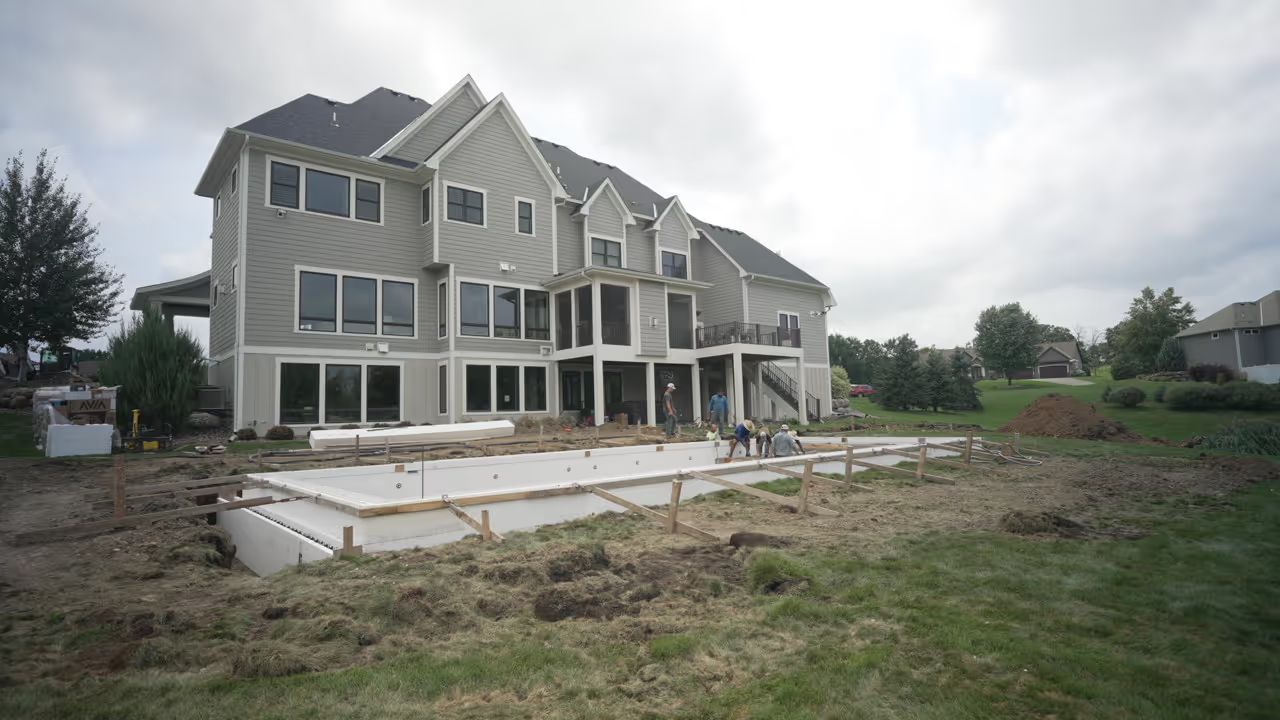
ICF installation: 1 week. ICF forms are assembled, reinforcing steel positioned, and concrete poured to create your pool walls. This is where the lifetime structural warranty begins.
Plumbing and systems: 1-2 weeks. All plumbing, electrical, and equipment installation proceeds once concrete cures.
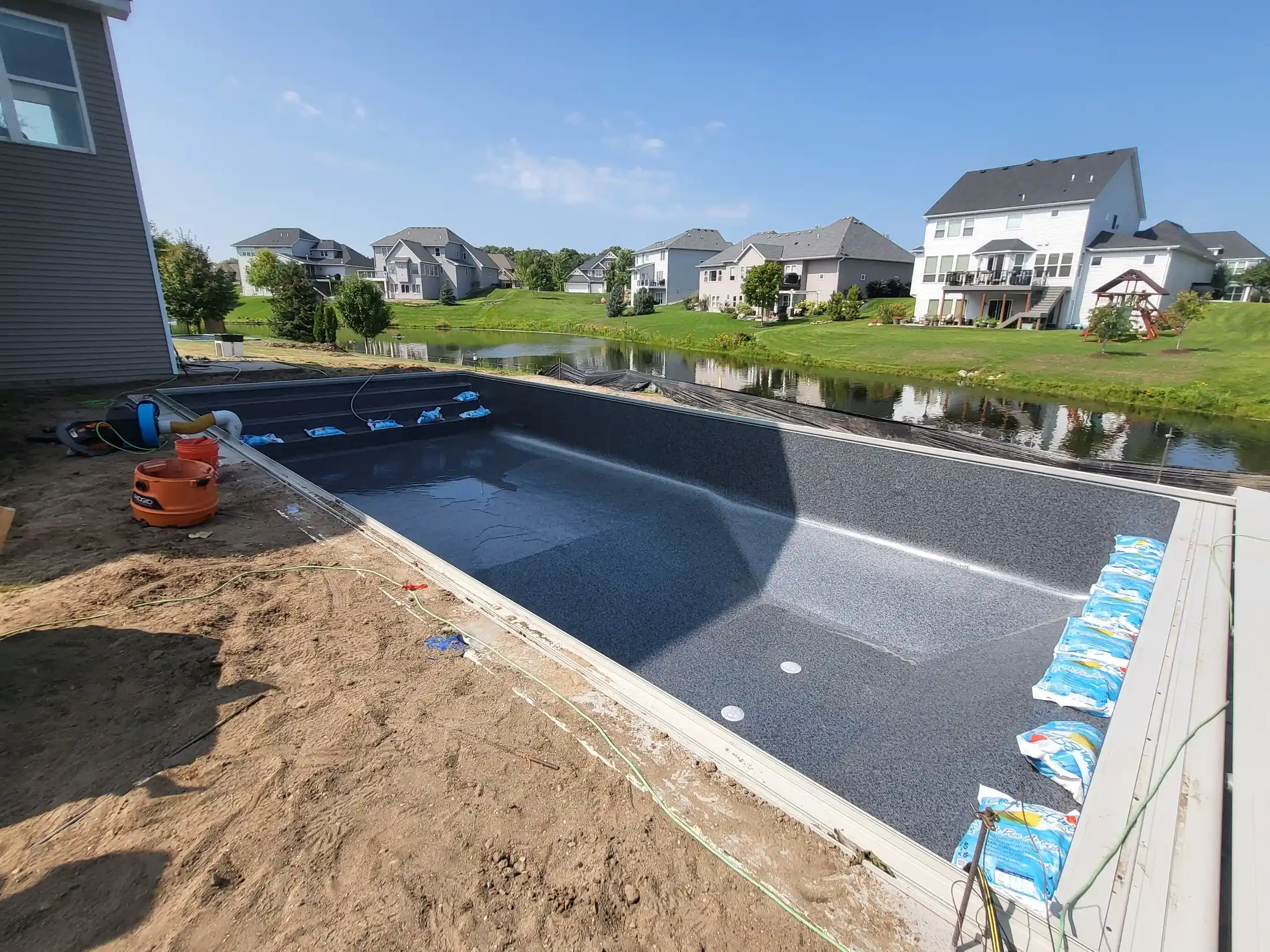
Liner and finishing: 1 week. Custom vinyl liner installation, coping, and final details complete the pool itself.
Deck and hardscape: 3-6 weeks. Same timeline as fiberglass installations.
Total realistic timeline: 12-18 weeks from contract signing to swimming. In many cases, ICF pools are completed on similar timelines to fiberglass alternatives, without the transportation risks and customization limitations.
Spring scheduling matters more than pool type. Whether you choose ICF or fiberglass, getting on a quality contractor's schedule in February or March means swimming in June. Waiting until April or May means swimming in August or September regardless of pool type.
Weather delays affect all construction. Minnesota weather doesn't respect pool type preferences. Rain delays excavation, concrete pouring, and deck installation equally for ICF and fiberglass projects.
Quality takes time. Rushing pool construction to save 2-3 weeks often leads to problems that cost years of frustration and thousands in repairs. Choose quality over speed.
Custom design adds minimal time. The time to create custom ICF pool designs (1-2 weeks) is negligible compared to the months of additional enjoyment and satisfaction a properly sized, optimally positioned pool delivers.
What happens 10, 15, or 20 years into pool ownership when something needs repair or maintenance? Your pool construction choice today determines your options and costs for decades.
Vinyl liner replacement: Every 8-12 years. This is the primary planned maintenance for ICF vinyl liner pools. Minnesota pool owners should budget $4,000-$6,000 for liner replacement approximately every decade. The process takes 1-2 days and your pool is back to like-new condition.
Equipment maintenance: Standard across all pool types. Pumps, heaters, filters, and automation systems require similar maintenance whether you have ICF, fiberglass, or steel wall construction. Quality equipment from manufacturers like Pentair and Rheem (which Plan Pools installs) delivers 10-15 years of reliable service before replacement becomes economical.
Chemical maintenance: Minimal with salt systems. Properly sized salt chlorination systems require adding salt once or twice per season and occasional monitoring—significantly less maintenance than traditional chlorine systems.
Structural maintenance: Essentially none. The lifetime structural warranty on ICF pools reflects reality: properly constructed reinforced concrete pools require no structural maintenance. Your walls last longer than your house.
Local contractor availability: Excellent. Hundreds of pool service contractors throughout the Twin Cities can service ICF vinyl liner pools. Competition keeps costs reasonable and ensures rapid response when you need help.
Gel coat maintenance: $500-$1,500 annually. Fiberglass gel coat surfaces require regular acid washing, stain removal, and careful chemical balance to prevent deterioration. Minnesota's hard water makes this more challenging and expensive than in softer water regions.
Gel coat refinishing: $8,000-$15,000 every 15-20 years. The fiberglass industry's dirty secret is that gel coat surfaces don't last forever. After 15-20 years, the gel coat becomes porous, rough, and stained. Professional refinishing requires draining the pool, grinding down the old surface, and applying new gel coat—an expensive, specialized process.
Crack and leak repairs: $3,000-$8,000 per incident. Fiberglass pools can develop stress cracks from ground movement, impact, or manufacturing defects. Repairing these cracks requires finding one of the few qualified fiberglass repair specialists in Minnesota, scheduling around their busy season, and paying premium rates for specialized skills.
Structural repairs: $15,000-$55,000 for major issues. If hydrostatic pressure lifts your fiberglass pool, or if the shell develops widespread cracking or delamination, repairs can cost more than installing a new pool. Many insurance companies won't cover these failures, considering them "maintenance issues" rather than covered incidents.
Limited contractor availability: Problematic. Minnesota has only a handful of contractors with proper fiberglass repair training and equipment. When you need help, you're at their mercy for scheduling and pricing. During peak summer season, you might wait weeks or months for repairs while your pool sits unusable.
Chemistry challenges: Ongoing costs. Fiberglass gel coat is more sensitive to chemical imbalances than vinyl liners. Maintaining perfect chemistry requires more testing, more chemical adjustments, and more knowledge—or you'll pay for professional pool service, typically $100-$200 monthly during swimming season.
Let's calculate realistic total costs for Minnesota pool owners over 20 years:
ICF Pool 20-Year Ownership (Plan Pools):
Fiberglass Pool 20-Year Ownership:
The difference: $69,000 over 20 years. That's $3,450 annually that ICF pool owners save compared to fiberglass alternatives—savings that pay for family vacations, college tuition, or retirement contributions.
Choosing between ICF pools and fiberglass pools isn't just about construction methods—it's about finding the right swimming pool contractor who will be your partner through design, construction, and decades of pool ownership.
Family-owned and operated. We're not a national franchise or corporate pool company. We're a local Minnesota family business that lives, works, and swims in the same communities we serve. We see our customers at grocery stores, youth sports, and community events—reputation matters to us.
Every employee is family staff. Unlike competitors who subcontract major portions of pool construction, every person who works on your pool is a Plan Pools employee. This ensures consistent quality, accountability, and pride in workmanship.
ICF specialization. We've built hundreds of ICF pools and perfected the process. This isn't something we dabble in—it's our core expertise. You benefit from refined systems, trained crews, and proven results.
Design-build process. Our comprehensive design-build approach means you see exactly what your pool will look like before construction begins. We create detailed 3D renderings showing your pool integrated with landscape, hardscape, and your home. No surprises, no disappointments.
Preferred partnerships. We work collaboratively with Minnesota's best landscape contractors (Minnesota Landscapes, Country Creek Builders, Neil's Outdoor Services) to ensure your entire backyard transformation occurs seamlessly. Pool, deck, landscaping, lighting, and hardscape all coordinate perfectly.
On-time, on-budget commitment. We provide fixed-price contracts with detailed specifications. What we quote is what you pay. Our 2-week construction timeline means we complete your pool quickly without sacrificing quality.
Premium equipment as standard. We include the best-value automation, pool covers, and systems without silly upcharges. Our salt water chlorination systems, Rheem heaters with copper-nickel heat exchangers, and Pentair pumps represent the best equipment available.
Lifetime structural warranty. We stand behind our ICF pool construction with a lifetime structural warranty because we know these pools will last generations.
Service commitment. Unlike competitors who become "full-service" companies serving everyone, we focus exclusively on pools we build. This ensures rapid response times and prioritizes our customers when repairs or service are needed.
Before signing with any swimming pool contractor in Minnesota, ask these critical questions:
Do you build pools in-house or subcontract? Companies using subcontractors sacrifice quality control and accountability. Insist on company employees handling your project.
How many pools have you built using this construction method? Experience matters. Contractors who've built 5-10 pools are still learning. Look for companies that have completed hundreds of projects using the construction method you're considering.
Can you show me 10-15 year old pools you've built? Young pools all look good. Mature pools reveal the quality of construction, materials, and design. Visit older projects and see how they've held up.
What's included in your base price? Beware of low initial quotes that balloon with necessary "upgrades" and add-ons. At Plan Pools, our base price includes salt systems, automation, quality equipment, and features others charge extra for.
Do you provide a fixed-price contract? Open-ended "estimates" lead to budget overruns and conflicts. Insist on fixed-price contracts with detailed specifications.
What's your warranty coverage? Understand exactly what's covered, for how long, and what exclusions apply. Lifetime structural warranties on ICF pools are standard for quality contractors.
Can you provide references from customers 5+ years after installation? Happy customers remain happy years later. Talk to long-term customers about their experience with construction, follow-up service, and whether they'd choose the same contractor again.
Do you handle permitting and city requirements? Navigating Minnesota city building departments requires experience and persistence. Your contractor should manage this process completely.
What happens if weather delays construction? Minnesota weather is unpredictable. Understand how weather delays affect timeline and completion, and ensure your contractor has contingency plans.
Do you carry proper insurance? Verify general liability and workers compensation insurance. Pool construction involves significant risk—you need protection if accidents occur.
Your family deserves a swimming pool that delivers decades of enjoyment, reasonable operating costs, and worry-free ownership. ICF pool construction offers measurable advantages over fiberglass alternatives:
Minnesota families in Eden Prairie, Lakeville, Prior Lake, Shakopee, Eagan, Maple Grove, Minnetonka, and throughout the Twin Cities metro have trusted Plan Pools for hundreds of ICF pool installations. We'd be honored to earn your business and show you what makes ICF construction the smart choice for Minnesota pool owners.
Contact Plan Pools today to schedule your free consultation. Text Joe at 952-994-6032 or visit our website to see our portfolio of completed projects. Let's create your family's backyard oasis with ICF pool construction that delivers superior performance, lasting value, and decades of Minnesota summer memories.
Explore our completed pool projects and read what our customers say about working with Plan Pools. Your backyard transformation starts here.
Plan Pools serves the Twin Cities metro area including Eden Prairie, Lakeville, Prior Lake, Shakopee, Eagan, Maple Grove, Minnetonka, Orono, Minnetrista, Blaine, Chaska, Corcoran, Dayton, Victoria, Elko New Market, Farmington, Jordan, New Prague, Northfield, Rosemount, Stillwater, and Woodbury. We're Minnesota's leading ICF pool contractor, specializing in energy-efficient, custom-designed swimming pools built to last generations.