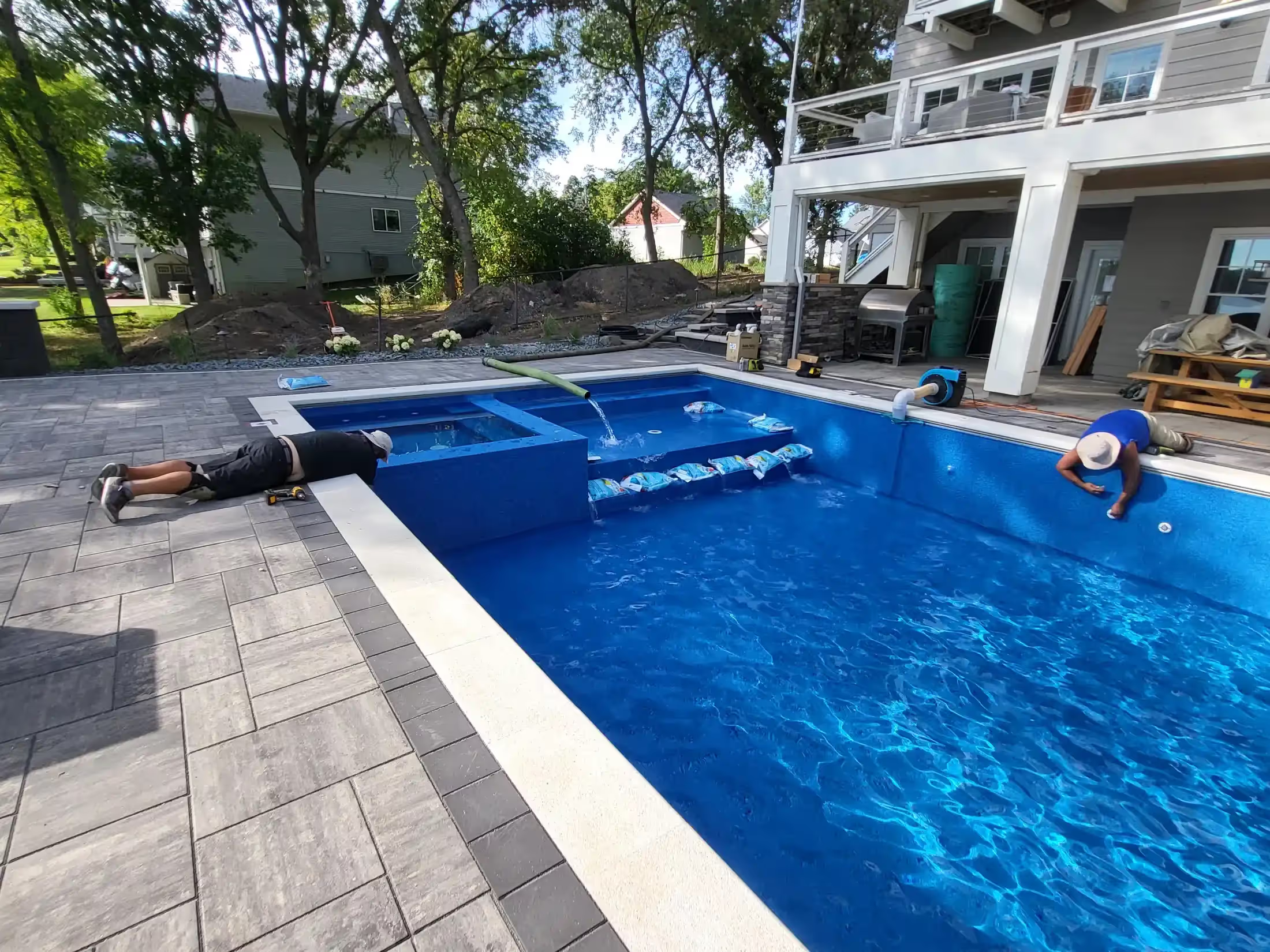
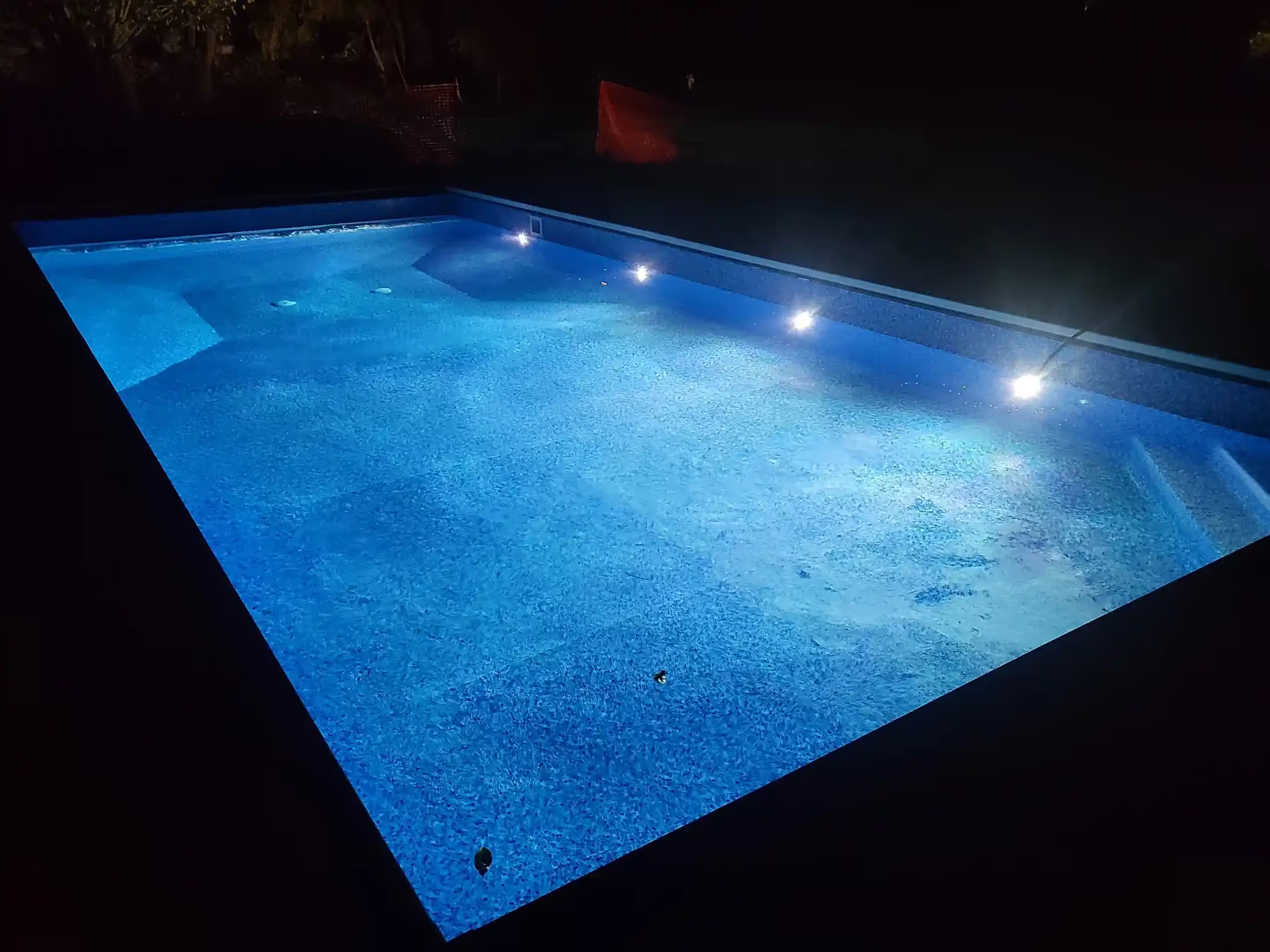
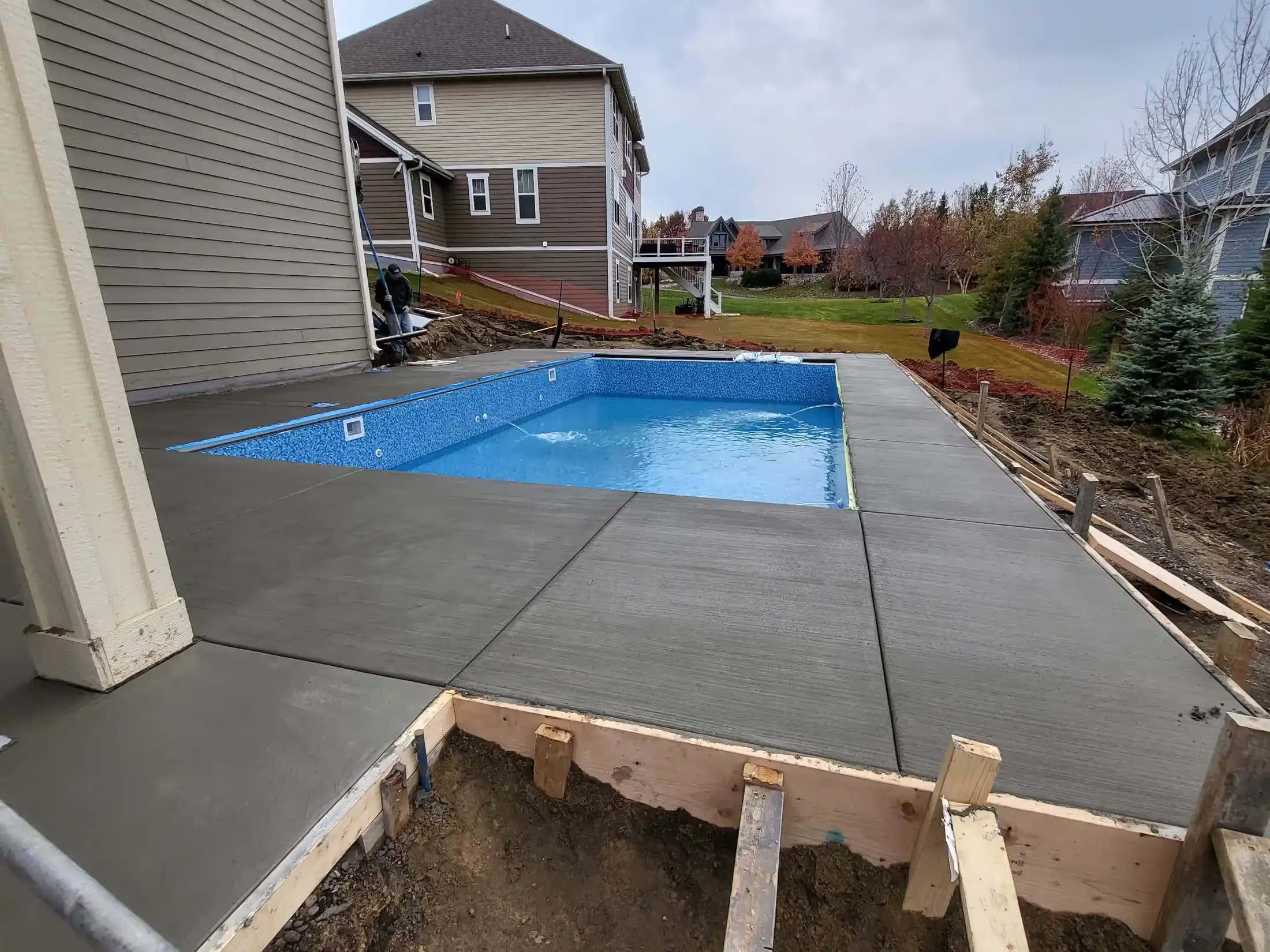
Learn ho hard water impacts your Minnesota pool.
If you've spent any time researching pool ownership, you've probably encountered countless articles about pool water chemistry. But here's what most of those generic guides won't tell you: Minnesota's water fundamentally changes the pool chemistry equation.
At Plan Pools, we've helped hundreds of Twin Cities pool owners understand why their water chemistry behaves differently than what they read in national pool care guides written for Arizona or Florida. Minnesota's famously hard water creates unique challenges—and once you understand them, they're entirely manageable.
Minnesota's groundwater is exceptionally hard, particularly in the Twin Cities metro area and southern Minnesota. Water hardness refers to dissolved calcium and magnesium content, measured in grains per gallon (gpg) or parts per million (ppm).
Typical Minnesota Water Hardness:
For Context:
Minnesota water isn't just hard—it's very hard to extremely hard across most of the state. This matters enormously for pool water chemistry.
Calcium and magnesium dissolved in your fill water don't disappear when you add that water to your pool. They remain in solution, affecting:
Understanding Minnesota's hard water is the foundation of successful pool chemistry management.
While there are many parameters to monitor in pool water, three are most affected by Minnesota's water conditions:
pH (Target: 7.4-7.6)
pH measures water's acidity or alkalinity on a 0-14 scale. For pools, proper pH is critical because:
Minnesota's hard water naturally wants to push pH higher. The calcium and magnesium act as pH buffers, making water more alkaline. You'll fight an ongoing battle to keep pH from creeping upward.
Total Alkalinity (Target: 80-120 ppm)
Total alkalinity (TA) measures water's ability to resist pH changes. It acts as a pH buffer:
Minnesota's hard water often comes with elevated alkalinity. Many Twin Cities homeowners find their fill water has alkalinity of 150-250 ppm or higher. This creates an immediate challenge when filling a new pool.
Calcium Hardness (Target: 200-400 ppm)
Calcium hardness measures dissolved calcium in water. Proper calcium levels protect pool surfaces and equipment:
Minnesota fill water often contains 200-400+ ppm calcium hardness. You're starting at or above the recommended range before adding any chemicals.
The Langelier Saturation Index (LSI) predicts whether water will be scale-forming, balanced, or corrosive. It considers:
LSI Results:
Here's the Minnesota problem: Start with hard water (high calcium), add natural alkalinity (high TA), and Minnesota water chemistry naturally creates positive LSI—meaning your water wants to form scale.
During summer when water temperatures rise, the LSI becomes even more positive, increasing scaling tendency. This is why you see white scale lines on Minnesota pool tiles and why heaters fail prematurely in hard water areas.
The Problem:
You test your water and pH is 7.8. You add acid to lower it to 7.4. Three days later, it's back to 7.8. This cycle repeats endlessly.
Why It Happens in Minnesota:
High alkalinity in Minnesota water resists pH changes. When you add acid, you temporarily lower pH, but the buffering capacity of high alkalinity pulls pH back upward. Additionally, as your pool water loses CO2 to the atmosphere (especially with aeration from waterfalls, jets, or fountains), pH naturally rises.
The Solution:
The Problem:
White crusty deposits form along the waterline, on tile, inside heaters, and on salt cell plates. Surfaces feel rough rather than smooth.
Why It Happens in Minnesota:
When water is saturated with calcium (which Minnesota water often is), any factor that drives positive LSI causes calcium to precipitate as scale:
Minnesota pools face all these factors, especially during summer.
The Solution:
The Problem:
Your chlorine levels are perfect, pH is in range, yet water remains slightly cloudy or hazy rather than crystal clear.
Why It Happens in Minnesota:
High calcium hardness can cause cloudiness when water is at the edge of saturation. Very fine calcium carbonate particles remain suspended, creating haze. High TDS (total dissolved solids) from hard water minerals can also cause cloudiness.
The Solution:
The Problem:
Brown, green, or blue-green stains appear on pool surfaces, especially in corners, near returns, or in low-flow areas.
Why It Happens in Minnesota:
Minnesota water often contains iron, manganese, and copper that can cause staining:
Hard water exacerbates metal staining because the high pH and alkalinity typical of Minnesota water can cause metals to oxidize and precipitate on surfaces.
The Solution:
The Problem:
Your salt chlorine generator displays error messages, produces less chlorine, or the cell develops thick white scale buildup requiring frequent cleaning.
Why It Happens in Minnesota:
Salt chlorine generators (like the premium systems Plan Pools installs as standard) produce chlorine through electrolysis. This process locally raises pH near the cell plates to very high levels (pH 10-12). In Minnesota's hard water, this extreme pH causes rapid calcium precipitation on the cell plates.
The Solution:
Water chemistry needs change throughout our compressed pool season:
Challenges:
Focus:
Minnesota Consideration: Spring fill water may be different from municipal water during rest of year due to treatment changes. Test everything, don't assume.
Challenges:
Focus:
Minnesota Consideration: This is when hard water issues peak. Stay vigilant about pH control and scaling prevention.
Challenges:
Focus:
Minnesota Consideration: Proper closing chemistry is critical for Minnesota winters. Ensure calcium hardness is in range, pH is balanced, and alkalinity is appropriate before closing.
Because Minnesota's hard water means you're constantly adding calcium with every top-off, calcium hardness inevitably climbs over time. There are only two solutions:
When: When calcium hardness exceeds 500 ppm or when TDS is excessive (typically >2,000 ppm above your source water TDS)
Process:
Timing: Best done in spring during opening or fall before closing, never during peak summer.
Minnesota Consideration: Consider where drained water will go and local discharge regulations. Never drain a pool if high groundwater could cause structural issues (less concern with ICF pools from Plan Pools, which have superior structural strength).
What It Is: Specialty service providers bring RO filtration to your property and filter your pool water on-site, removing minerals and reducing calcium hardness without draining.
Advantages:
Disadvantages:
When to Consider: For pools where calcium exceeds 600 ppm, TDS is very high, or when drain/refill isn't practical.
Not all pool chemicals work equally well in hard water. Here's what performs best in Minnesota conditions:
Muriatic Acid (Hydrochloric Acid): Most effective and economical for lowering both pH and alkalinity. Use 15-20% concentration. Available at any pool supply store.
Dry Acid (Sodium Bisulfate): Easier to handle than muriatic acid but more expensive and less effective. Use when you need to lower pH without significantly affecting alkalinity.
CO2 Injection: Expensive and complex but highly effective for commercial pools or residential pools with persistent pH problems.
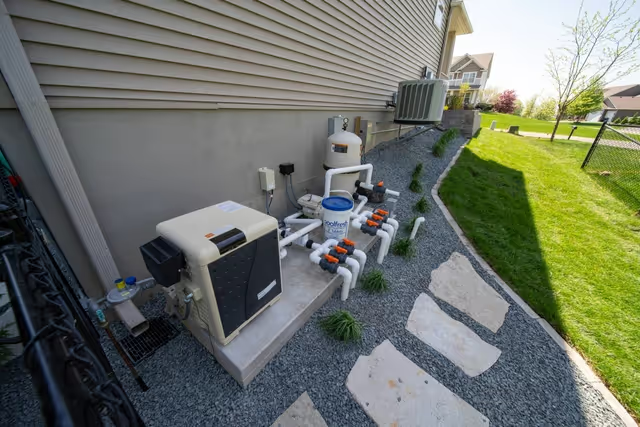
Salt Chlorine Generators: Plan Pools installs these as standard because they work beautifully in Minnesota despite hard water. Modern systems have features specifically for hard water areas.
Liquid Chlorine (Sodium Hypochlorite): Excellent choice for weekly shock treatments. Doesn't add calcium or cyanuric acid. Raises pH slightly.
Cal-Hypo (Calcium Hypochlorite): Effective shock treatment but adds calcium to your already-hard water. Use sparingly in Minnesota.
Trichlor Tablets: Convenient but acidic (lowers pH) and adds cyanuric acid. Good for daily chlorination if not using salt system.
Muriatic Acid: Lowers both TA and pH simultaneously. Careful dosing required.
Sodium Bicarbonate (Baking Soda): Raises alkalinity with minimal pH impact. Useful when TA is low (rare in Minnesota).
No chemical adds calcium without consequences. If calcium is low (extremely rare in Minnesota), calcium chloride can be used, but verify calcium is actually low before adding any.
For high calcium: Only solution is dilution through partial water replacement.
Metal Sequestrants: Products like MetalFree, Stain & Scale, or similar products keep metals in solution. Essential for Minnesota pools, especially those filled with well water.
Enzyme-Based Clarifiers: Help remove oils and organics that can cause cloudiness in hard water.
Scale Inhibitors: Specialty products that help prevent calcium precipitation. Many quality pool maintenance programs include these.
Weekly Testing:
Monthly Testing:
Seasonal Testing:
Test Strips: Convenient but less accurate. Good for quick daily checks but not for decision-making about chemical additions.
Liquid Test Kits (Taylor or similar): Much more accurate. Essential for pH, alkalinity, and chlorine. Worth the investment.
Digital Testers: Very accurate for specific parameters (pH, ORP, salt). Can be expensive but valuable for serious pool maintenance.
Professional Lab Testing: Consider comprehensive professional testing once or twice per season to verify your home testing accuracy and catch issues you might miss.
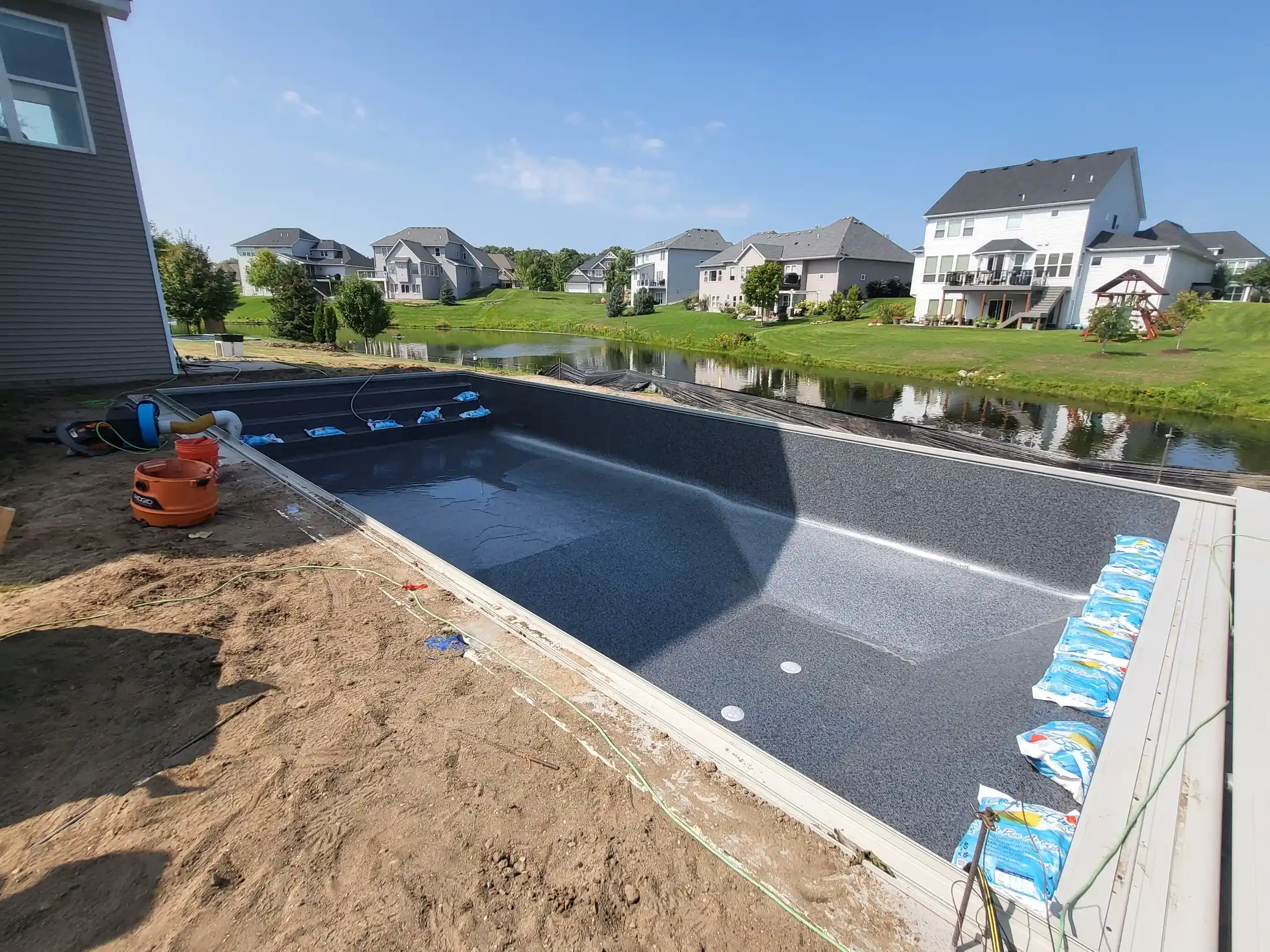
Vinyl Liners: Less susceptible to scaling than plaster but can still develop waterline scale. Easier to clean but can be damaged by aggressive acid cleaning.
Plan Pools uses premium vinyl liners that resist staining and are easy to maintain even in hard water conditions.
Plaster: More susceptible to scaling and staining. Calcium scale can bond to plaster surface. May require periodic acid washing.
Aggregate Finishes (Pebble, Quartz): Generally more resistant to staining and scaling than plaster. Rougher texture hides minor scale better but can be harder to clean.
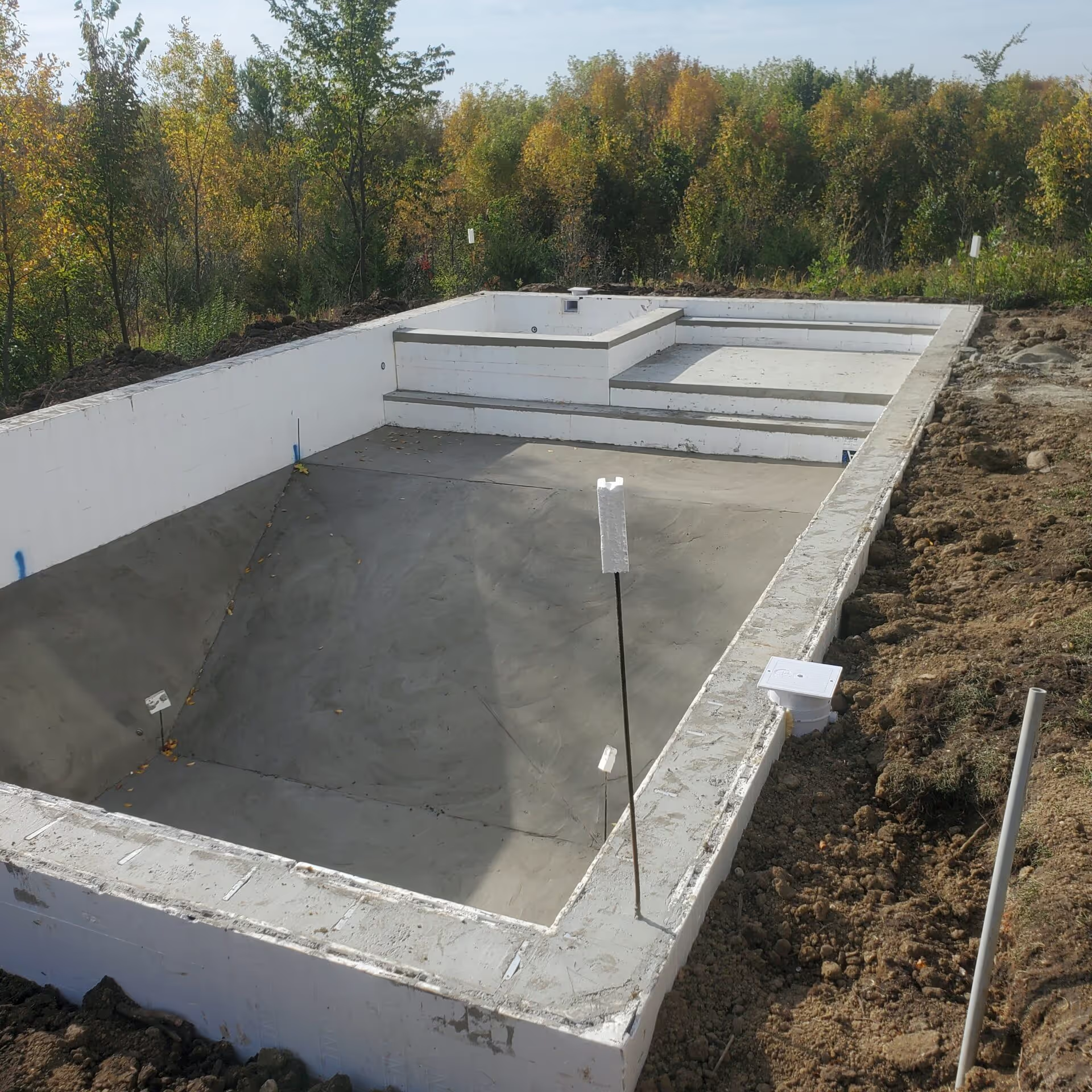
Plan Pools' ICF (Insulated Concrete Form) construction provides superior protection against Minnesota's hard water challenges:
No Metal Corrosion: Unlike steel wall pools, ICF construction eliminates the risk of rust stains from corroding steel walls leaching into your water.
Better Surface Adhesion: Properly installed liners over ICF walls have excellent adhesion, reducing the risk of staining between liner and wall.
Structural Integrity: Hard water-induced scaling problems never compromise the pool structure itself with ICF construction, whereas steel walls can be weakened by corrosion.
Minnesota's hard water creates chemistry challenges that pool owners in soft water areas don't face. But with proper understanding and consistent attention, hard water pools can be crystal clear, comfortable, and problem-free.
The keys to success:
Remember, hard water isn't bad water—it's just different. With the right approach, your Minnesota pool will provide decades of beautiful, clear water for your family's enjoyment.
Generally no. While water softeners remove calcium and magnesium (good), they replace them with sodium (problematic). High sodium levels can damage pool surfaces and equipment. It's better to manage hardness through proper pool chemistry than to soften fill water.
Most Minnesota pools benefit from partial drain/refill every 3-5 years, or when calcium hardness exceeds 500 ppm or TDS is very high. Pools with quality construction like Plan Pools' ICF systems can go longer between water replacement because proper chemical management is easier.
Yes, but test it first. Well water often has high iron, manganese, or other metals that can cause staining. Use a pre-filter with metal-removing media when filling, and add metal sequestrant before filling to prevent staining.
Minnesota's hard water has high alkalinity that constantly pushes pH upward. You'll use more acid than pool owners in soft water areas. This is normal. Focus on lowering total alkalinity to reduce ongoing acid demand.
Hard water can cause scale buildup in heaters, salt cells, and other equipment, reducing efficiency and lifespan. Proper water balance and use of scale inhibitors protects equipment. Quality equipment like Plan Pools installs is designed to handle hard water conditions.
Understanding Minnesota's hard water is just one aspect of successful pool ownership. At Plan Pools, we design and build pools specifically for Minnesota conditions, using ICF construction that eliminates many of the problems associated with hard water while providing superior insulation and durability.
When you choose Plan Pools, you get:
Ready to enjoy a beautiful Minnesota pool without fighting water chemistry problems? Contact Plan Pools today. We'll show you how our ICF construction and premium equipment make pool ownership easier and more enjoyable, even with Minnesota's hard water.
Because the best pools aren't just built to look beautiful—they're engineered to stay beautiful with minimal effort, season after season, in the real-world conditions of Minnesota. That's the Plan Pools difference.