Should you install a gas or electric heater in your pool? Consider the pros and cons.
Every Minnesota pool owner faces the same reality: our short swimming season and cool nights mean comfortable pool temperatures don't happen naturally. You need a reliable heating system. But which type is right for Minnesota's unique climate conditions?
At Plan Pools, we've installed hundreds of pool heating systems throughout the Twin Cities metro area, and we've tracked their real-world performance across our brutally cold springs, pleasant summers, and chilly falls. The "best" heater isn't the same for every pool owner—it depends on how you use your pool, your budget, and your construction method.
Here's everything Minnesota pool owners need to know about choosing the right pool heater for our climate.
Let's be honest about Minnesota pool temperatures without heating:
May: Water temperatures naturally reach 60-68°F. That's uncomfortably cold for most swimmers. Kids might tolerate it briefly, but adults won't enjoy extended swimming.
June: Unheated pools warm to 70-75°F by mid-month. This is tolerable but not ideal, especially during cool stretches or evening swimming.
July-August: Peak temperatures of 76-82°F in unheated pools. Comfortable during hot sunny days, but cool evenings drop water temperature quickly.
September: Water temperatures fall back to 68-72°F as air temperatures cool. Without heating, the season effectively ends by Labor Day.
With quality heating, you can maintain 80-84°F from May through September, extending your season by 4-6 weeks and making every swim comfortable regardless of air temperature.
This is critical: your pool's construction determines how much heating capacity you need and which heater type works best.
Steel Wall Pools:
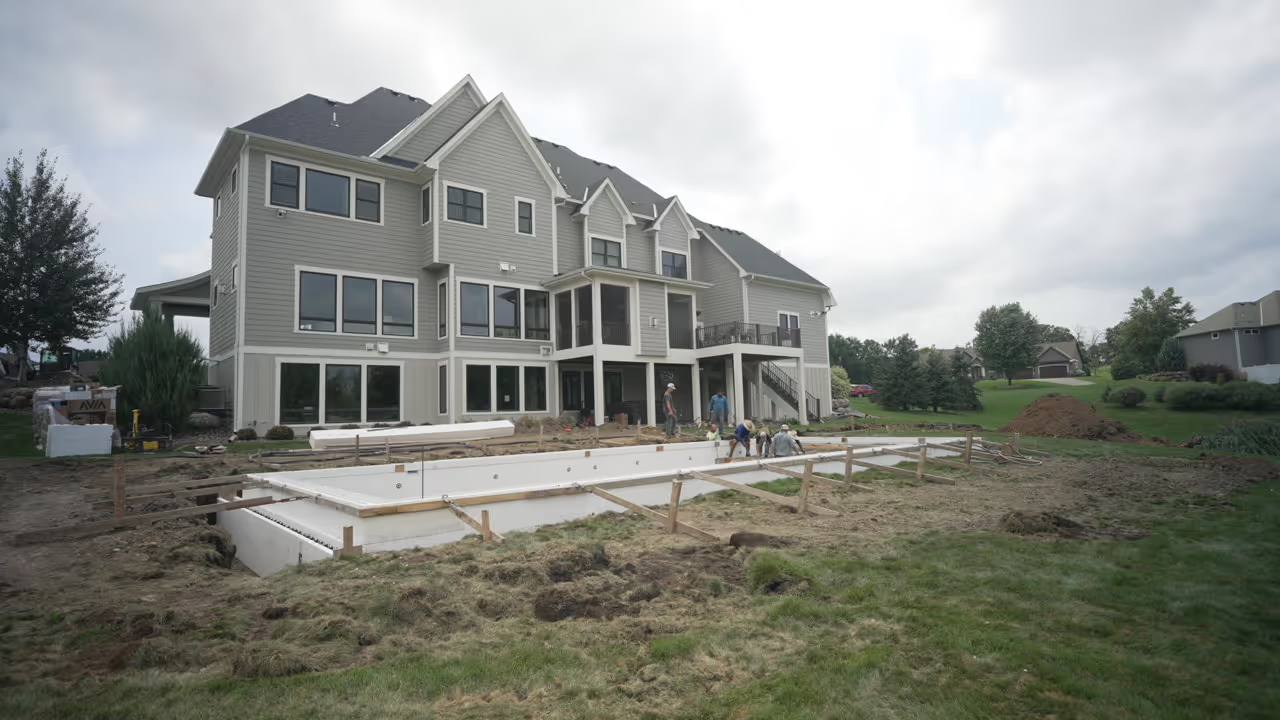
ICF Pools from Plan Pools:
Your heating system choice should be made in conjunction with construction method. The best heater for a steel wall pool is different from the best heater for an ICF pool—and more importantly, ICF construction makes all heater types more effective and economical.
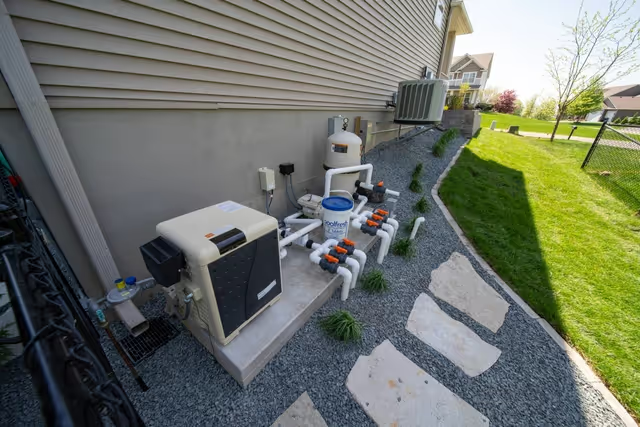
Gas heaters burn natural gas or propane to heat water flowing through a copper or titanium heat exchanger. They're the traditional choice for pool heating and remain popular despite higher operating costs.
Heat Output: Measured in BTUs (British Thermal Units). Typical residential gas heaters range from 150,000 to 400,000 BTUs.
Temperature Rise: Gas heaters can raise pool temperature 1-2°F per hour (depending on heater size, pool volume, and conditions). This is significantly faster than heat pumps.
Fuel Source: Natural gas (preferred if available) or propane (more expensive but available anywhere)
Rapid Heating: This is the gas heater's killer advantage. When you decide on a Friday afternoon that you want to swim Saturday, a gas heater can take your pool from 68°F to 82°F overnight. Heat pumps would take 2-3 days to accomplish the same temperature rise.
For Minnesota pool owners who use their pool sporadically or want the ability to heat quickly for special occasions, this speed is invaluable.
Effectiveness in Cold Weather: Gas heaters work efficiently regardless of air temperature. They'll heat your pool just as effectively in 50°F May weather as in 80°F July conditions. This makes them ideal for shoulder season use—extending your swimming season into cool spring and fall months.
Heat pumps, by contrast, become dramatically less efficient as air temperature drops, making them problematic for May and September swimming in Minnesota.
No Temperature Floor: Gas heaters will heat your pool from any starting temperature. Whether your water is 55°F (early spring) or 75°F (summer), the gas heater performs consistently.
Independence from Weather: A string of cloudy, cool days doesn't affect gas heater performance. You get consistent heating capability regardless of outdoor conditions.
Proven Technology: Gas heaters are mature, well-understood technology. Any pool technician can service them, parts are readily available, and reliability is excellent with quality units.
High Operating Costs: This is the major drawback. Natural gas or propane heating is expensive, especially when heating inefficient steel wall pools.
Typical Costs for Minnesota Pools:
Steel Wall Pool (16x32, poorly insulated):
ICF Pool from Plan Pools (16x32, well insulated):
Even with ICF construction reducing costs by 60%, gas heating remains the most expensive option for daily operation.
Environmental Impact: Gas heaters burn fossil fuels, producing carbon emissions. For environmentally conscious homeowners, this may be a consideration.
Higher Maintenance: Gas heaters require annual service to ensure safe operation:
Neglected gas heaters can develop dangerous carbon monoxide leaks or fail prematurely.
Shorter Lifespan: Gas heaters typically last 7-12 years with proper maintenance—shorter than heat pumps (12-20 years). The constant thermal cycling and combustion process stress components.
Gas heaters make sense for:
Weekend/Occasional Pool Users: If you use your pool sporadically rather than daily, gas heaters' rapid heating ability outweighs higher operating costs.
Shoulder Season Extension Seekers: If you want to swim in May and September when air temperatures are cool, gas heaters' consistent performance in cold weather is essential.
Those with Natural Gas Service: Natural gas is significantly cheaper than propane. If you already have natural gas service to your home, adding a gas pool heater is relatively straightforward and more economical.
Owners Prioritizing Flexibility: If you want the ability to heat your pool on-demand without planning days ahead, gas heating provides unmatched responsiveness.
ICF Pool Owners Who Heat Occasionally: With Plan Pools' superior insulation, gas heating becomes much more affordable. You can heat quickly when desired, then rely on the insulation to maintain temperature with minimal ongoing heating.
Heat pumps don't generate heat—they move it. They extract heat from the air and transfer it to your pool water, similar to how an air conditioner works in reverse.
COP (Coefficient of Performance): Heat pumps are rated by COP, which measures how many units of heat energy they produce per unit of electricity consumed. Modern heat pumps achieve COPs of 5.0-6.5, meaning they produce 5-6.5 BTUs of heat for every BTU of electricity used.
Heat Output: Measured in BTUs, but delivered more slowly than gas heaters. Typical residential heat pumps range from 50,000 to 140,000 BTUs.
Temperature Rise: Heat pumps raise pool temperature 0.5-1°F per hour under ideal conditions. They're much slower than gas heaters.
Low Operating Costs: This is the heat pump's primary advantage. While they cost more upfront, operating costs are dramatically lower than gas heating.
Typical Costs for Minnesota Pools:
Steel Wall Pool (16x32):
ICF Pool from Plan Pools (16x32):
With ICF construction, heat pump operating costs become remarkably affordable—less than half the cost of gas heating and a fraction of the cost of heating a steel wall pool with any method.
Long Lifespan: Quality heat pumps last 12-20 years with proper maintenance. This offsets their higher initial cost through extended service life.
Environmentally Friendly: Heat pumps use electricity but don't directly burn fossil fuels. If you have solar panels or choose renewable electricity sources, heat pump operation can be very low-carbon.
Quiet Operation: Modern heat pumps operate at 50-65 decibels—similar to normal conversation. Much quieter than older models and less intrusive than gas heater combustion noise.
Lower Maintenance: Heat pumps have fewer components subject to wear than gas heaters. Annual maintenance is simpler and less critical, though still recommended.
Temperature-Dependent Performance: This is the critical limitation for Minnesota: heat pumps become dramatically less efficient as air temperature drops.
Heat Pump Performance by Air Temperature:
In Minnesota's May and September weather (often 50-65°F), heat pumps struggle. They'll still heat your pool, but slowly and inefficiently. For early spring heating from cold water (55-60°F), heat pumps may take a week or more to reach comfortable temperatures.
Slow Heating Speed: Even under ideal conditions, heat pumps take 2-4 times longer than gas heaters to raise pool temperature. If you want to heat your pool for weekend guests, you need to start heating Tuesday or Wednesday, not Friday.
Higher Initial Cost: Quality heat pumps cost $3,500-$6,000 installed versus $2,500-$4,500 for gas heaters. The payback period through lower operating costs is 3-6 years depending on usage patterns.
Size Matters More: Heat pumps must be properly sized for your pool volume and climate. Undersized heat pumps will struggle to maintain temperature during cool stretches. Oversizing is often wise in Minnesota to compensate for reduced capacity during cool weather.
Not Ideal for Intermittent Use: Heat pumps work best when run continuously to maintain temperature rather than heating on-demand. If you use your pool sporadically, the slow heating speed is frustrating.
Heat pumps make sense for:
Daily Pool Users: If you swim frequently throughout the summer, heat pumps' low operating costs provide excellent value. Set your desired temperature in June and maintain it through August economically.
Budget-Conscious Operators: If ongoing costs matter more than upfront investment, heat pumps deliver the lowest lifetime heating expenses.
Peak Season Focus: If you primarily swim during July and August (warmest months when heat pumps work most efficiently), they're an excellent choice.
ICF Pool Owners: This is crucial—heat pumps shine with Plan Pools' ICF construction. The superior insulation means you heat once and maintain temperature easily, playing to the heat pump's strengths while minimizing its slow-heating weakness.
Environmental Priority: If reducing carbon footprint matters, heat pumps (especially when powered by renewable electricity) are the greenest choice.
Combination System Users: Many Minnesota pool owners pair a heat pump (for daily operation) with a smaller gas heater (for shoulder season boost or quick temperature recovery). This provides efficiency with flexibility.
Electric resistance heaters use electrical elements (similar to an electric water heater) to heat pool water directly. They're simple, reliable, and rarely the right choice for full-size Minnesota pools.
Small Therapy Spas: For dedicated therapy spas (300-500 gallons), electric resistance heating can be cost-effective and appropriately sized.
Indoor Pools: In fully enclosed, climate-controlled indoor pool environments, electric resistance heating may be viable as water loss and heat loss are minimal.
Supplemental Heating: Occasionally used as backup or supplemental heating alongside a primary system.
Extremely High Operating Costs: Electric resistance heating costs 4-6 times more than heat pumps and 2-3 times more than gas heating for the same heat output.
Insufficient Capacity: Even large electric resistance heaters struggle to heat full-size pools quickly enough for practical use.
High Electrical Demands: Require substantial electrical service (often 50-100 amp circuits), which may require panel upgrades.
Better Alternatives Exist: For any application where electric resistance seems viable, a heat pump delivers the same benefits at a fraction of operating cost.
Plan Pools does not recommend or install electric resistance heaters for outdoor Minnesota pools. The economics simply don't make sense.
We covered solar heating extensively in a previous blog post, but here's the summary in context of choosing your primary heating system:
Solar's Role in Minnesota:
Solar as Primary Heating: Not recommended for Minnesota. Too weather-dependent and ineffective during shoulder season when heating is most needed.
Solar as Supplemental Heating: Can reduce operating costs of gas or heat pump systems during peak season. Best results when combined with ICF construction that retains solar-gained heat.
Investment Priority: If budget is limited, invest in quality primary heating (gas or heat pump) and ICF construction first. Add solar supplementation later if desired.
Many Plan Pools customers choose combination heating systems that provide flexibility:
The System:
Advantages:
Who It's For:
Typical Costs:
The System:
Advantages:
Who It's For:
Typical Costs:
The System:
Advantages:
Who It's For:
Typical Costs:
Proper heater sizing is critical. Undersized heaters struggle to maintain temperature during cool weather; oversized heaters waste money on unnecessary capacity.
Pool Volume: More water requires more heating capacity. A 16x32 pool (approximately 16,000 gallons) needs roughly 250,000-300,000 BTU gas heater or 100,000-120,000 BTU heat pump.
Desired Temperature Rise: Heating from 60°F to 80°F requires more capacity than maintaining 80°F once achieved.
Expected Weather Conditions: Minnesota's cool springs and falls require more heating capacity than peak summer.
Construction Method: This is huge: steel wall pools need 40-60% more heating capacity than ICF pools to achieve the same results due to constant heat loss. If your contractor sizes a heater based on pool volume alone without considering insulation, they're doing you a disservice.
Wind Exposure: Pools in exposed, windy locations lose more heat through evaporation and convection.
Pool Cover Usage: Pools with quality covers (like the automated safety covers Plan Pools includes as standard) retain heat much better, reducing required heater capacity.
Gas Heaters (ICF Pools):
Gas Heaters (Steel Wall Pools):Add 40-50% capacity to compensate for heat loss:
Heat Pumps (ICF Pools):
Heat Pumps (Steel Wall Pools):Many contractors try to sell undersized heat pumps for steel wall pools. Don't accept it. Steel wall pools need substantially larger heat pumps (or shouldn't use heat pumps at all):
Important: These are guidelines. Plan Pools performs detailed heat loss calculations specific to your pool, property conditions, and usage patterns to recommend optimal heater sizing.
Gas Heaters:
Heat Pumps:
Gas Heaters:
Heat Pumps:
Minnesota follows National Electrical Code and local amendments for pool equipment installation. Plan Pools handles all permitting, code compliance, and inspections, ensuring your heating system meets all requirements.
Key Requirements:
Modern pool automation systems (available as upgrades through Plan Pools) allow smartphone control of heating:
This is particularly valuable for heat pump users, who can start heating several days before pool use, or for vacation home owners who want the pool ready when they arrive.
Annual Service (Fall):
Owner Maintenance:
Lifespan Factors:
Annual Service (Spring):
Owner Maintenance:
Lifespan Factors:
Both gas heaters and heat pumps must be properly winterized in Minnesota:
Gas Heaters:
Heat Pumps:
Proper winterization prevents freeze damage that can destroy a heater in a single cold night.
Let's compare real-world costs over 10 years of Minnesota pool ownership:
Initial Costs:
Annual Costs:
10-Year Costs:
Initial Costs:
Annual Costs:
10-Year Costs:
Savings vs. Gas: $16,500
Initial Costs:
Annual Costs:
10-Year Costs:
Savings vs. Steel/Gas: $11,500Value beyond cost: Rapid heating, shoulder season capability, lifetime structural warranty
Initial Costs:
Annual Costs:
10-Year Costs:
Savings vs. Steel/Gas: $23,000Savings vs. Steel/Heat Pump: $6,500Value beyond cost: Lowest operating costs, environmentally friendly, quiet operation
ICF construction combined with heat pump heating delivers the lowest 10-year ownership costs while providing superior pool performance, extended season capability, and lifetime structural warranty.
The investment in ICF construction pays for itself within 4-5 years through heating savings alone, then continues saving money for decades.
No. Pool heaters require professional installation for safety, code compliance, and warranty validity. Gas heaters involve combustion and gas lines (dangerous if incorrect). Heat pumps require substantial electrical work. DIY installation voids warranties and creates serious safety hazards.
Gas Heater: 8-24 hours to raise temperature 15-20°F depending on heater size and pool volume
Heat Pump: 2-4 days to raise temperature 15-20°F depending on air temperature and unit size
ICF vs. Steel Wall: ICF pools heat faster because energy goes into warming water rather than fighting heat loss through walls
Heat Pumps: Yes, typically run continuously during pool season to maintain temperature. More efficient than heating/cooling cycles.
Gas Heaters: No, typically run only when needed due to high operating costs. With ICF construction and good cover, can heat once and maintain for days without additional heating.
Most comfortable range is 80-84°F. Personal preference varies:
Yes! Quality automated safety covers (included with Plan Pools installations) reduce heat loss by 70-95% overnight. They're the single most cost-effective heating accessory, often paying for themselves within 3-5 years through reduced heating costs.
Yes, but your heater type matters:
The "best" pool heater for Minnesota isn't a one-size-fits-all answer. It depends on:
Your Usage Pattern:
Your Budget:
Your Season:
Your Pool Construction:
The single most important decision isn't which heater to buy—it's whether to build with ICF construction. ICF pools from Plan Pools make all heating systems more effective, more economical, and more environmentally friendly.
A heat pump on an ICF pool delivers lower heating costs than any heater on a steel wall pool, while providing superior comfort, extended season, and decades of reliable performance.
Ready to build a pool that's economical to heat and comfortable all season? Contact Plan Pools today. We'll design a heating system tailored to your usage patterns, budget, and goals—backed by ICF construction that makes heating affordable year after year.
Because the best heating system starts with building your pool right. That's the Plan Pools difference, proven by hundreds of satisfied customers throughout Lakeville, Prior Lake, Eden Prairie, Maple Grove, Stillwater, and the entire Twin Cities metro area.