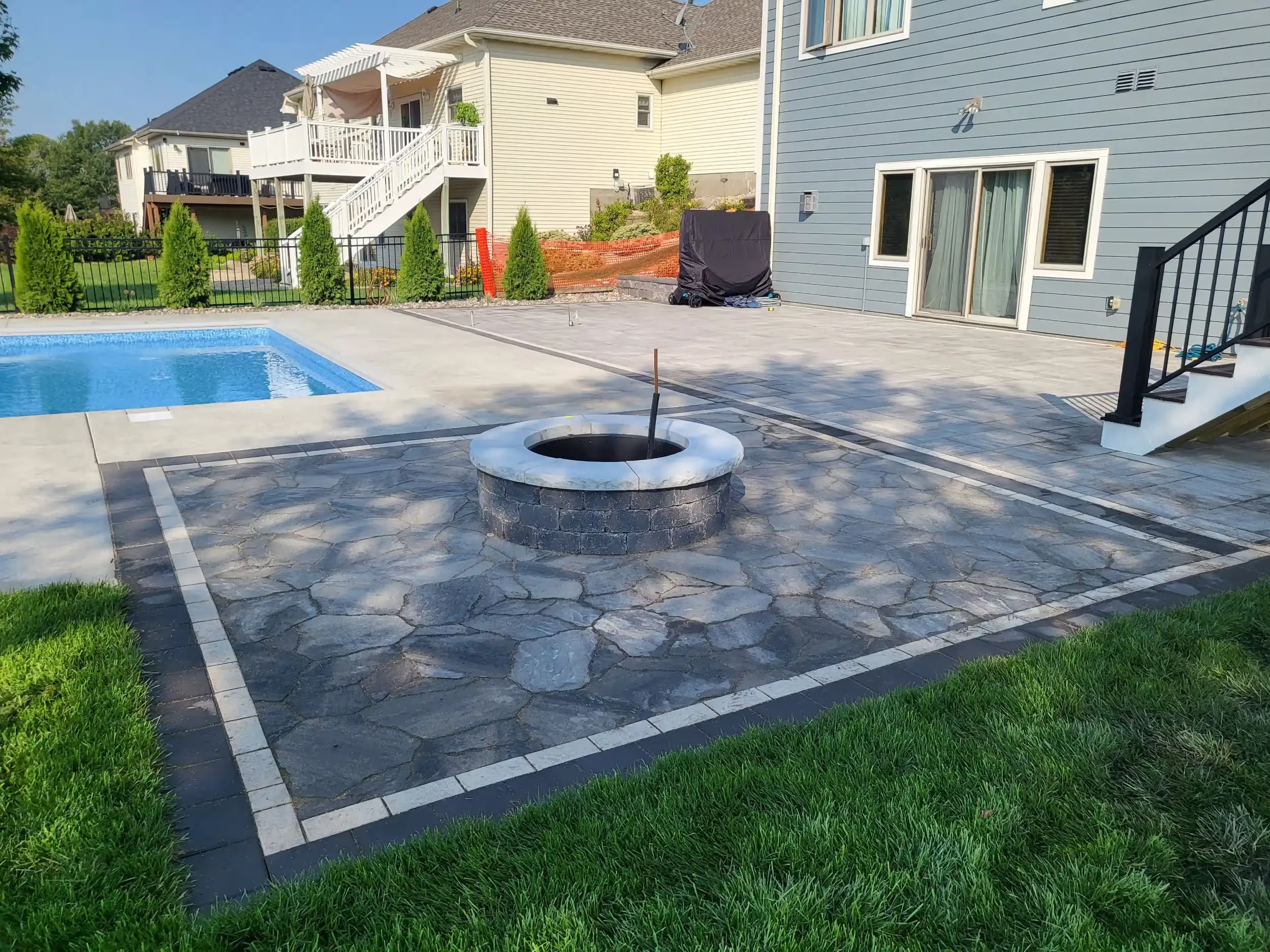
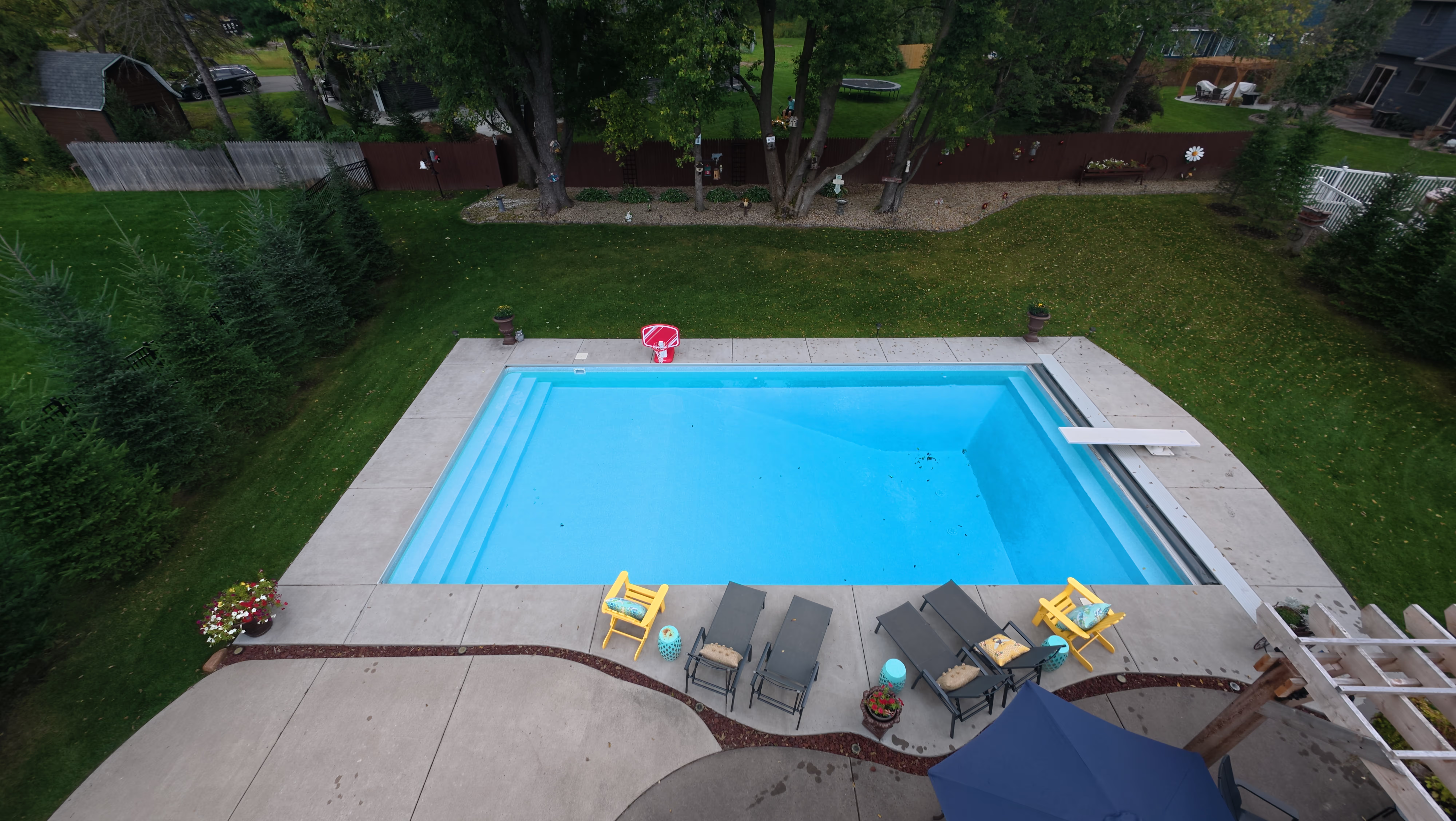
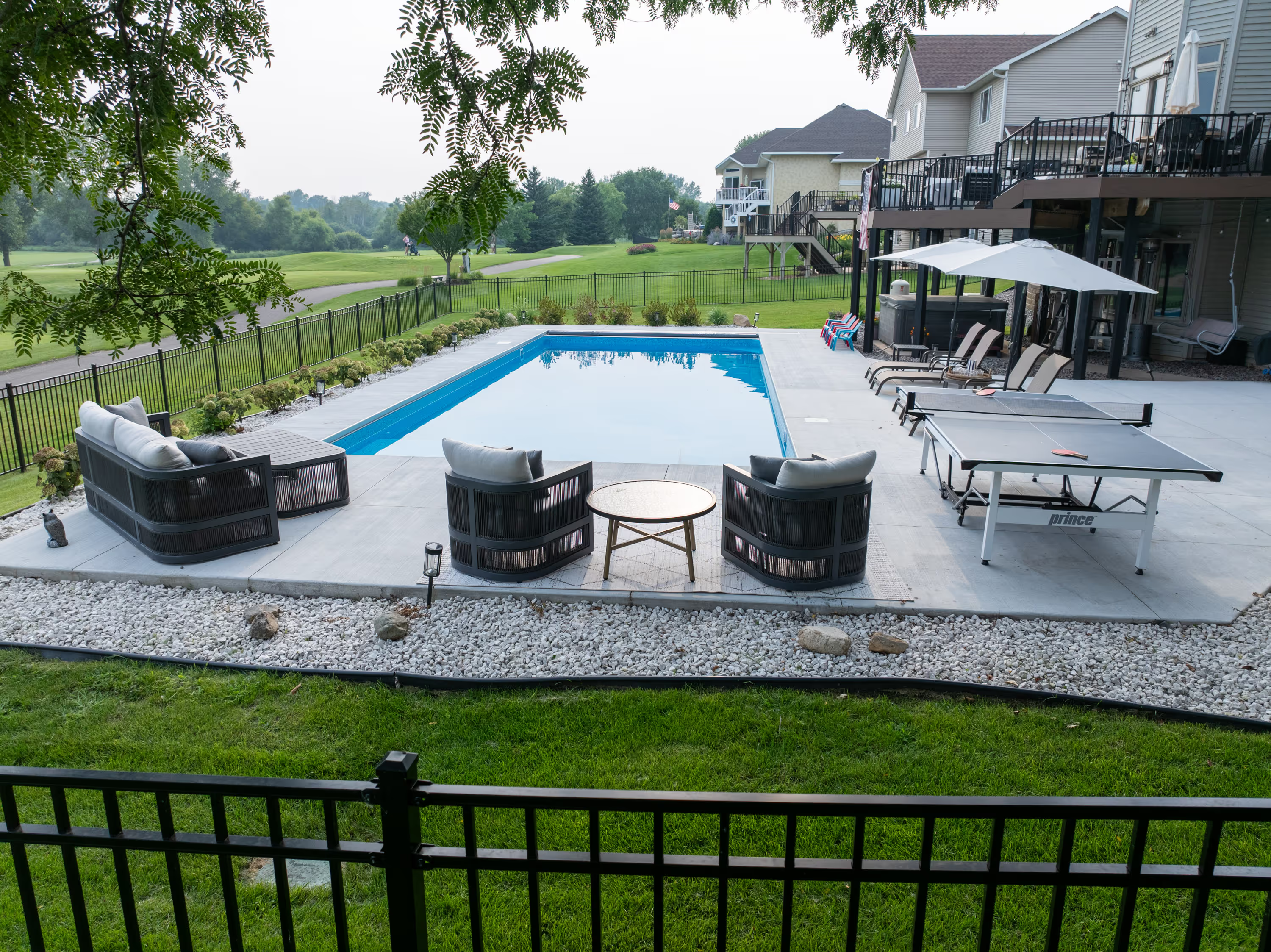
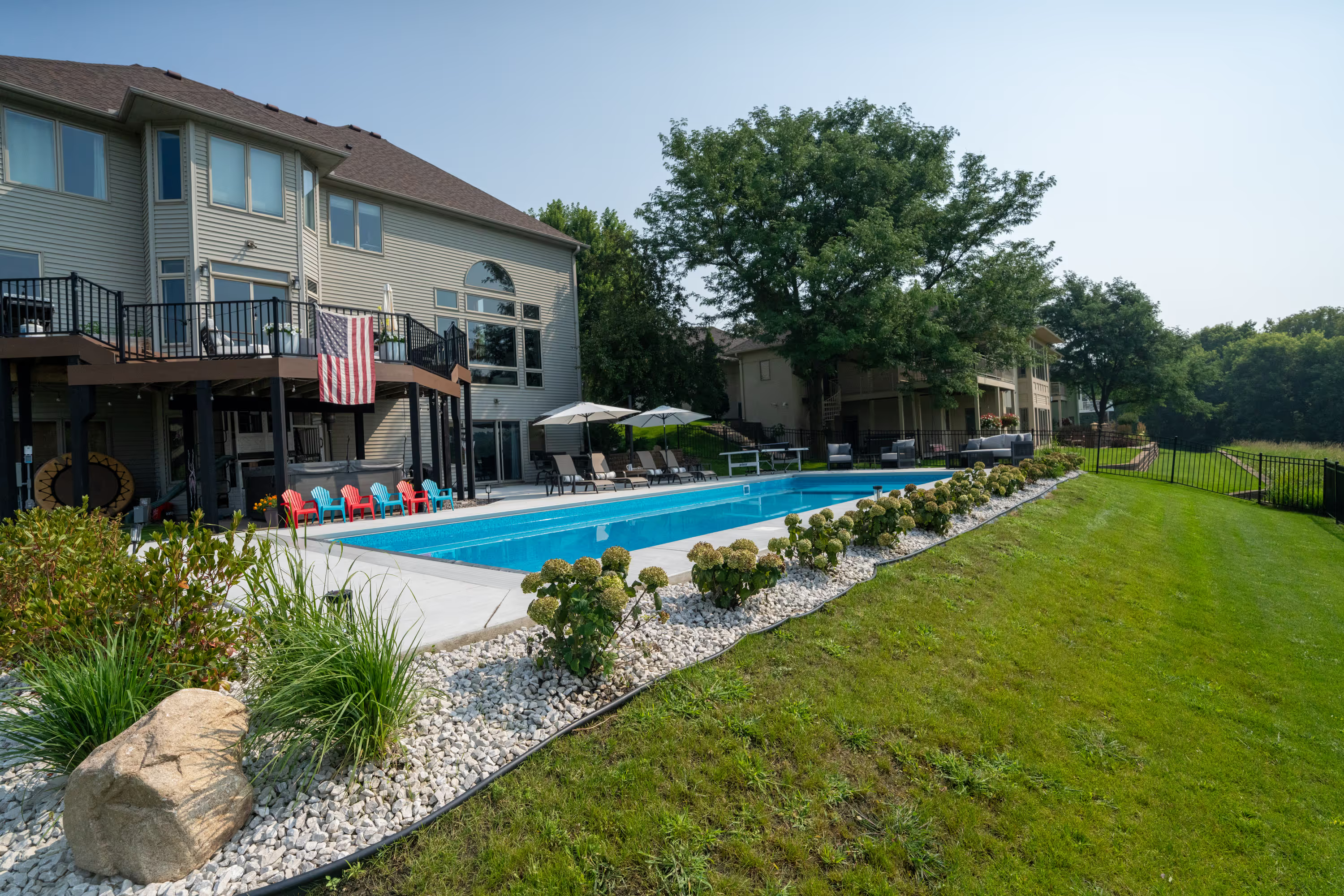
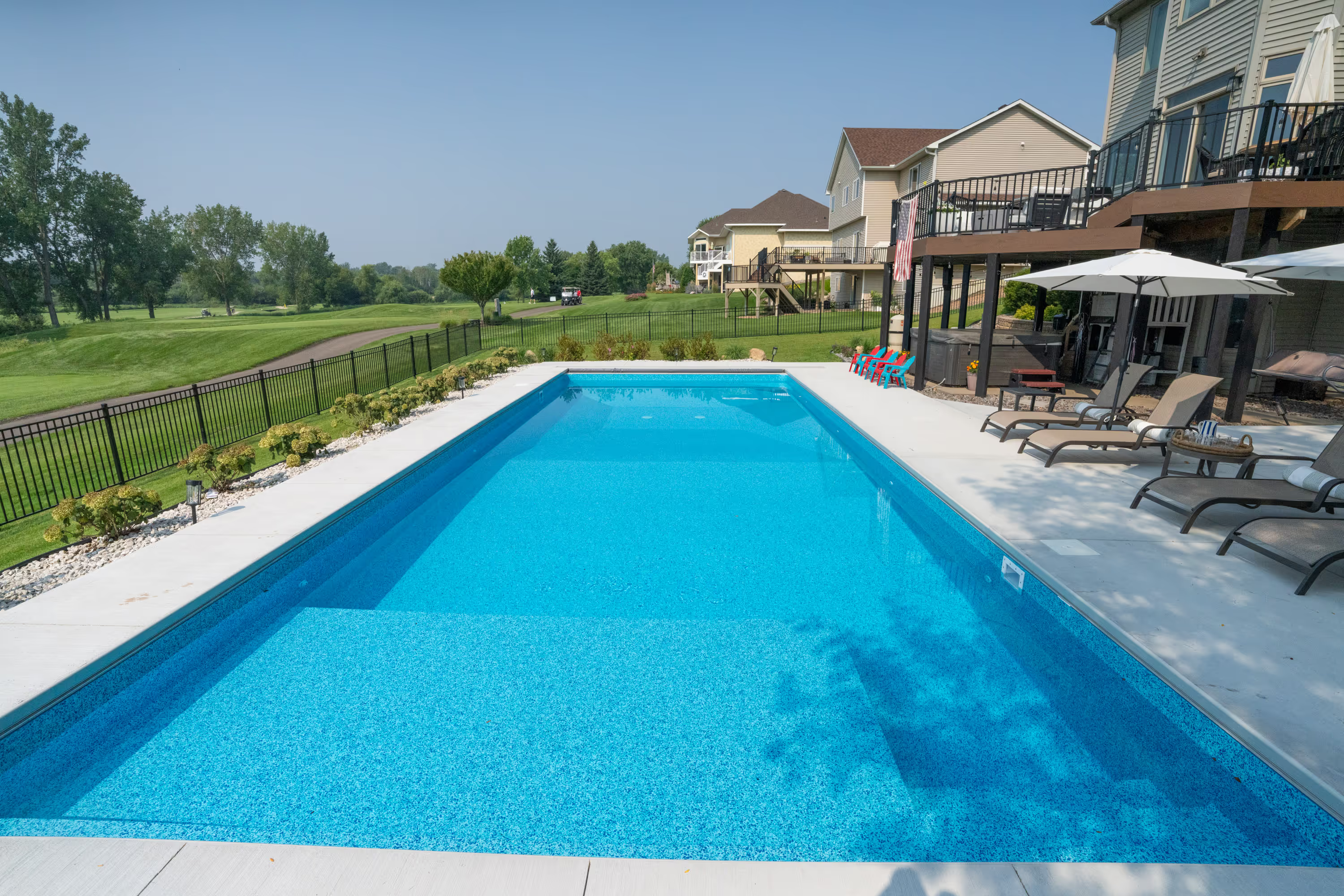
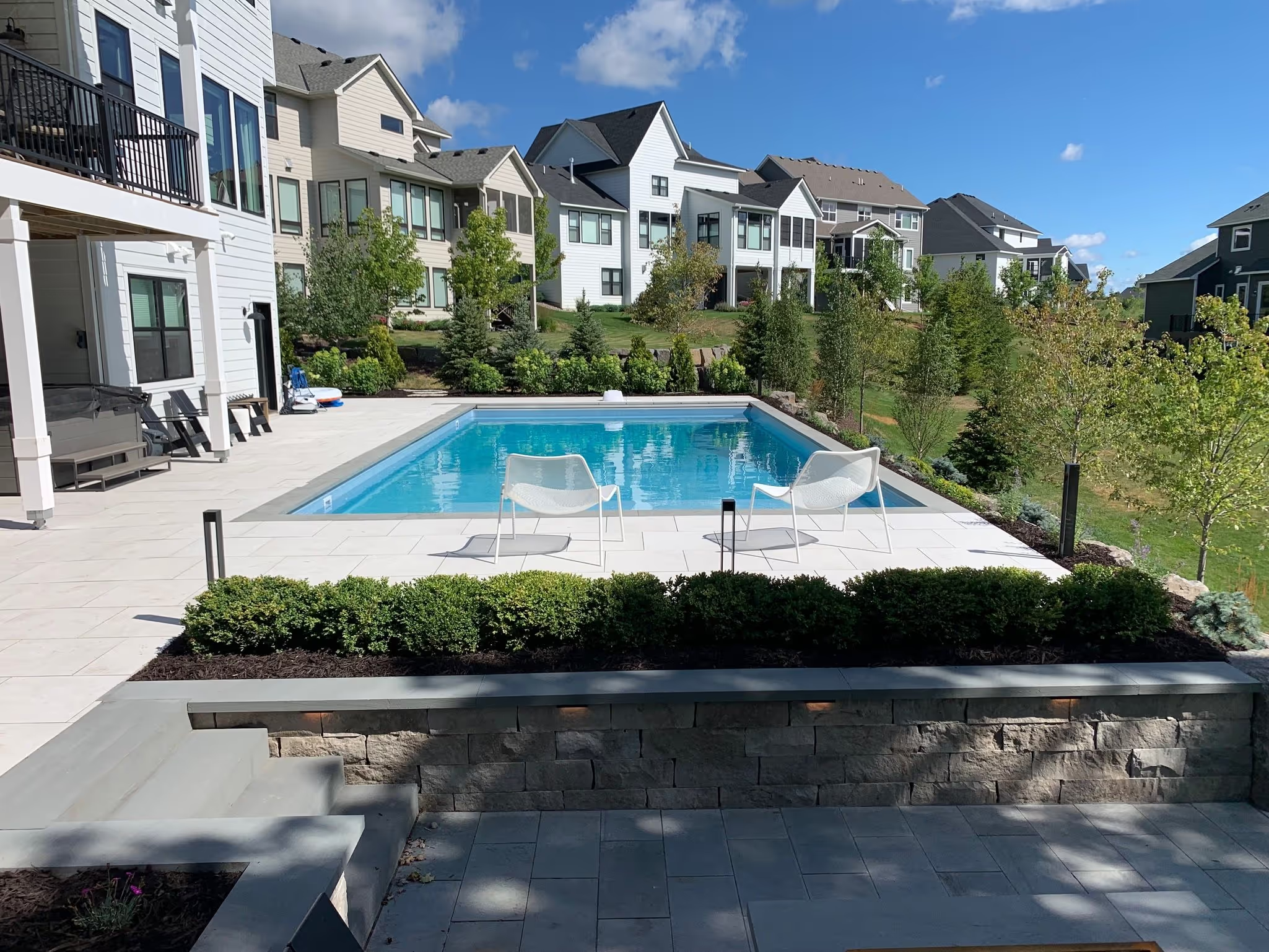
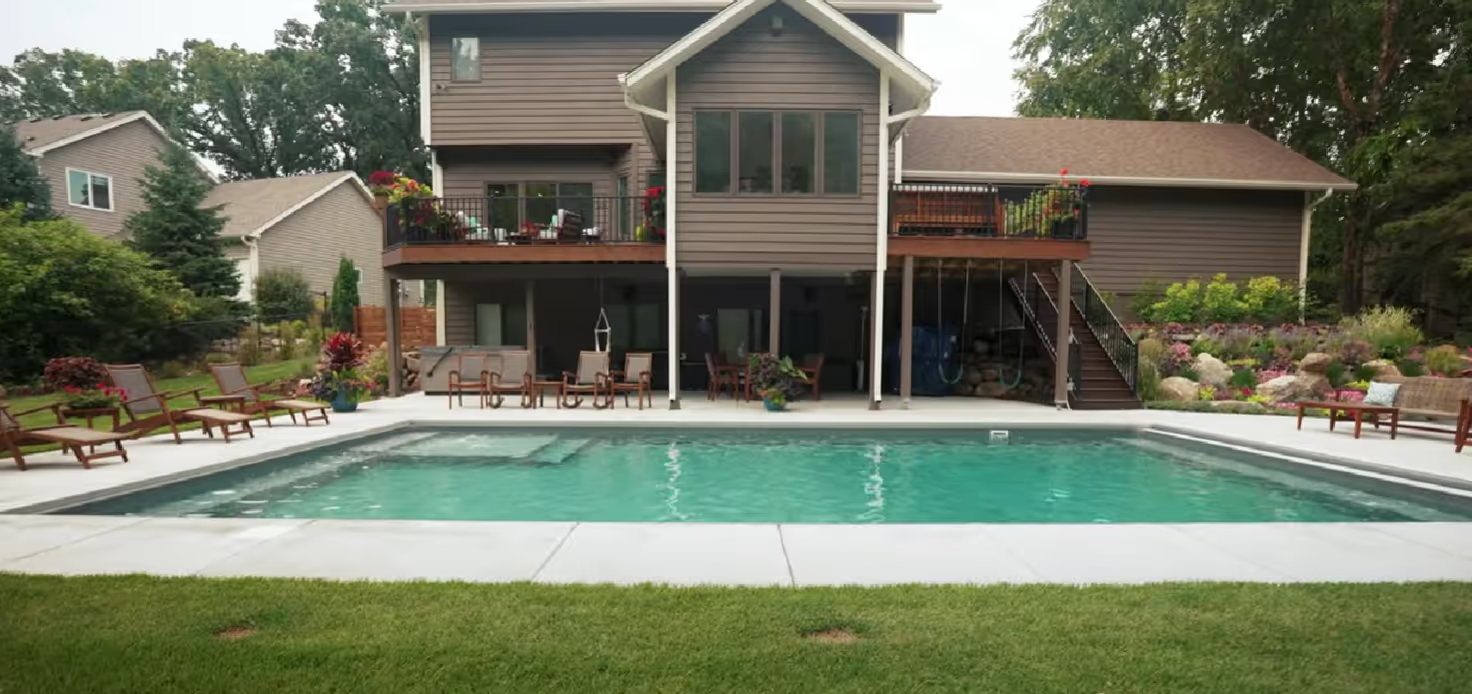
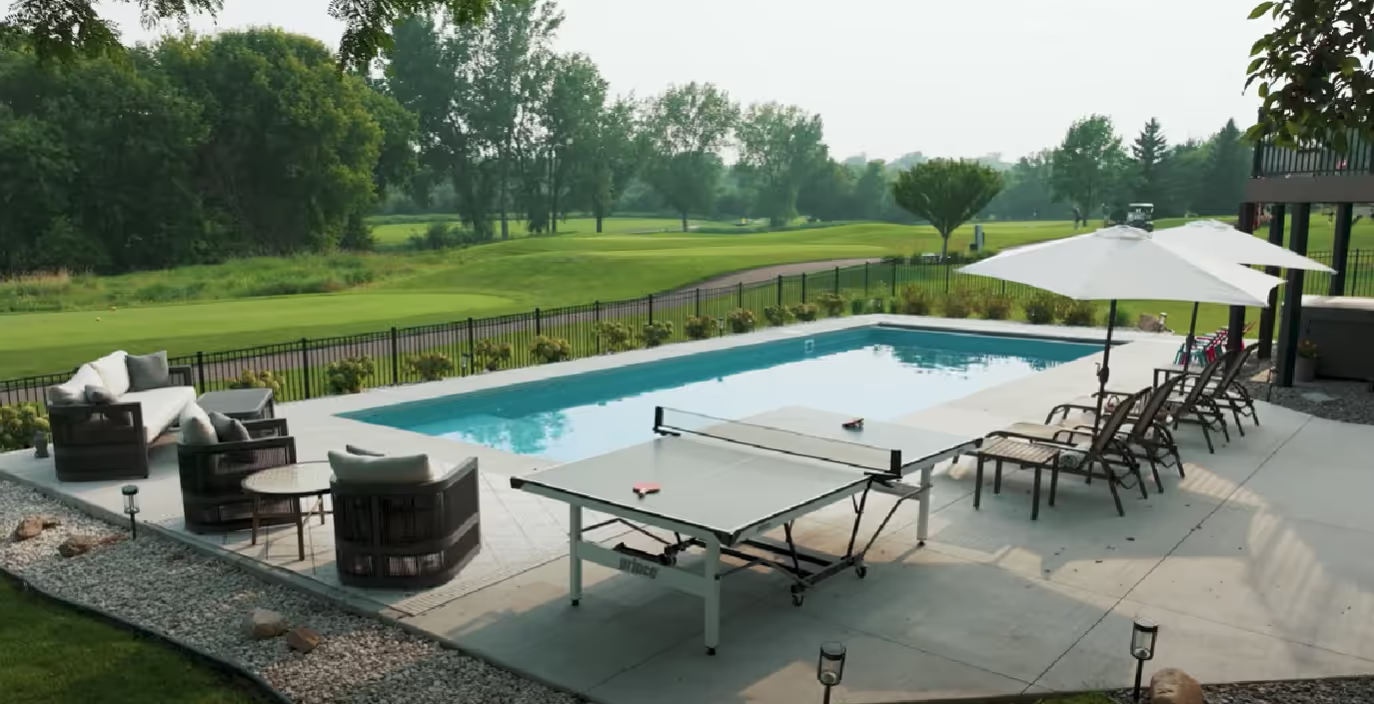
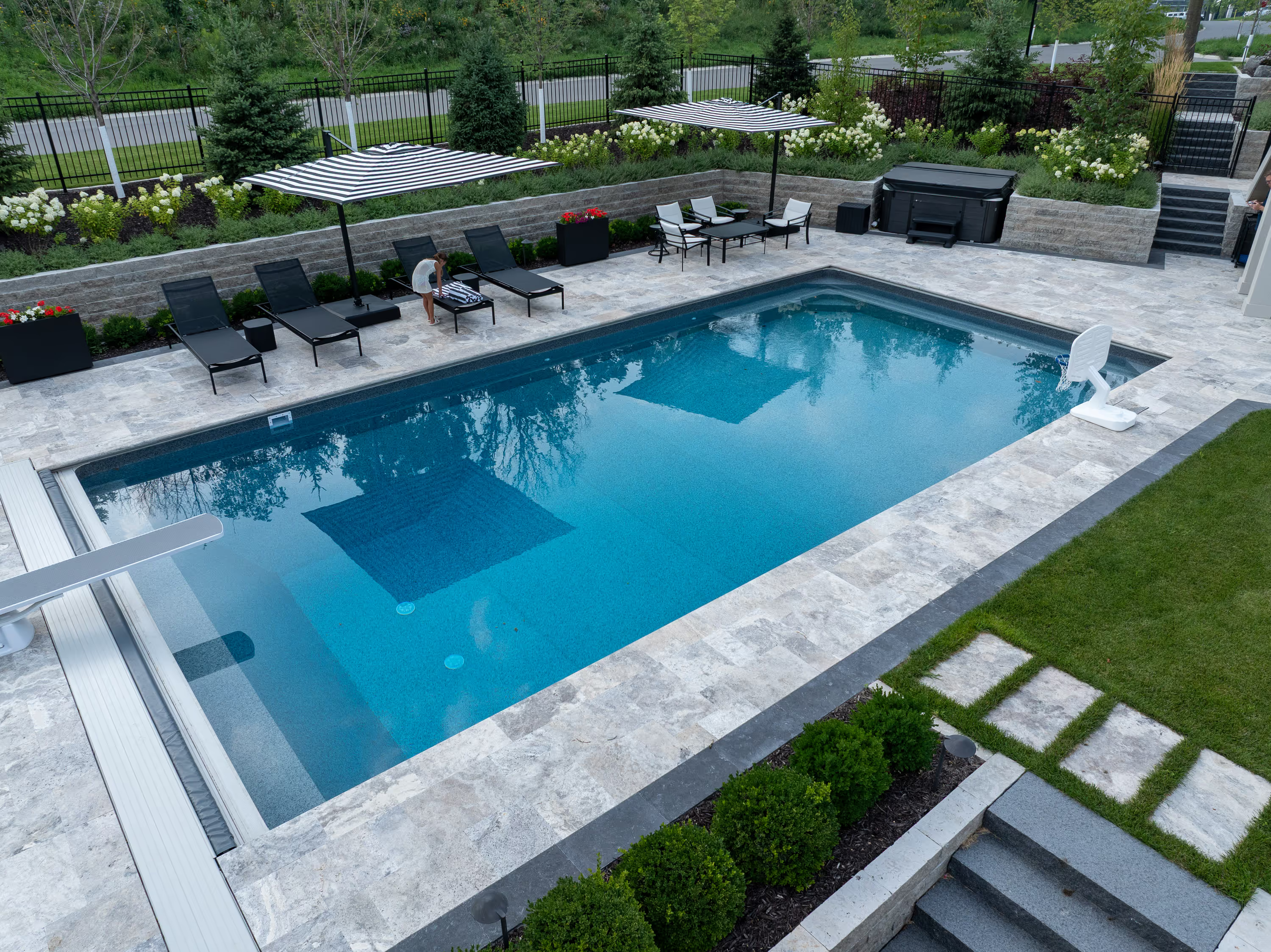
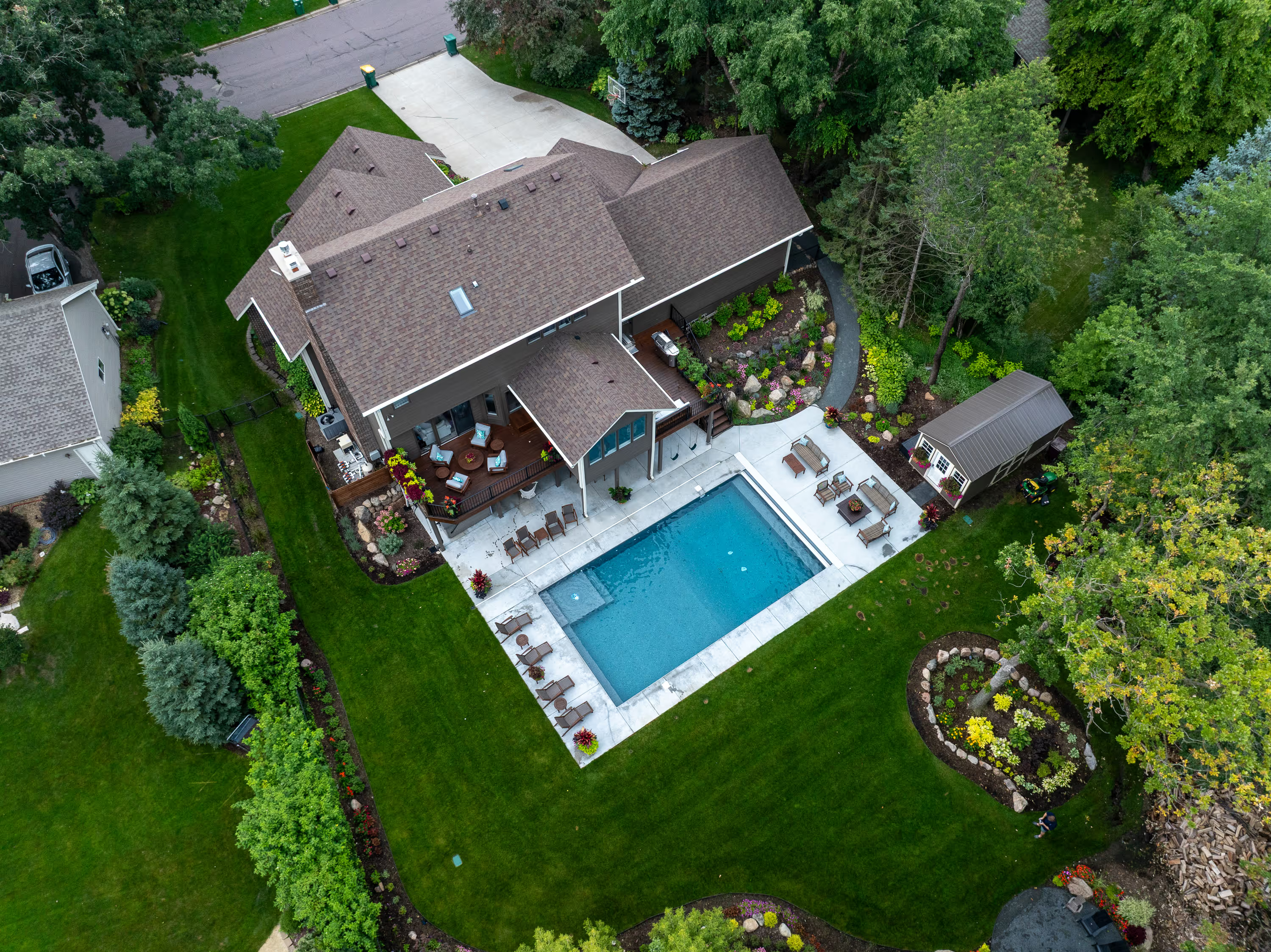
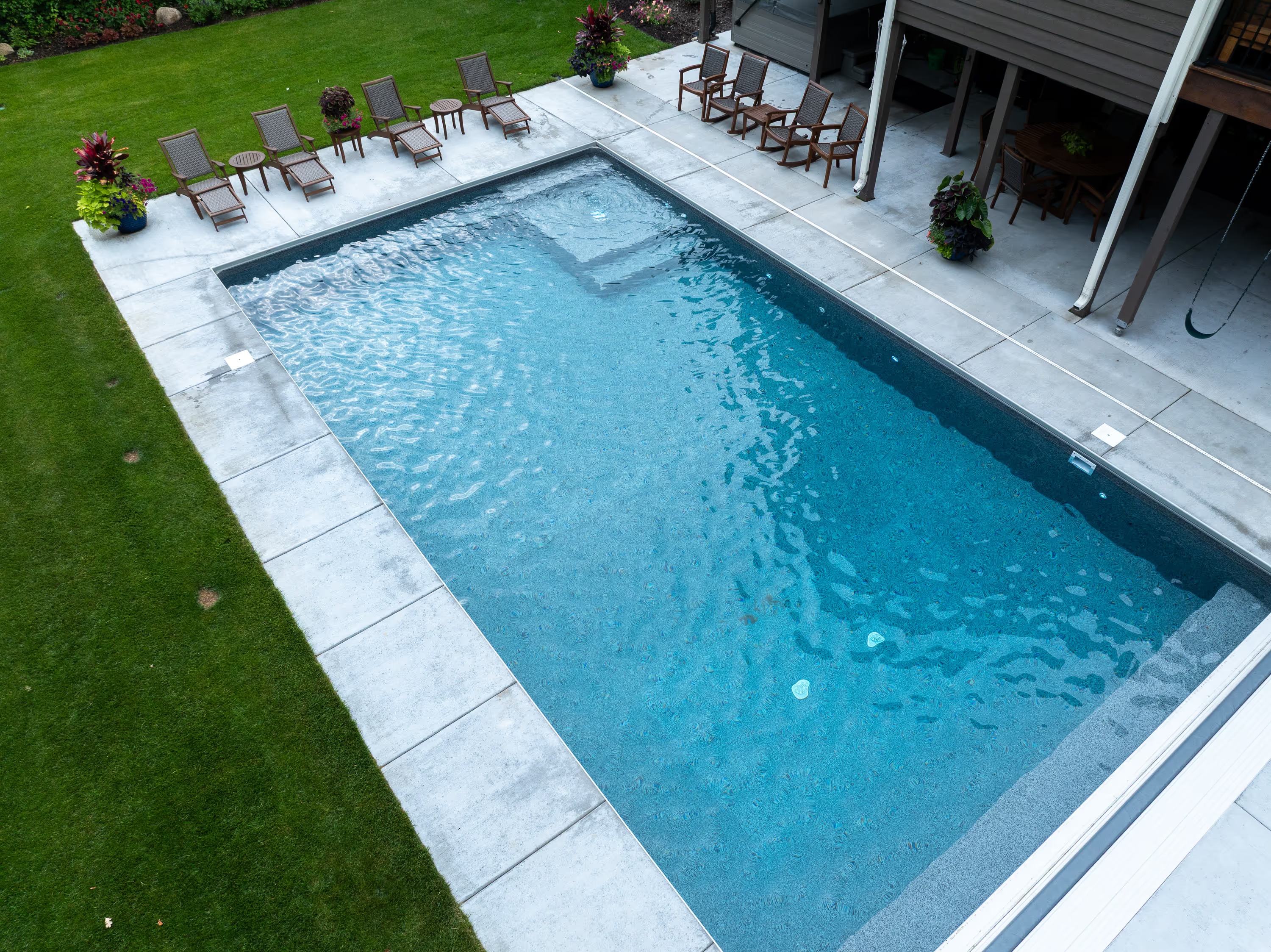
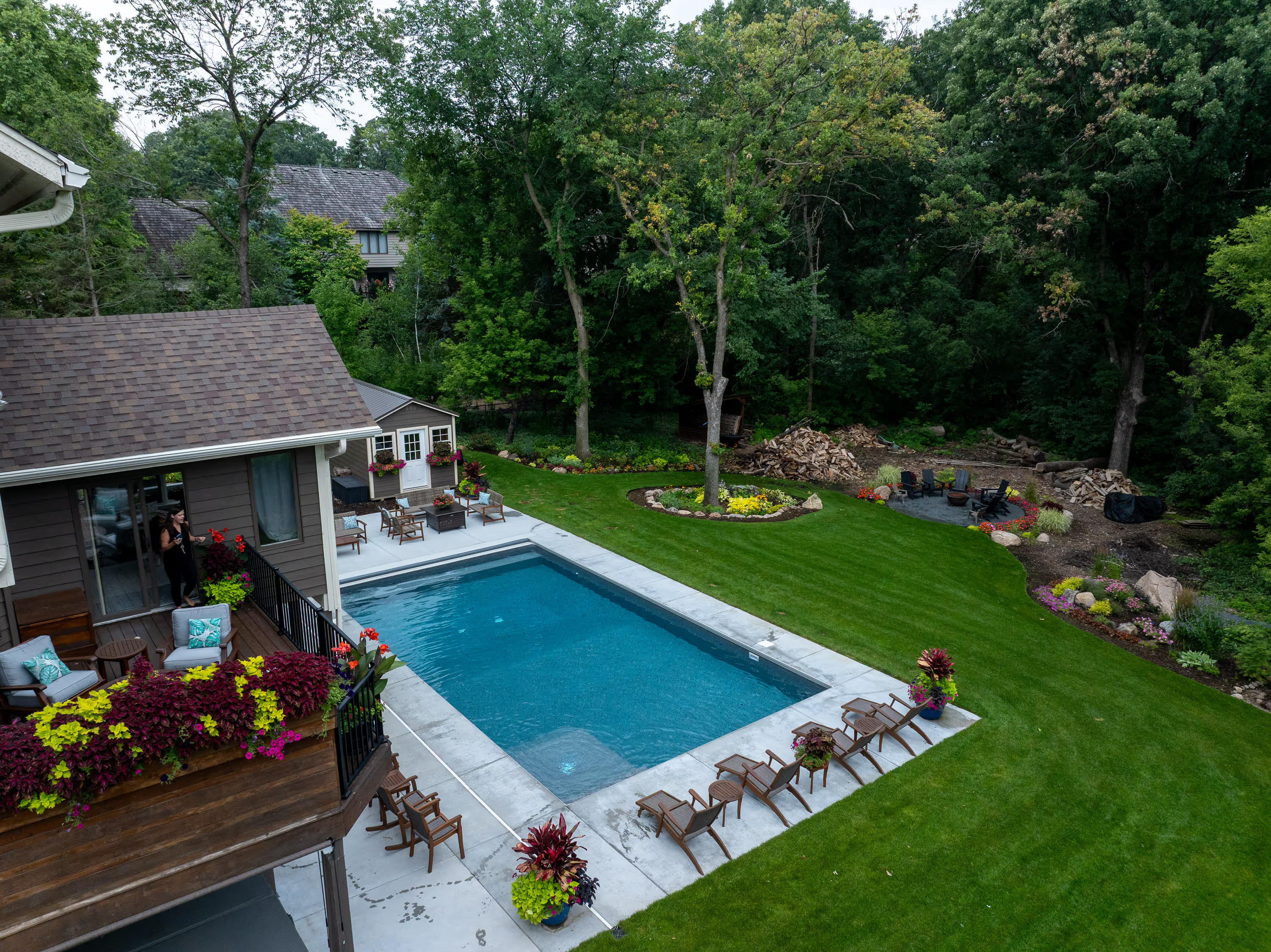
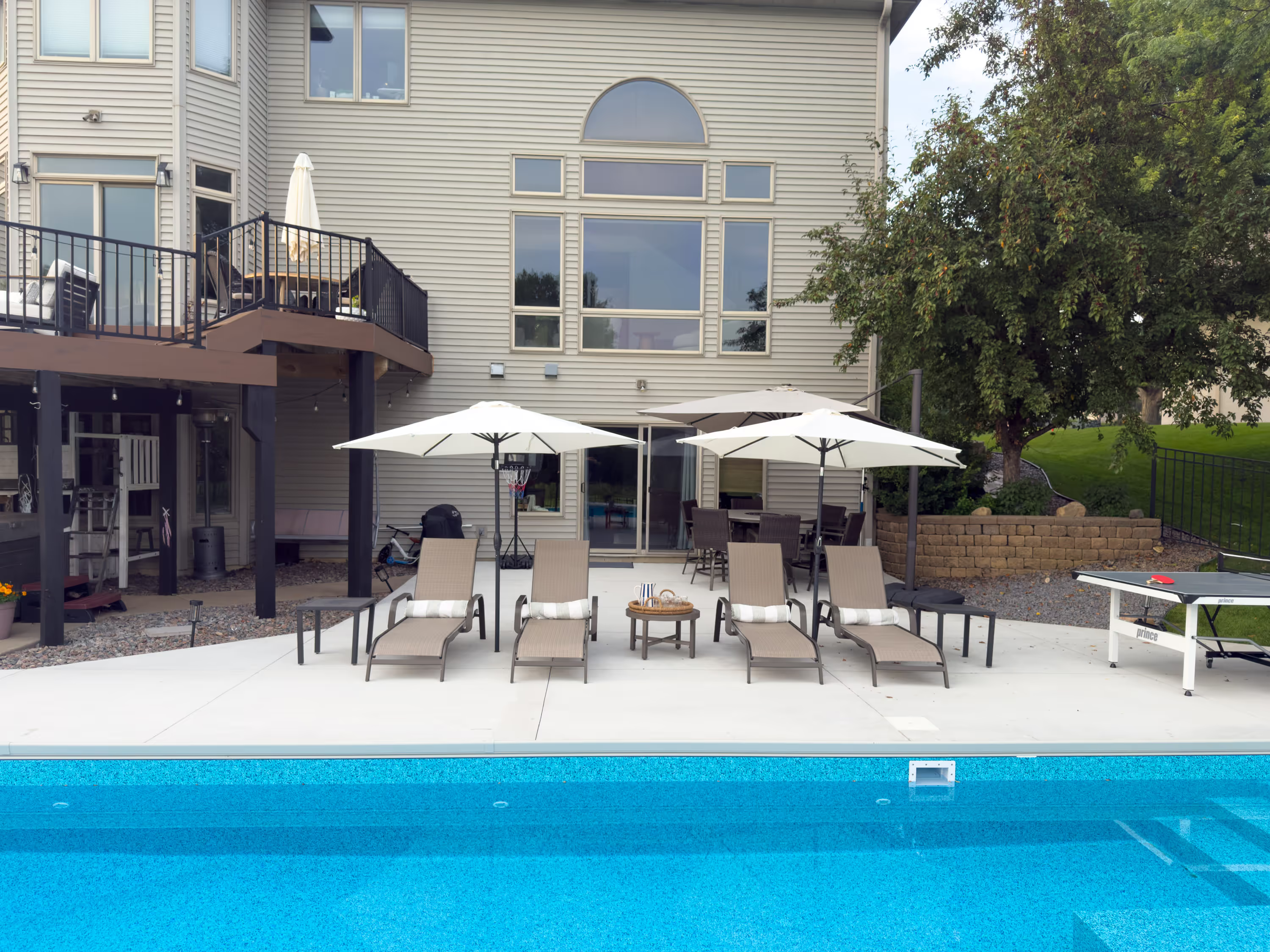
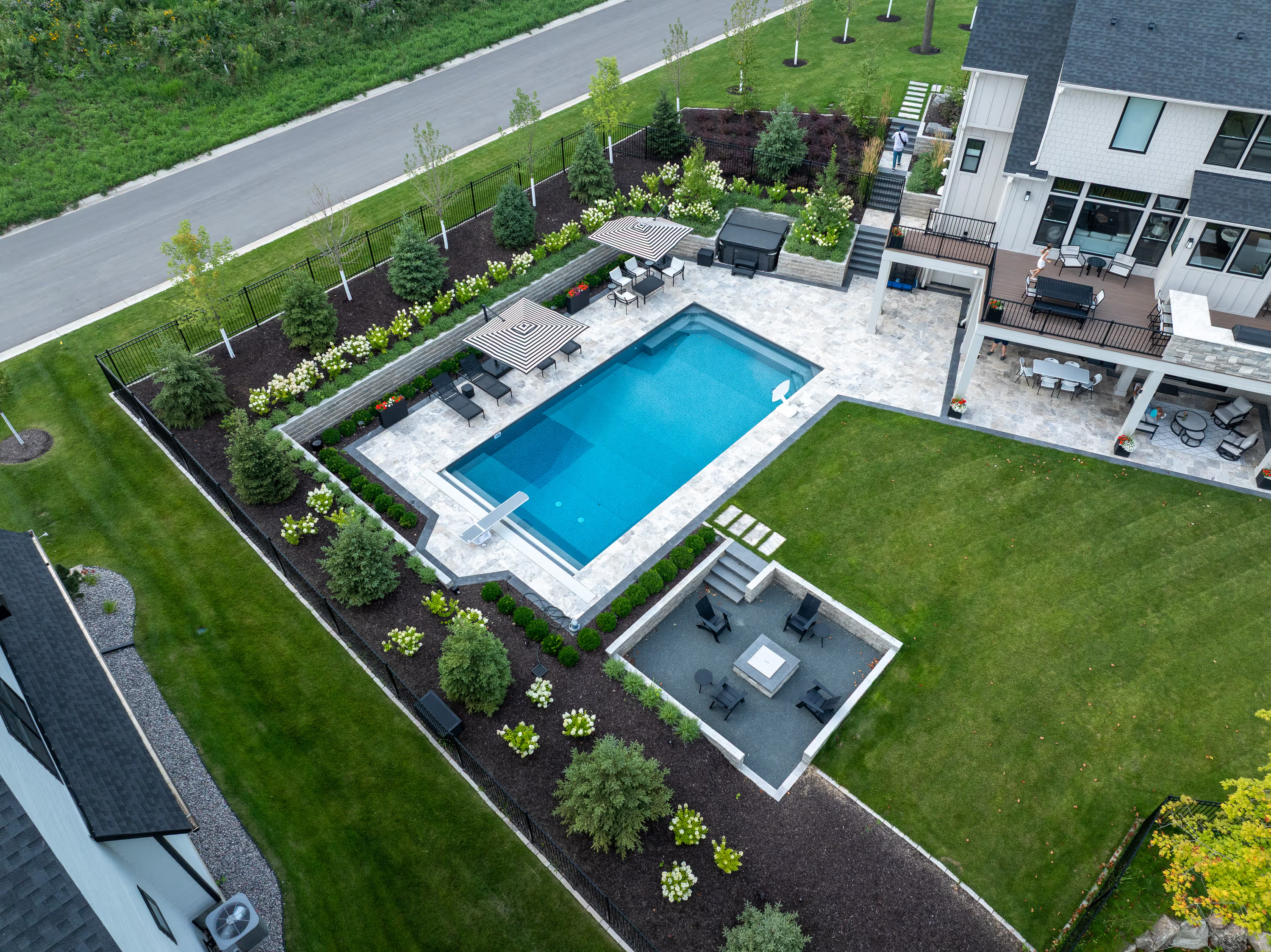
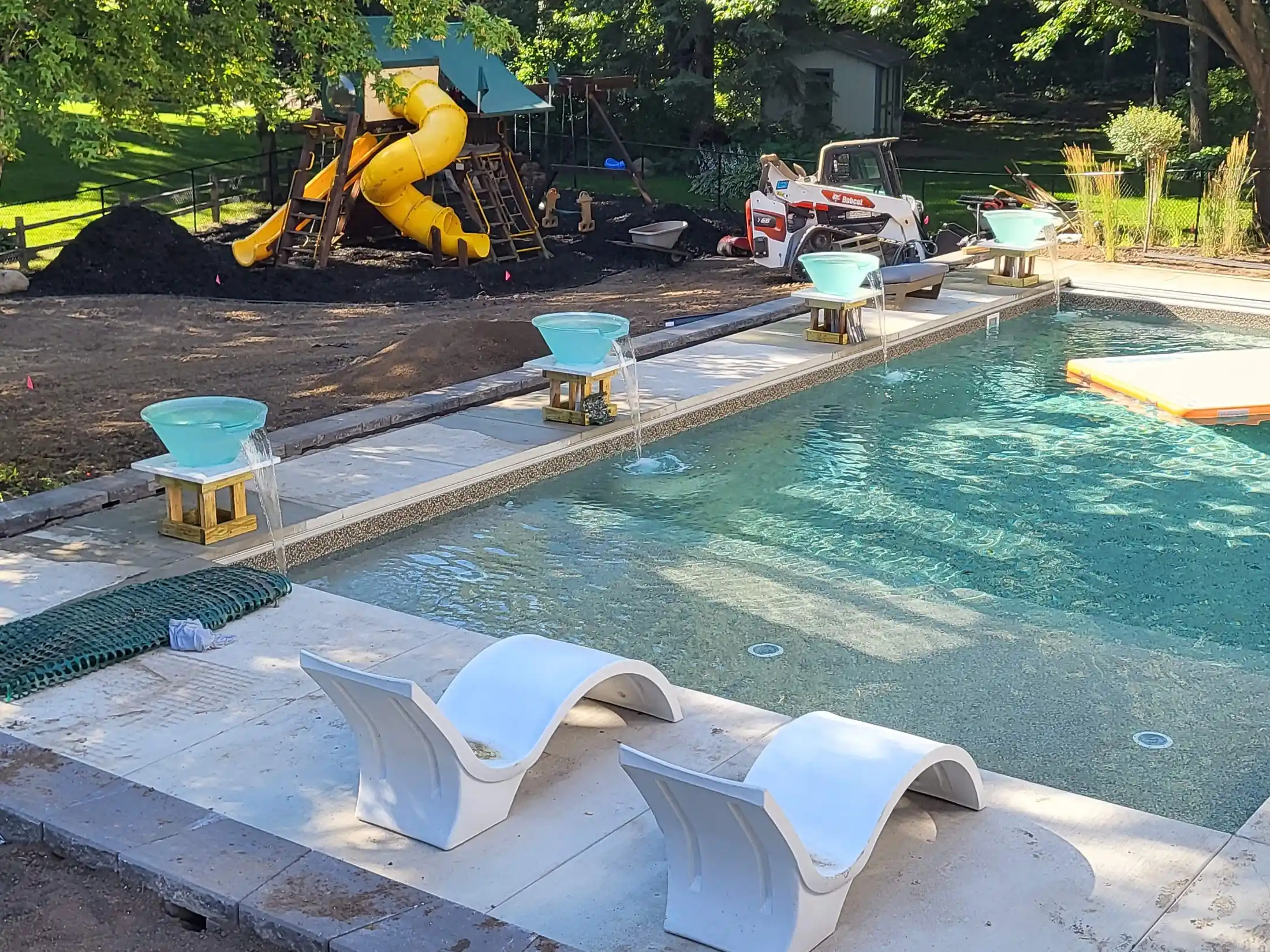
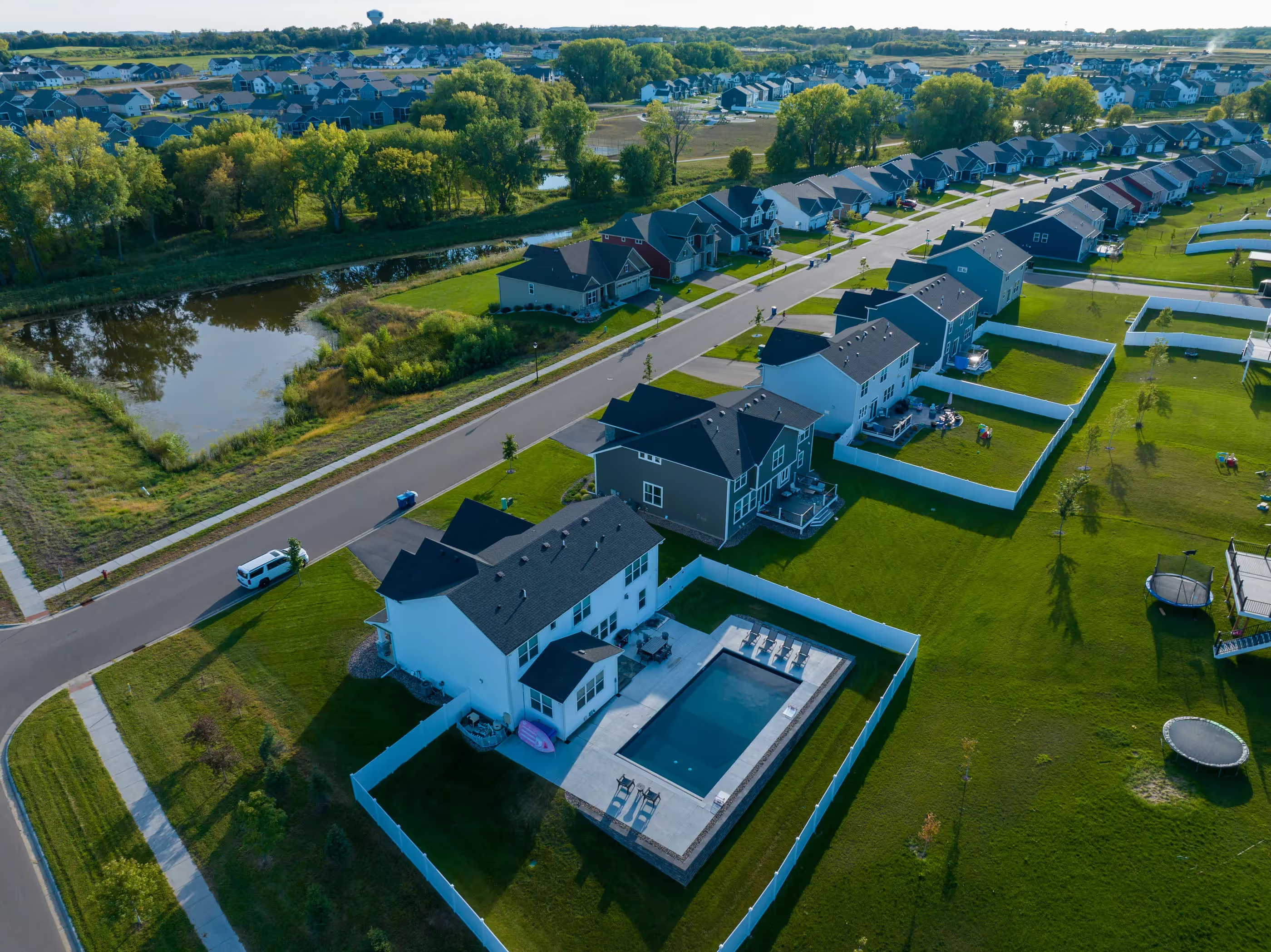
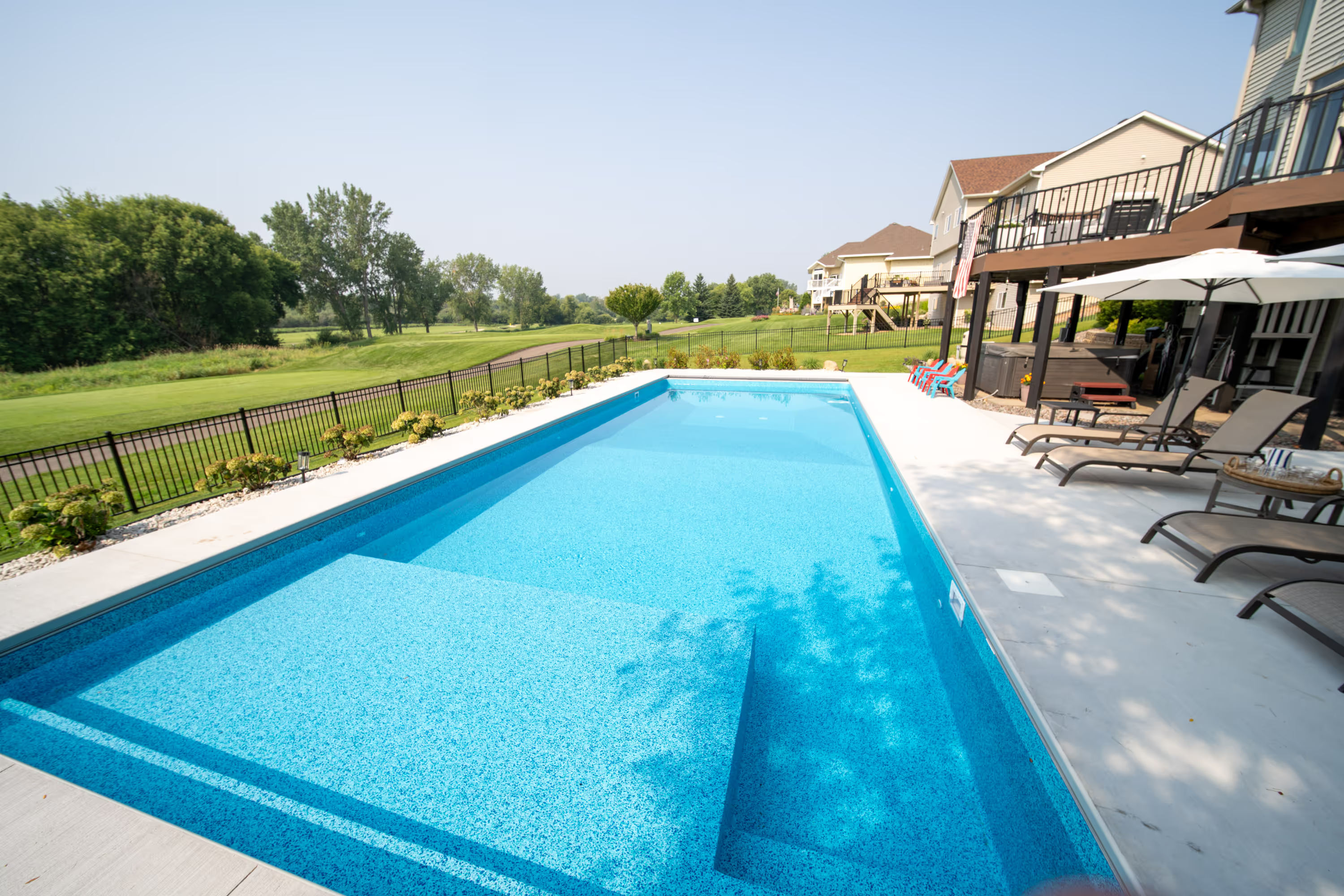
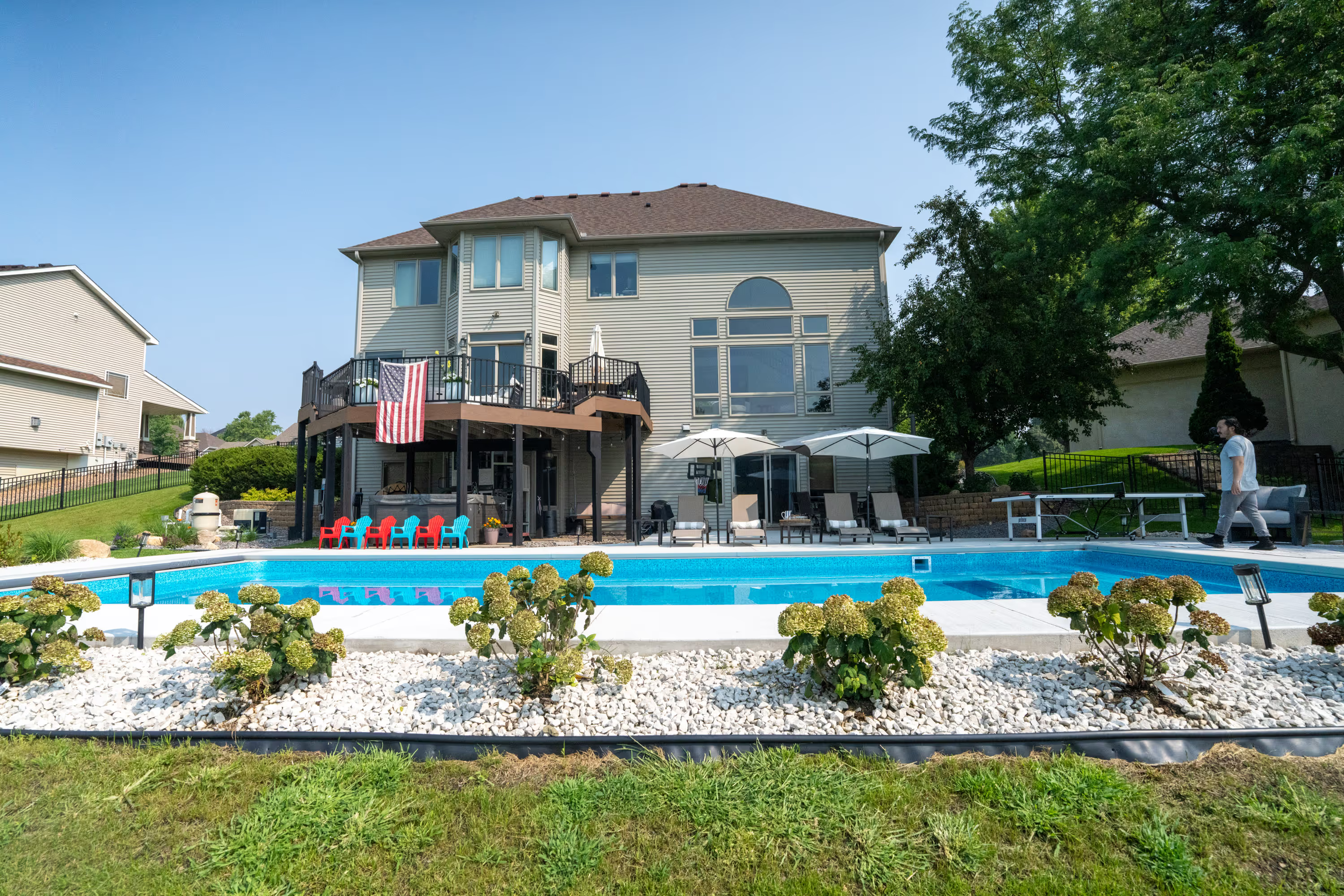
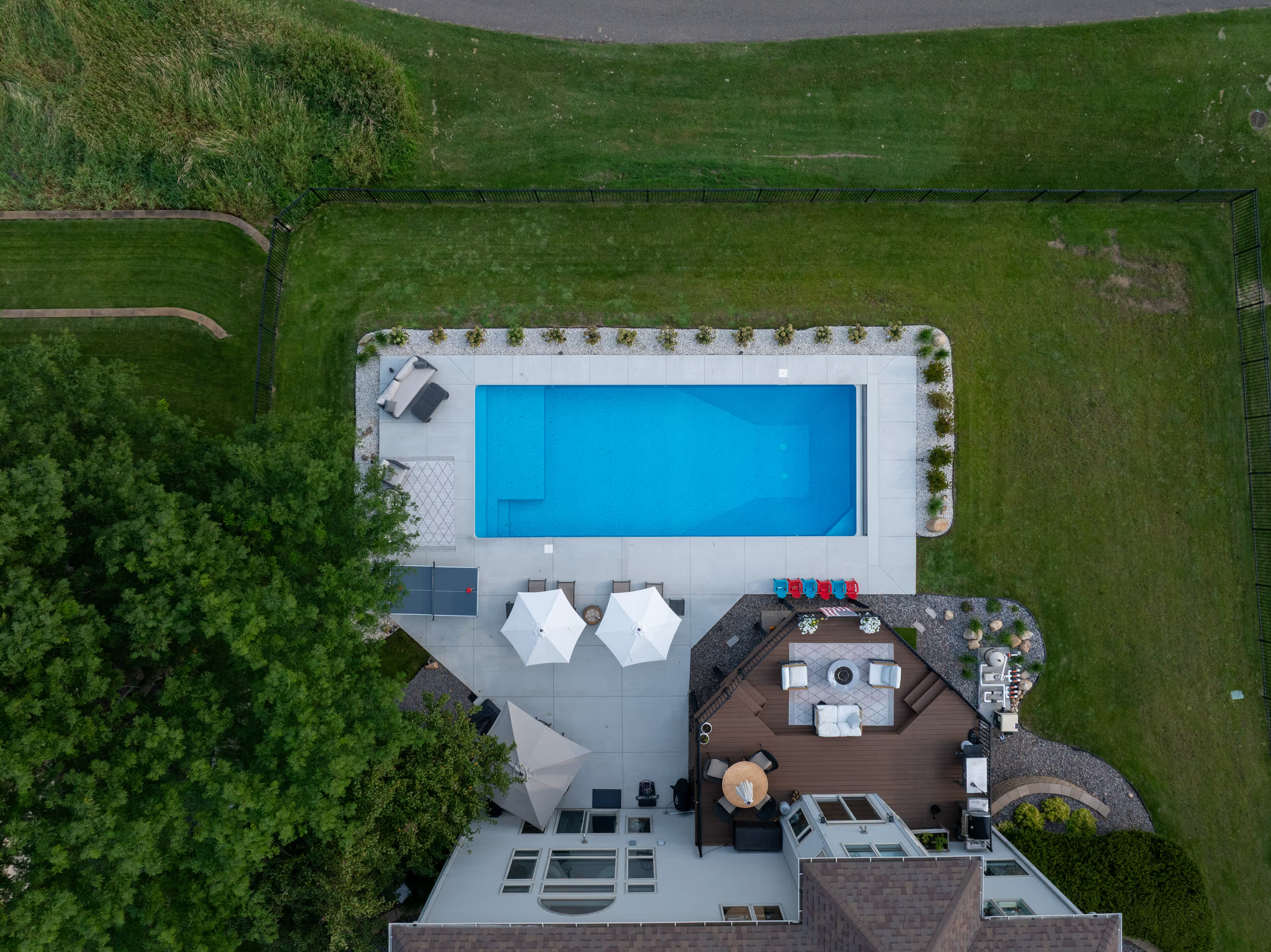
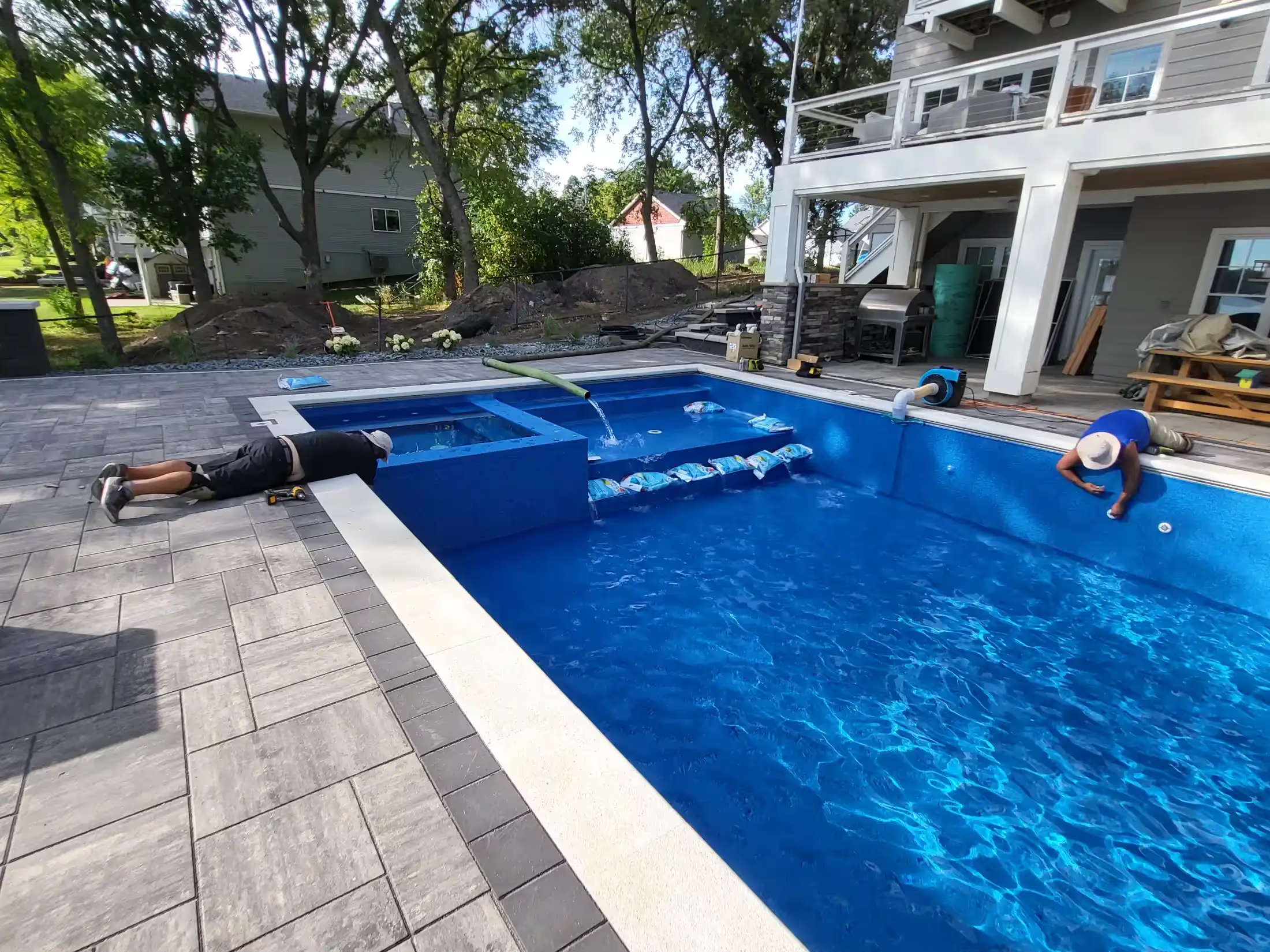
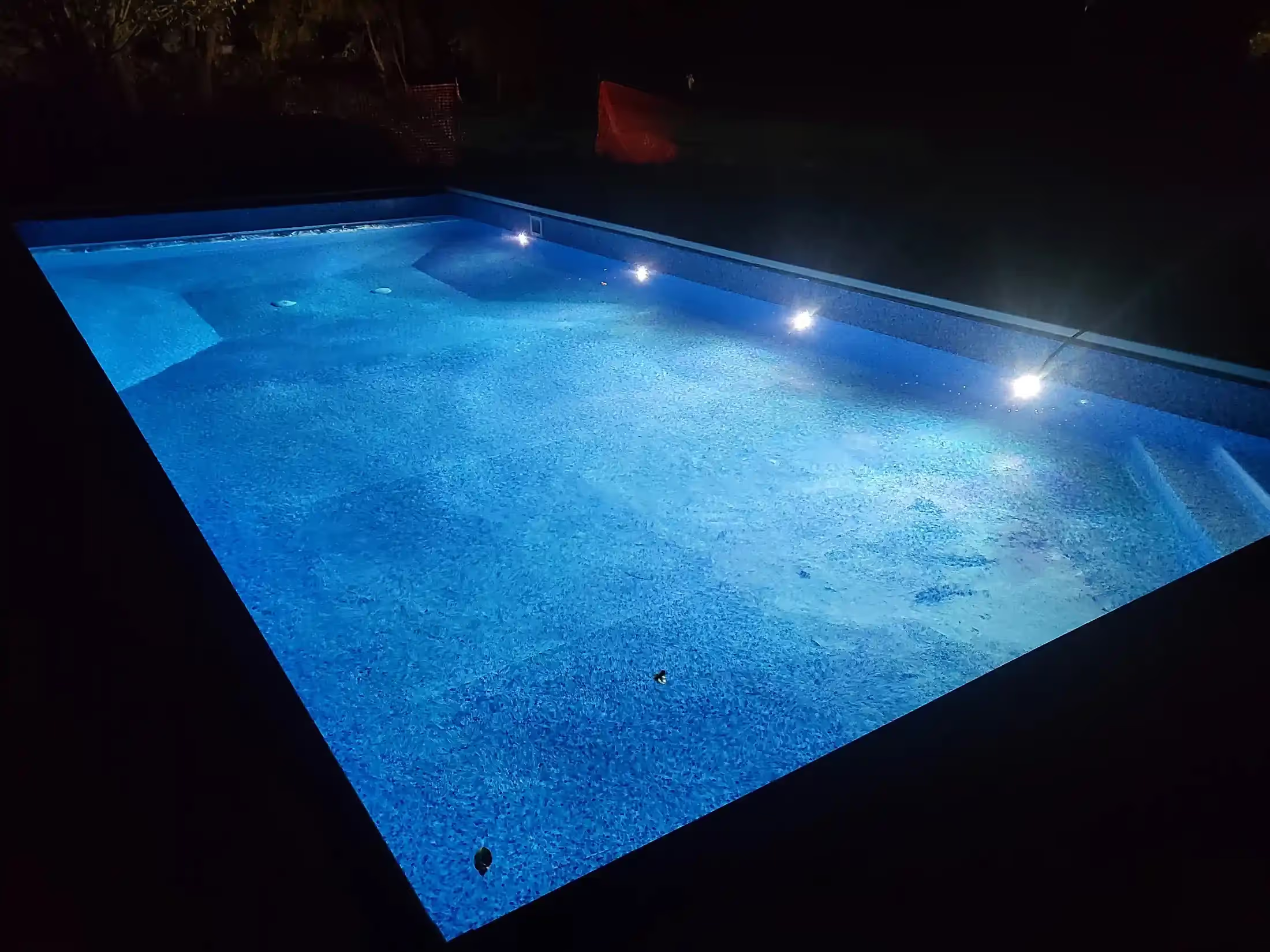
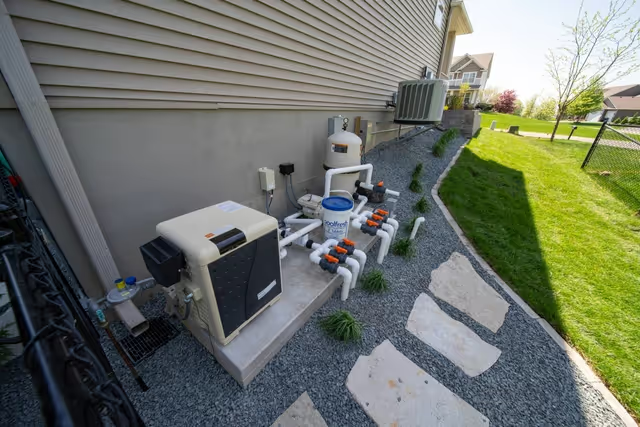
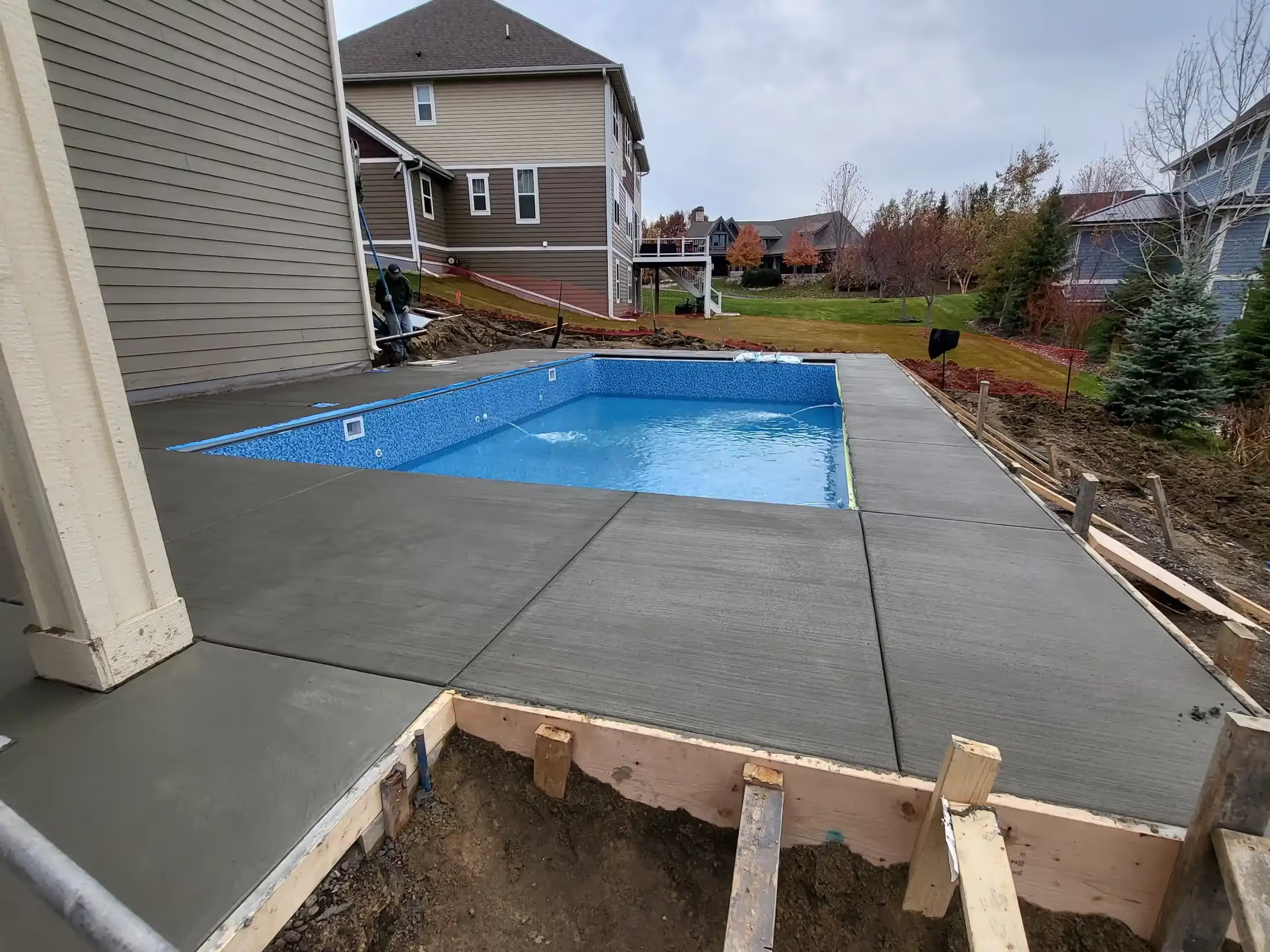
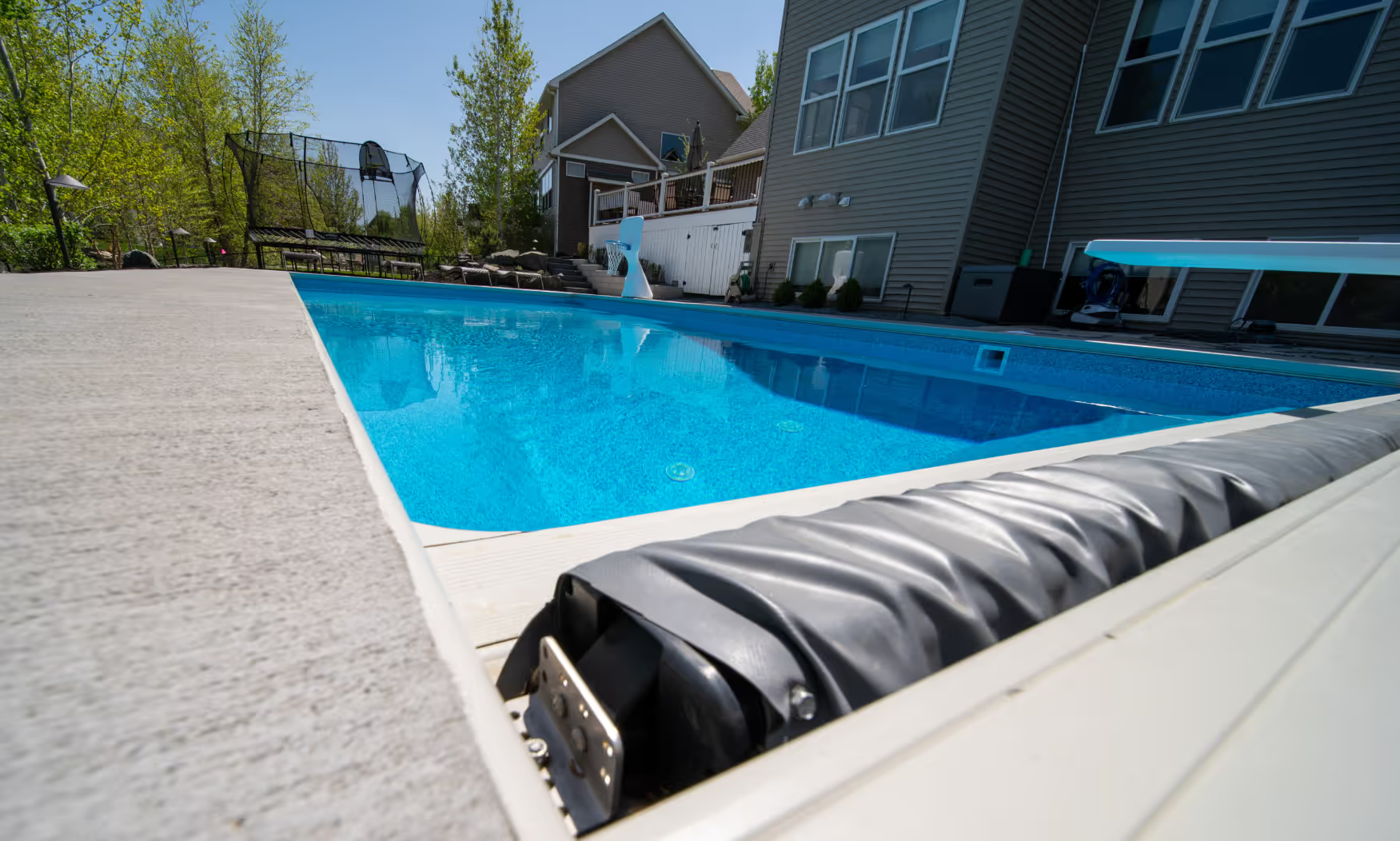
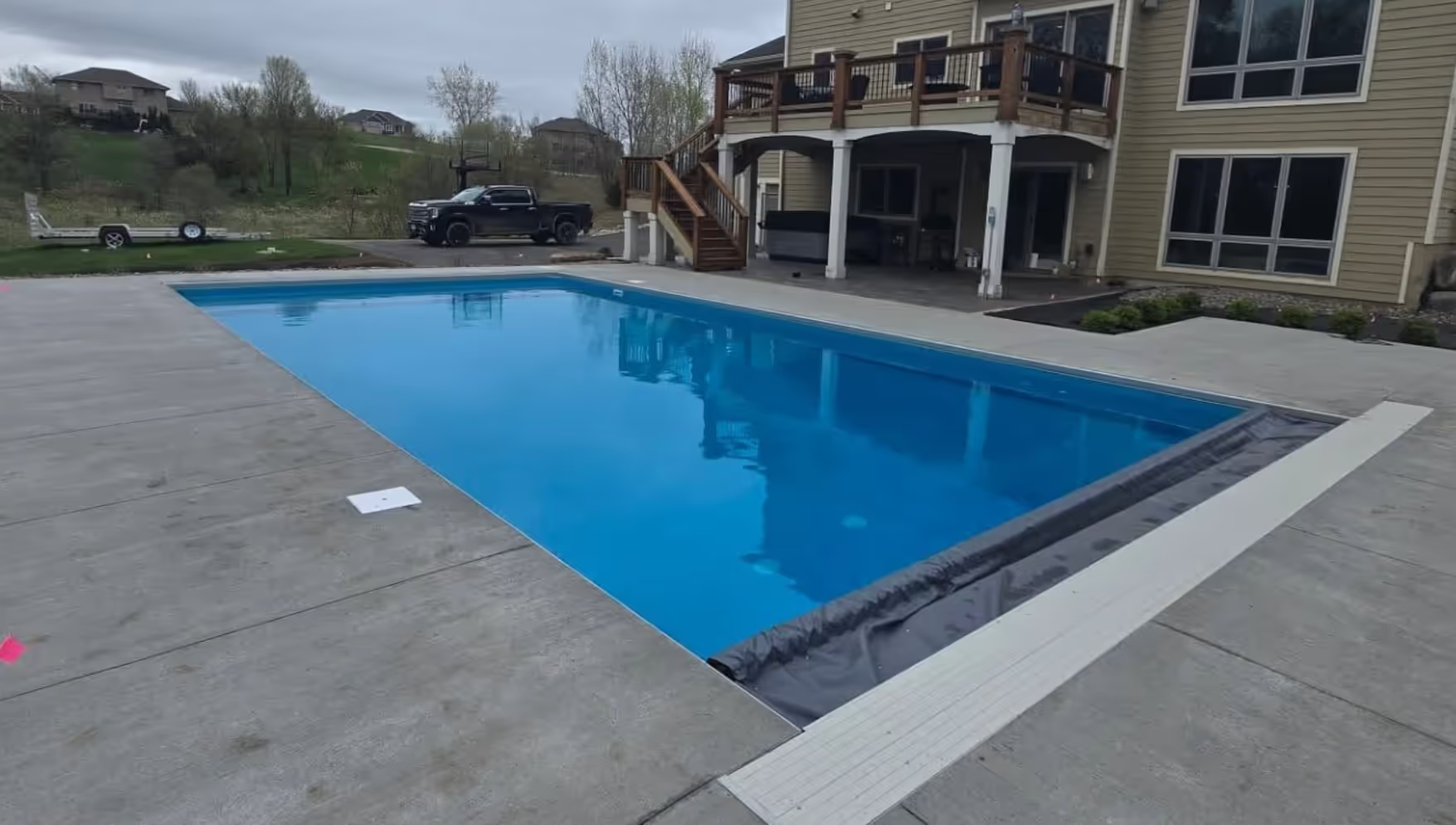
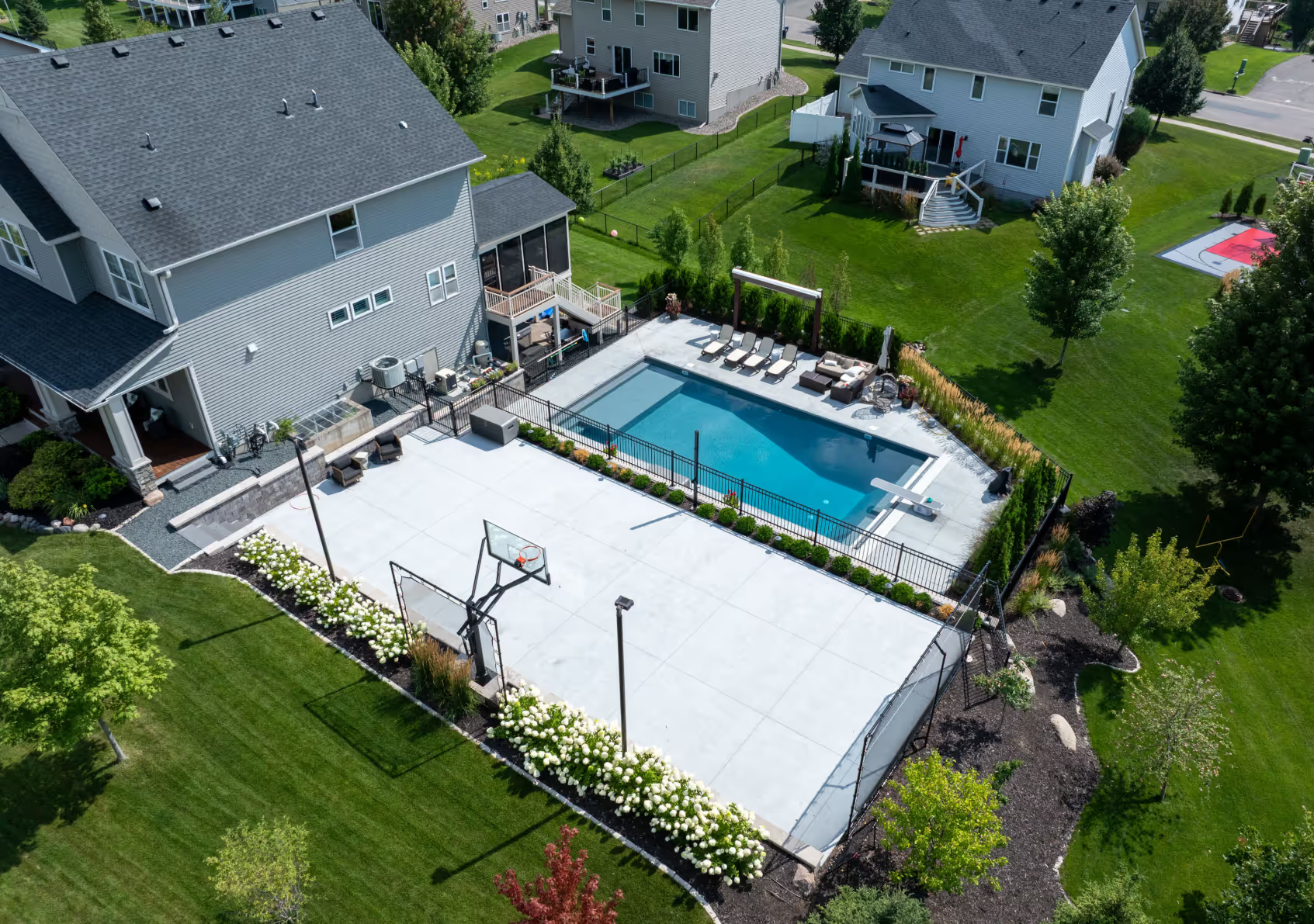
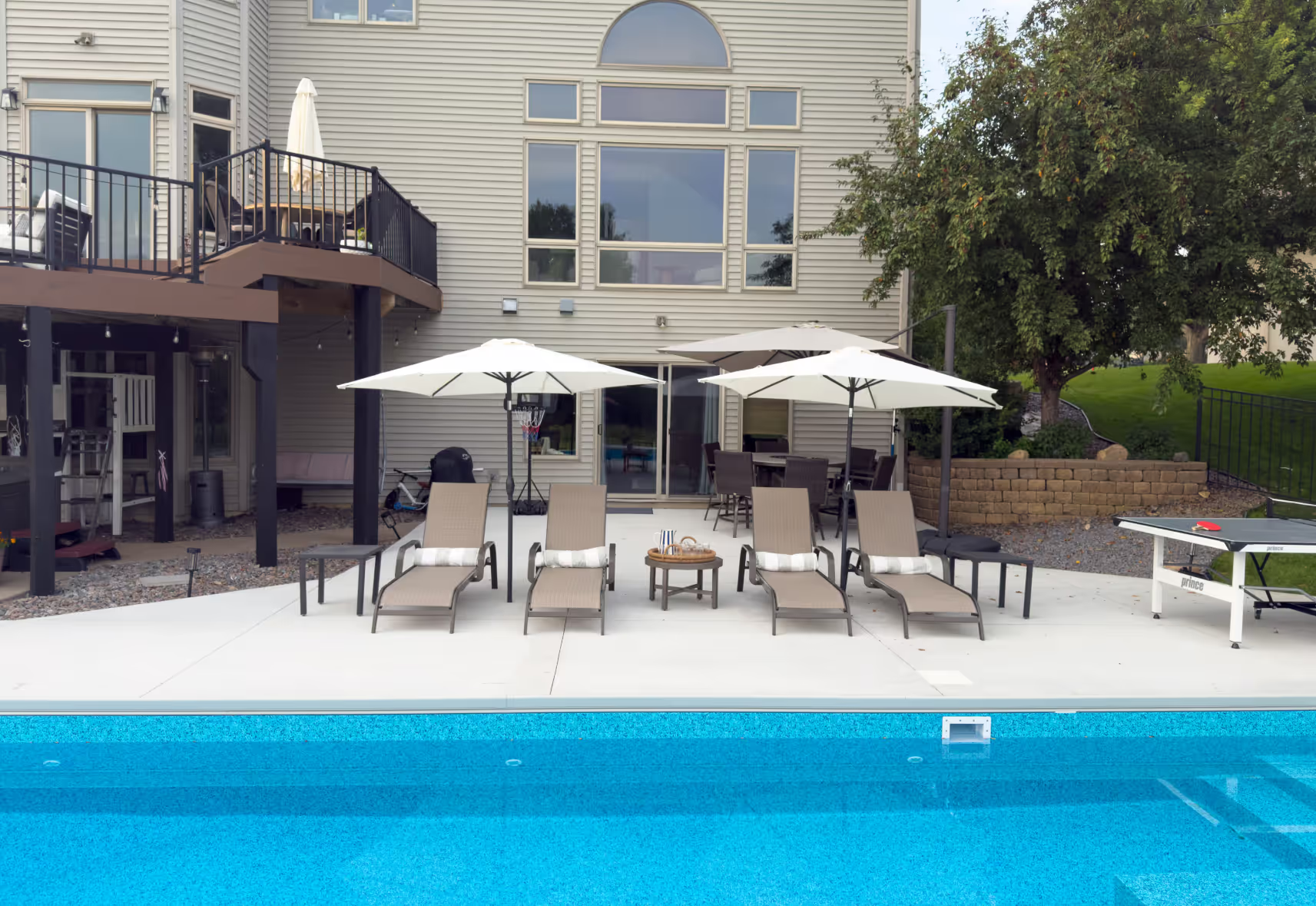
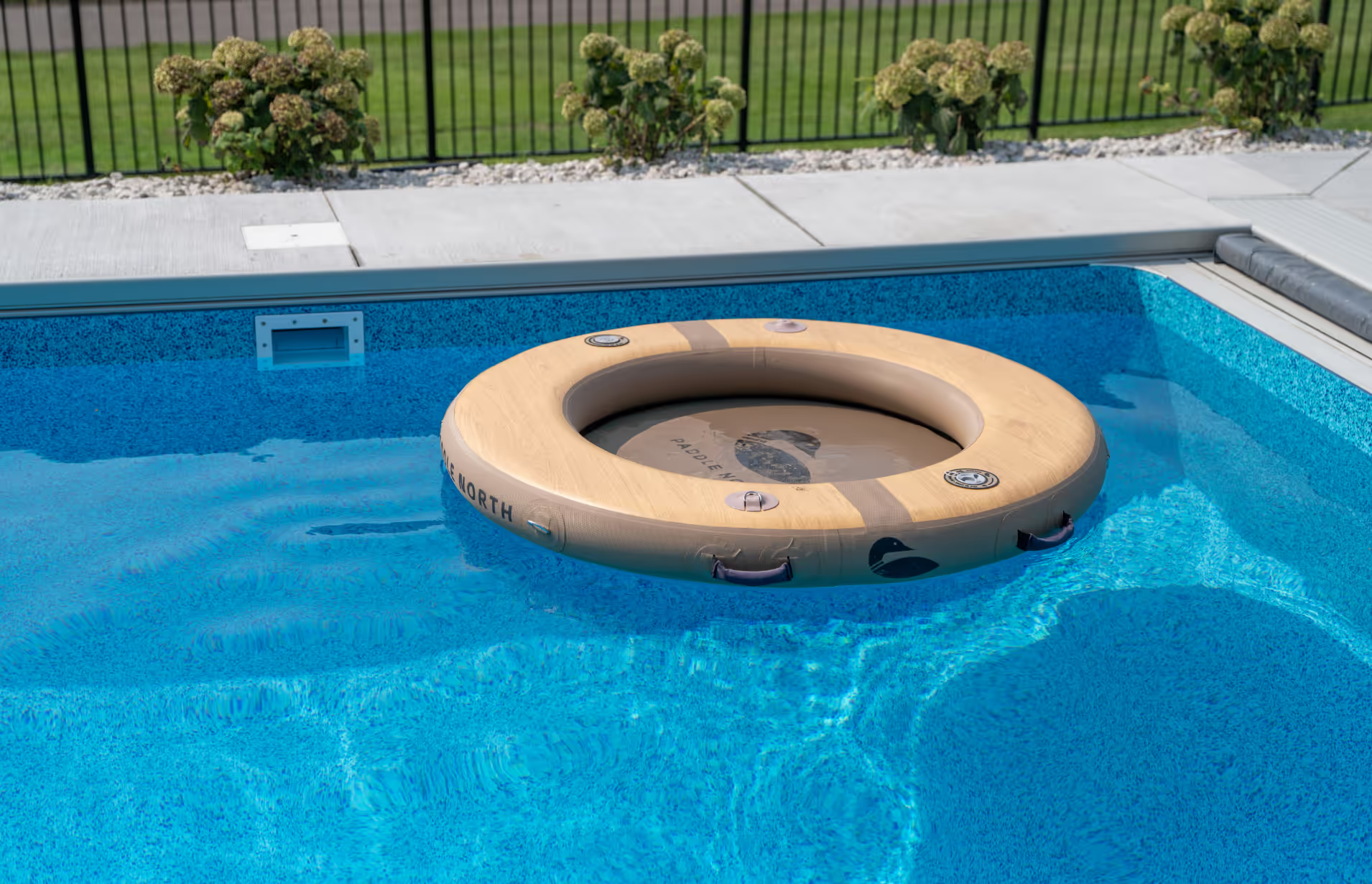
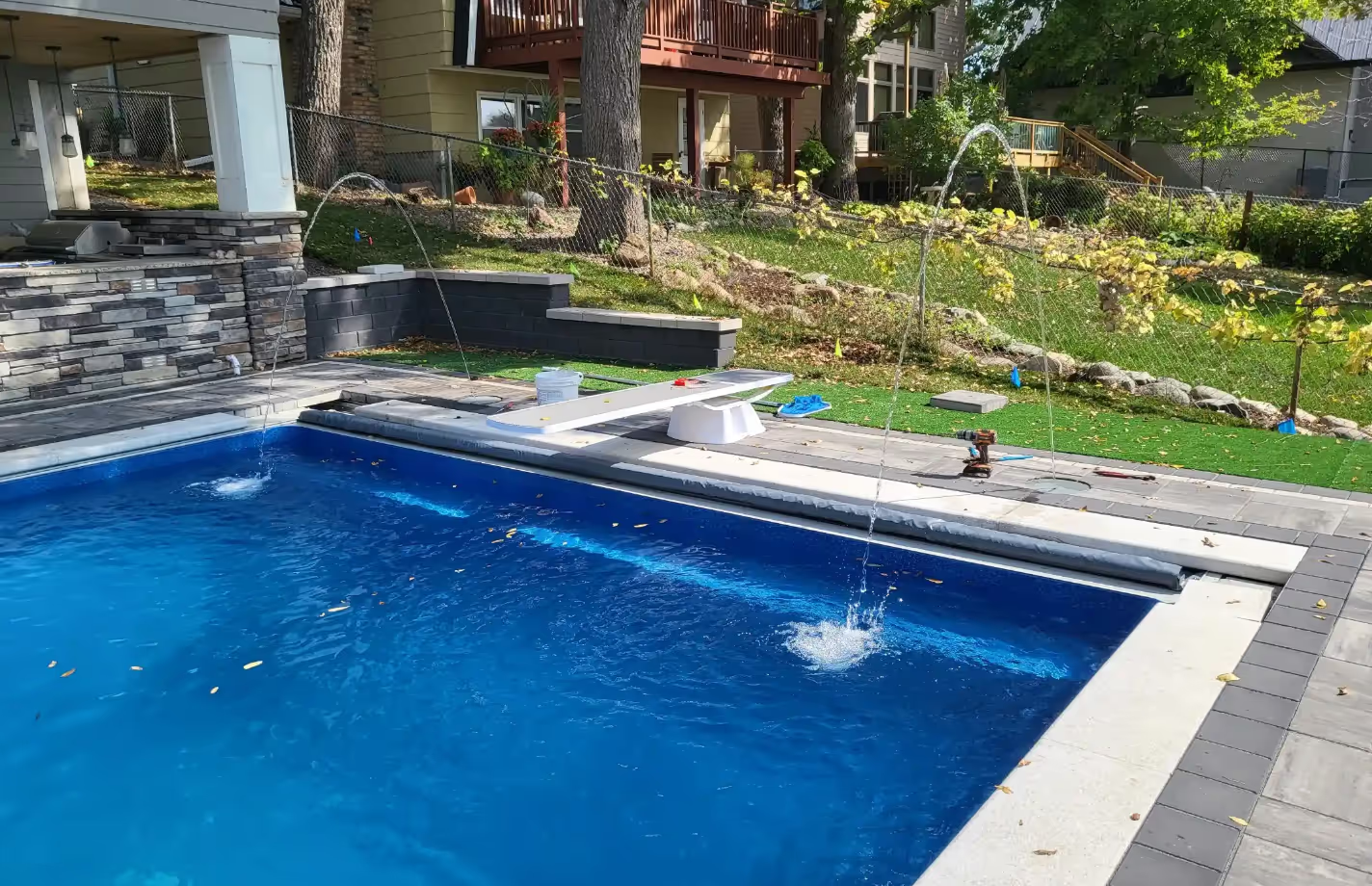
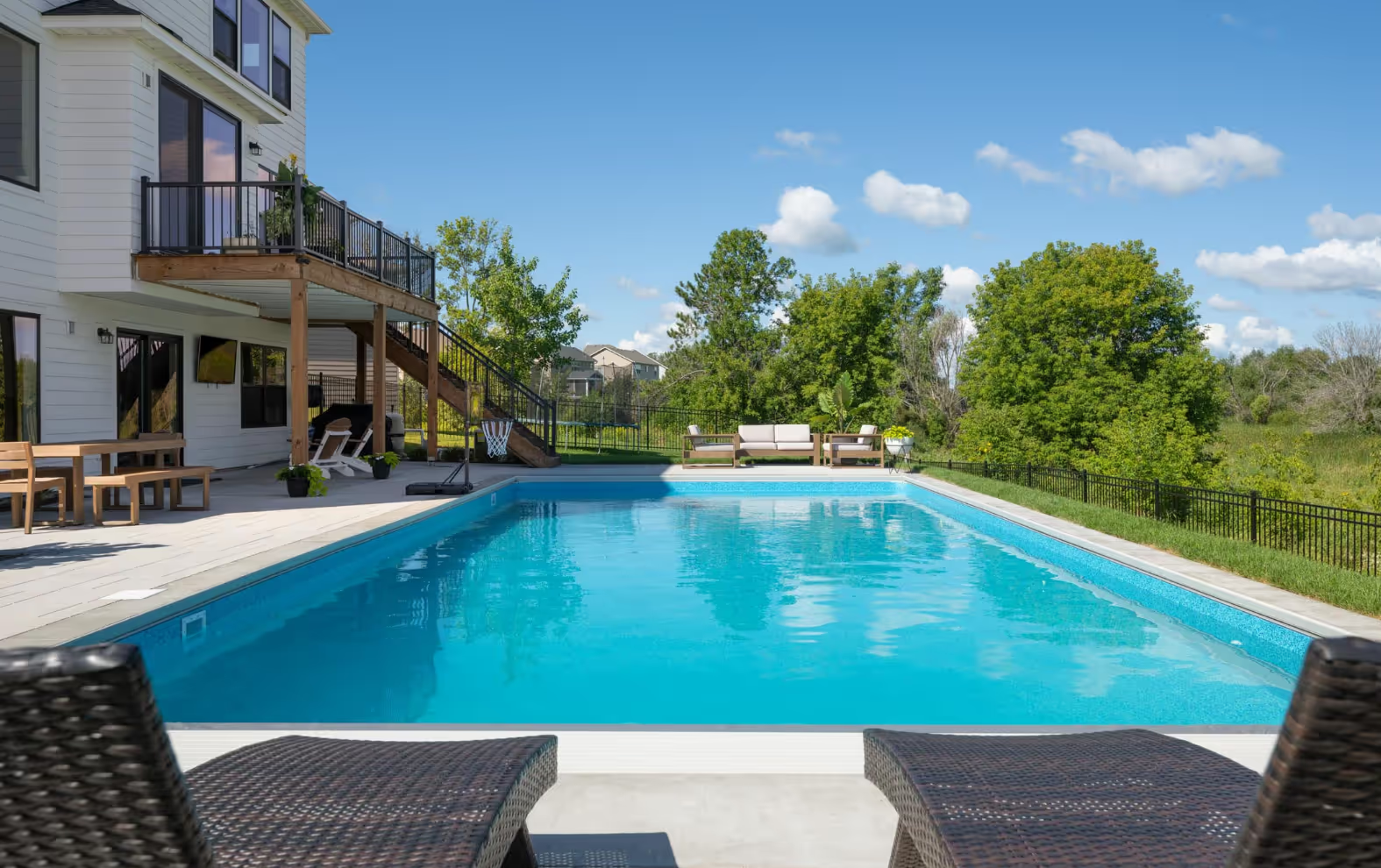
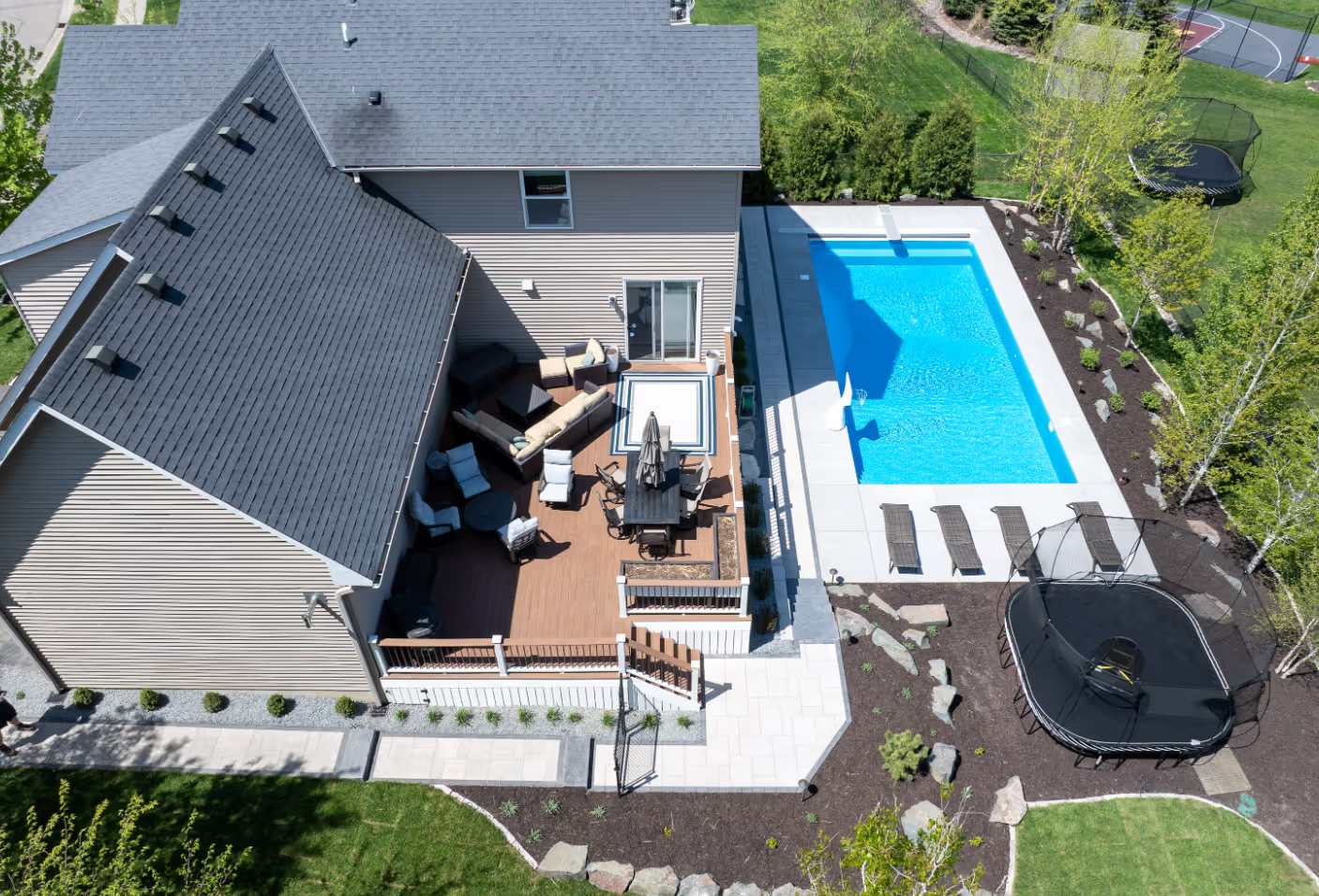
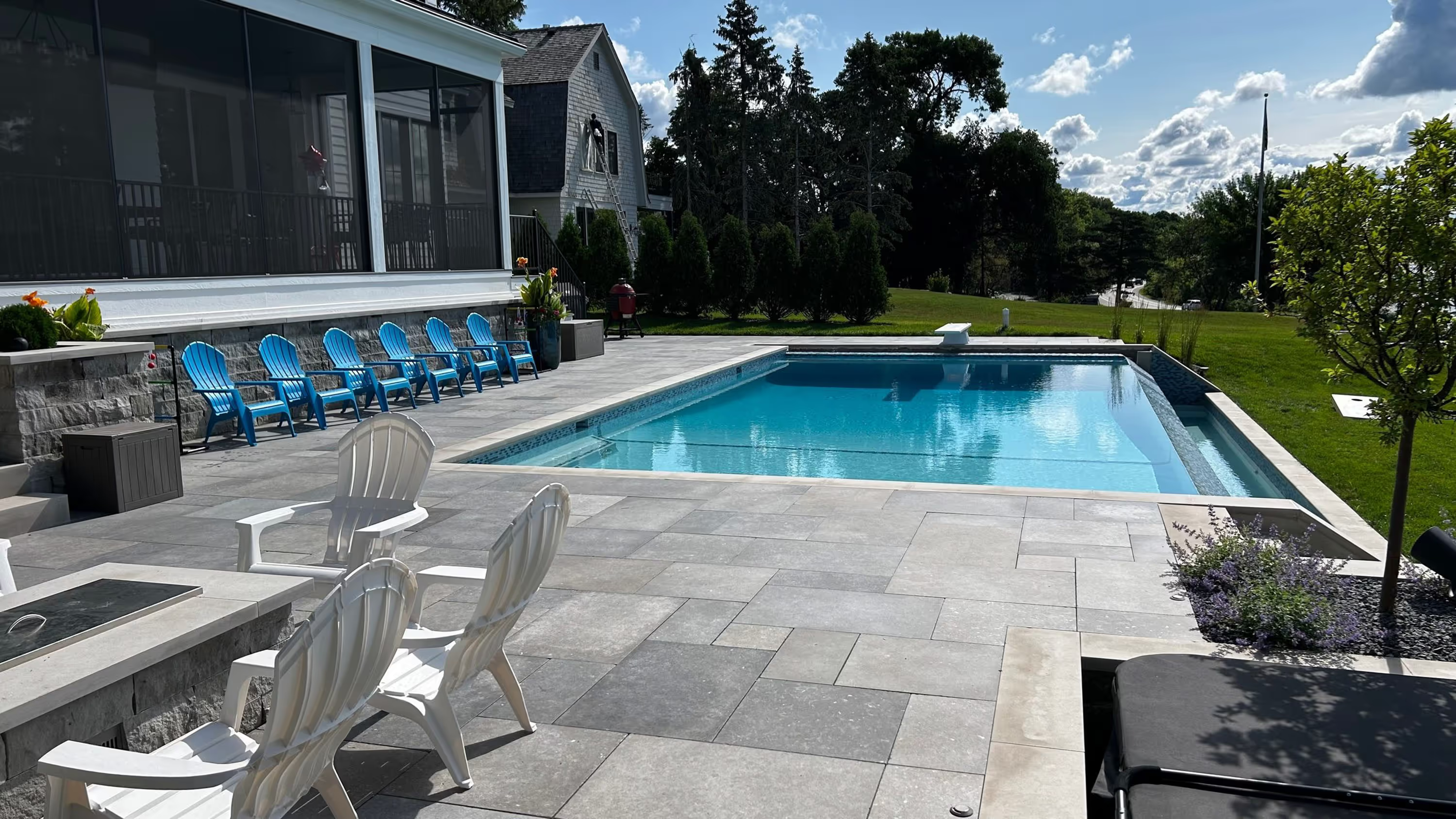
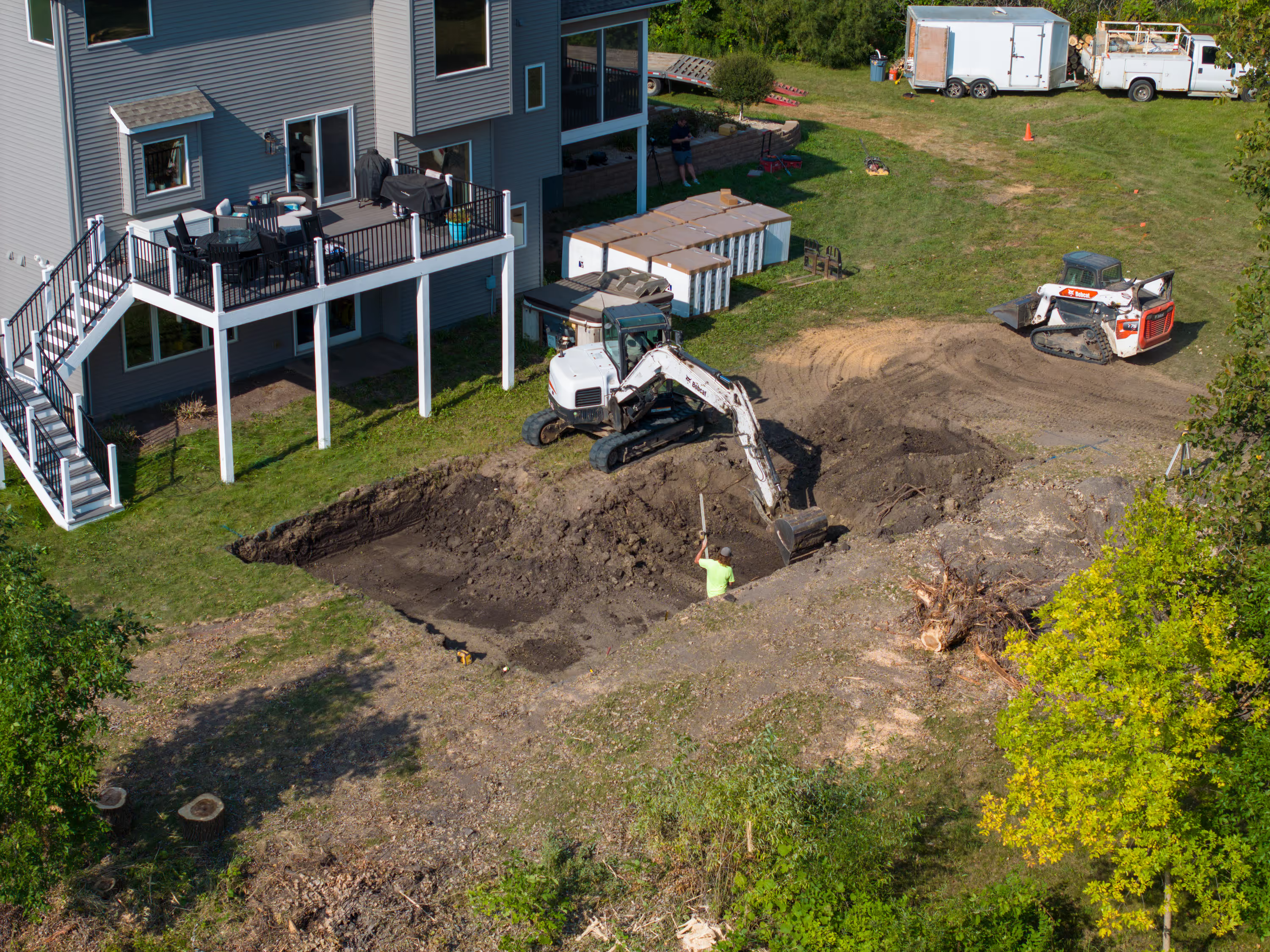
Learn how ICF pools can withstand Minnesota's varying temperatures.
Are you searching for swimming pool contractors near Minneapolis who understand Minnesota's brutal climate and can recommend pool construction that will last decades without cracking, leaking, or structural failures? If you're considering a fiberglass pool because salespeople promised "maintenance-free durability," you need to understand why fiberglass pools are particularly vulnerable to cracking in Minnesota's extreme freeze-thaw environment.
At Plan Pools, we've seen the aftermath of failed fiberglass pool installations throughout the Twin Cities. We've talked with frustrated homeowners in Lakeville, Prior Lake, Shakopee, and Eagan who discovered—years after installation—that their "durable" fiberglass pools developed cracks, leaks, and structural problems that cost tens of thousands to repair.
This comprehensive guide explains exactly why fiberglass pools crack in Minnesota's harsh climate, how freeze-thaw cycles create progressive damage, and why ICF (Insulated Concrete Form) construction delivers superior durability for Minnesota families. We'll examine the science behind cold-climate pool failures, review real owner experiences, and show you why concrete pool contractors who specialize in ICF construction build pools that outlast your home's foundation.
Whether you're in Lakeville, Eagan, Apple Valley, Burnsville, or anywhere in the Twin Cities metro area, understanding these durability factors will save you from expensive repairs and years of frustration.
Minnesota presents unique challenges for swimming pool construction that simply don't exist in warmer climates where fiberglass pools were originally developed. Our extreme temperature swings, freeze-thaw cycles, and ground movement create conditions that progressively damage rigid fiberglass structures.
Summer extremes in Minnesota regularly reach 90-95°F, with ground temperatures even higher in direct sunlight. Fiberglass pools absorb and conduct this heat, causing the resin and gel coat to expand.
Winter extremes commonly drop to -20°F to -30°F, with record lows approaching -40°F. These temperatures cause fiberglass materials to contract and become more brittle.
The total temperature swing of 130-140°F between summer highs and winter lows creates expansion and contraction cycles that stress fiberglass structures. Each cycle creates micro-stresses that accumulate over years, eventually manifesting as visible cracks.
Ground temperature variations lag air temperature but still cycle through 60-80°F ranges annually. The soil surrounding your pool expands and contracts, creating pressure points against the fiberglass shell.
Thermal cycling damage occurs because fiberglass is a composite material with different components (resin, glass fibers, gel coat) that expand and contract at different rates. This differential movement creates internal stresses that progressively weaken the structure.
Minnesota typically experiences 40-60 freeze-thaw cycles annually—days when temperature crosses the freezing point, causing water in soil to freeze and thaw repeatedly. This is far more cycles than fiberglass pools experience in southern states where they're predominantly installed.
Each freeze-thaw cycle expands and contracts soil surrounding your pool. When water in soil freezes, it expands by approximately 9%, creating significant pressure against pool walls and floor. When it thaws, that pressure releases. Forty to sixty cycles per year means your fiberglass pool experiences this pressure cycling dozens of times annually.
Ice lensing occurs when water migrates toward freezing fronts, creating ice layers that generate tremendous pressure. These ice lenses can form adjacent to pool structures, creating point loads that stress fiberglass shells in ways engineers never anticipated.
Frost heaving lifts structures when ice lenses form beneath them. While ICF pools' massive weight resists this uplift, lighter fiberglass pools can shift millimeters with each heave cycle—small movements that create stress fractures over time.
Ground movement is cumulative. Year one might see 2mm of movement, year two another 2mm, and so on. By year ten, that cumulative 20mm of movement has created stress concentrations that exceed fiberglass material capabilities, resulting in visible cracks.
Fiberglass pools were developed in warm climates—Florida, Arizona, Texas—where freeze-thaw cycles are rare or non-existent. Manufacturers optimized designs for those conditions: minimal ground movement, stable temperatures, and no seasonal soil expansion.
Minnesota's conditions weren't part of the design criteria. When fiberglass pool manufacturers engineering teams calculated structural requirements, they didn't account for 50+ annual freeze-thaw cycles, 140°F temperature ranges, or months of frozen ground creating sustained pressure against pool structures.
Material selection optimized for warmth. Fiberglass resins and gel coats work beautifully in consistently warm climates where materials remain flexible and stress-free. In Minnesota's cold, these materials become brittle and prone to cracking.
Installation methods assume stable soil. Fiberglass installation procedures developed for southern markets assume soil won't heave, shift, or generate hydrostatic pressure issues. These assumptions don't hold true in Minnesota.
Testing protocols don't replicate Minnesota. Manufacturers test fiberglass pools for structural integrity using climate simulations based on their primary markets—not Minnesota's extreme conditions. Pass all manufacturer tests and still fail in real-world Minnesota conditions.
Understanding how cracks develop in fiberglass pools helps explain why problems often don't appear until 5-10 years after installation—leading homeowners to believe initial quality was acceptable when underlying damage was progressing from day one.
Transportation stress is where many fiberglass pool failures begin, even though damage remains invisible during installation. Your pool travels 300-500 miles from manufacturing facilities in Iowa or Wisconsin to your Minnesota property.
Road vibrations subject the fiberglass shell to constant flexing. While secured on a trailer, the shell experiences thousands of small movements as the truck travels highways, turns corners, and navigates rough roads.
Loading and unloading stress occurs when cranes lift the shell using straps or chains. Improper rigging creates point loads that stress the fiberglass beyond design limits. Even proper rigging creates stress concentrations where straps contact the shell.
Micro-fractures form in the gel coat and underlying fiberglass layers during transport. These fractures are invisible to visual inspection but represent weak points where future cracks will propagate.
Storage yard handling adds more stress if pools sit in dealer yards for weeks or months before installation. Temperature cycling while supported on blocking creates uneven stress distribution.
The invisible damage clock starts during transportation, but symptoms won't appear until Minnesota's freeze-thaw cycles, ground movement, and thermal stress exploit these initial weak points years later.
Excavation variations create uneven support under fiberglass pools. Despite best efforts, excavations aren't perfectly smooth. Small rocks, tree roots, and soil variations create point loads where the shell bears unevenly.
Backfill material quality affects long-term performance dramatically. Fiberglass pools require special backfill materials (often sand or pea gravel) that provide uniform support without point loading. Improper backfill creates stress concentrations.
Compaction variations around the pool mean some areas support the shell well while others leave voids. These voids allow shell movement and flexing that generate stress fractures.
Plumbing penetrations through the fiberglass shell create stress concentration points. Every pipe penetration represents a weak point where cracks commonly initiate as ground movement creates differential forces between rigid plumbing and flexible shell.
Attachment points for ladders, lights, skimmers, and returns all create stress concentrations. These attachment points can't move with the shell, creating localized stresses during temperature cycling and ground movement.
Years 1-3: Invisible damage accumulation. Minnesota's freeze-thaw cycles begin stressing micro-fractures from shipping and installation. No visible damage yet, but internal weakening progresses with each temperature cycle.
Years 4-6: Gel coat spider cracking appears. Fine crack networks become visible, usually starting at stress points—plumbing penetrations, steps, wall-to-floor transitions. Homeowners often dismiss these as "cosmetic" without realizing they indicate underlying structural issues.
Years 7-9: Cracks penetrate into fiberglass layers. What started as gel coat surface cracks now extend into the structural fiberglass, allowing water penetration between layers. Leaks often begin during this period, though they may be too slow to notice immediately.
Year 10+: Structural integrity compromised. Cracks now fully penetrate the shell, creating obvious leaks requiring expensive repairs. Delamination may occur where water between fiberglass layers causes bonding failures. Repair costs escalate dramatically.
The progressive nature of fiberglass pool cracking means problems worsen over time rather than stabilizing. Unlike ICF pools where structural integrity is permanent, fiberglass pools become less durable with each passing year.
Lakeville 2021: "We bought our home with a 7-year-old fiberglass pool that looked perfect. By year 9, we noticed water level dropping faster than normal evaporation. After paying $1,200 for leak detection, we discovered spider cracks in three locations allowing slow seepage. Repair estimate: $7,800. We're considering whether to repair or replace with an ICF pool."
Prior Lake 2019: "Our fiberglass pool developed cracks around the step area after just 6 years. The pool company blamed our 'harsh climate' and said the warranty didn't cover ground movement damage. We paid $4,500 for repairs, but the cracks returned two years later. We're now dealing with recurring leaks and wish we'd chosen concrete construction initially."
Eagan 2020: "Nobody warned us that fiberglass pools could crack from Minnesota freeze-thaw cycles. After 11 years, our pool has spider cracks in multiple locations, the gel coat is rough and porous, and we're losing about 2 inches of water per week even with the leak 'repaired.' Getting estimates for complete removal and ICF pool installation—we should have done this 11 years ago."
Shakopee 2022: "The worst part isn't just the cracking—it's finding someone qualified to repair it. We've called a dozen pool companies and only two even work on fiberglass repairs. One quoted $9,200 and said they couldn't start for 3 months. The other quoted $12,500. Meanwhile our pool sits unusable during peak summer."
ICF (Insulated Concrete Form) pool construction eliminates the cracking vulnerabilities that plague fiberglass pools in Minnesota's climate. Let's examine why reinforced concrete pools deliver superior long-term durability.
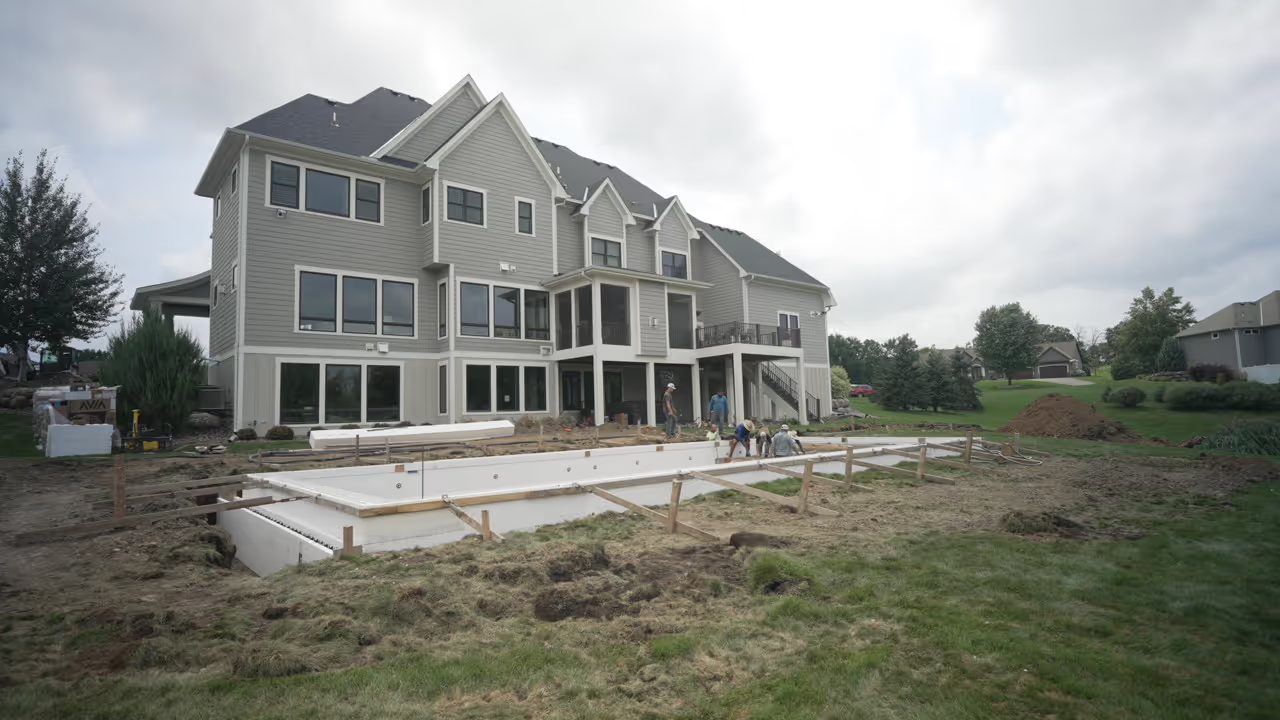
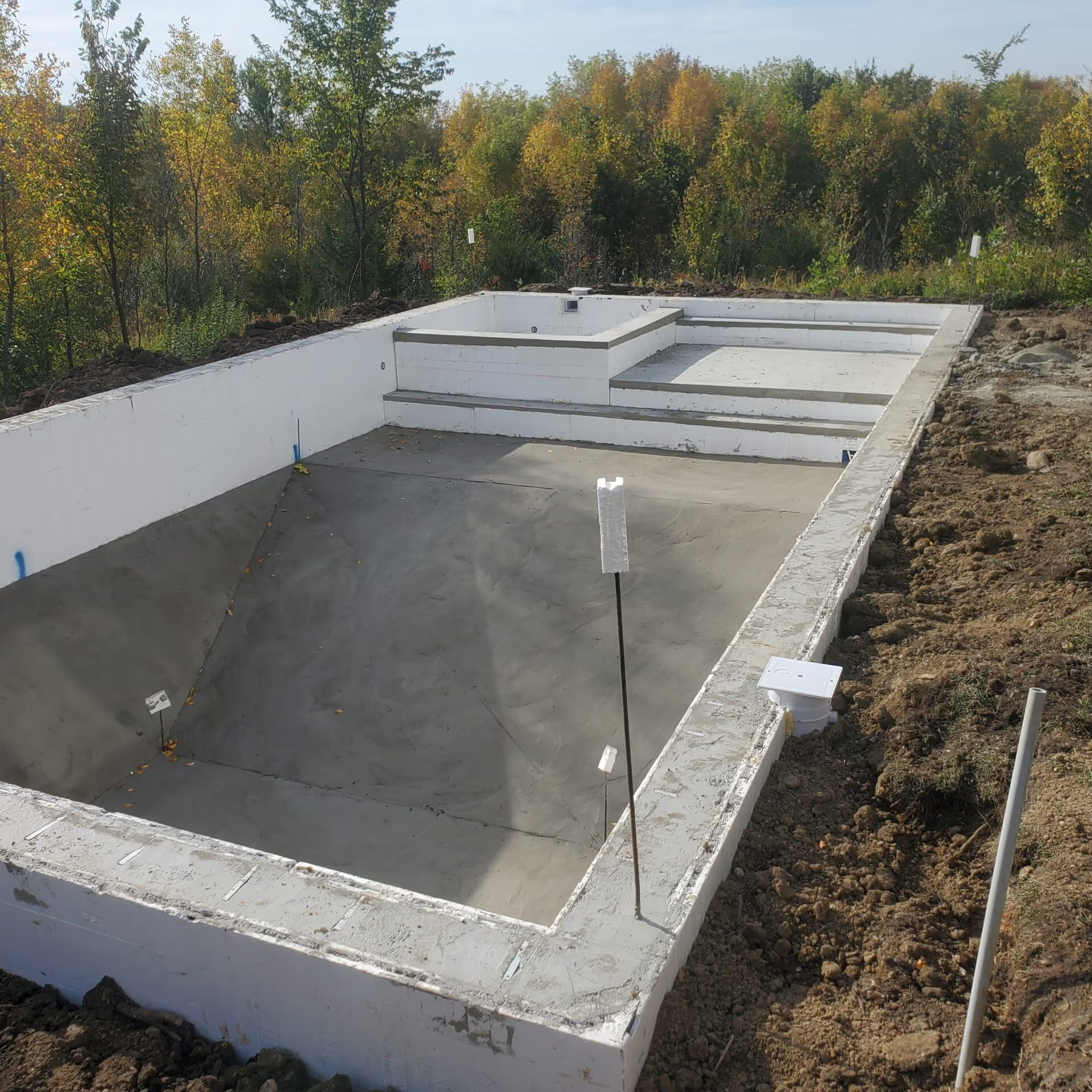
Insulated Concrete Forms consist of high-density foam blocks that interlock to create formwork for reinforced concrete walls. These forms remain in place after concrete curing, providing permanent double-sided insulation.
Reinforcing steel (rebar) creates a three-dimensional grid within the wall thickness. This steel reinforcement resists both tensile and compressive forces, preventing crack formation and propagation.
Cast-in-place concrete is poured into the ICF forms, creating a monolithic structure without seams, joints, or weak points. The concrete bonds perfectly with reinforcing steel, creating a composite structure stronger than either material alone.
Proper concrete mix design for Minnesota includes air entrainment (microscopic air bubbles) that provides freeze-thaw resistance. Water entering these air bubbles has room to expand when freezing without generating internal pressure that causes cracking.
Curing process allows concrete to achieve design strength over 28 days. During this time, chemical reactions (hydration) create incredibly strong calcium silicate hydrate crystals that bind everything together.
The resulting structure is stronger than your home's foundation walls, completely monolithic, and designed specifically for Minnesota's harsh climate.
Massive weight means ICF pool structures don't move with freeze-thaw cycles. While fiberglass pools shift millimeters with each cycle, ICF pools' 50-70 ton weight anchors them permanently. Ground moves around the pool, not against it.
Flexibility through reinforcement allows ICF walls to distribute stress rather than concentrating it. When external forces try to crack concrete, reinforcing steel engages and transfers that stress across wide areas, preventing crack initiation.
Air entrainment in properly mixed concrete provides freeze-thaw protection. When water enters concrete pores and freezes, microscopic air bubbles provide expansion space, preventing internal pressure buildup that causes cracking.
Structural redundancy means even if a hairline crack somehow formed (extremely rare with proper construction), multiple layers of rebar would prevent propagation. Cracks don't spread or worsen over time because steel reinforcement holds everything together.
Design for Minnesota conditions is fundamental to Plan Pools' ICF construction approach. We don't use designs developed for Florida and hope they work in Minnesota—we engineer specifically for freeze-thaw cycles, ground movement, and thermal stress our climate creates.
Plan Pools offers lifetime structural warranties on ICF pool walls because we know they won't crack, leak, or fail. This isn't marketing hype—it's confidence backed by hundreds of Minnesota installations performing flawlessly for decades.
Compare warranty coverage:
Fiberglass Pool Structural Warranty:
ICF Pool Structural Warranty (Plan Pools):
The warranty difference reflects genuine confidence in construction methods. Fiberglass manufacturers know their pools crack in cold climates, so they limit warranty coverage accordingly. ICF pool contractors know reinforced concrete doesn't fail, so lifetime warranties create no risk.
Let's examine structural durability through measurable factors:
Compressive strength:
Tensile strength:
Freeze-thaw resistance:
Impact resistance:
Long-term stability:
Service life:
Even if fiberglass pool shells somehow survived Minnesota's climate intact, the gel coat surface layer creates separate durability concerns that manifest as surface cracking, roughness, and permeability.
Gel coat is essentially thick paint applied during fiberglass manufacturing. It provides the smooth, colored surface everyone associates with fiberglass pools, but it's not a structural component—it's a cosmetic and waterproofing layer.
Thickness matters: Gel coat is typically 15-25 mils thick (0.015-0.025 inches). That's thinner than a credit card. This thin layer provides all the waterproofing, color, and surface quality for the entire pool.
It's the first line of defense against water, chemicals, UV exposure, and mechanical damage. When gel coat fails, water penetrates into underlying fiberglass layers, causing progressive structural deterioration.
Minnesota's UV exposure is intense during summer months with 16+ hours of daylight in June. This prolonged UV exposure breaks down gel coat polymers, causing fading, chalking, and surface deterioration.
Chemical exposure from chlorine, pH variations, and mineral content in Minnesota's hard water all attack gel coat surfaces. Perfect chemistry maintenance is required to prevent accelerated deterioration—something few homeowners achieve consistently.
Spider cracking gets its name from the fine crack networks that radiate from stress points, resembling spider webs. These cracks are often the first visible sign of fiberglass pool damage in Minnesota.
Temperature cycling causes differential expansion between gel coat and underlying fiberglass. Gel coat wants to expand/contract at different rates than structural fiberglass, creating internal stresses that manifest as surface cracks.
Stress concentration points where spider cracking typically initiates include:
Spider cracks allow water penetration into fiberglass layers beneath. Once water gets between gel coat and fiberglass, freeze-thaw cycles create progressive damage. Water expands 9% when freezing, generating pressure that peels gel coat away from underlying material.
Lakeville homeowner experience: "Spider cracks started appearing around our pool steps after 7 years. We didn't think much of it—they looked cosmetic. But three years later, that area was delaminating, rough to touch, and obviously leaking. Repair required removing and replacing an entire section of gel coat. Cost: $6,800."
Unlike vinyl liners that maintain integrity until physical damage occurs (then get replaced affordably), gel coat deteriorates progressively, creating escalating maintenance costs without clear "replace it" decision points.
Year 1-5: Good condition. Gel coat looks perfect, feels smooth, and performs well. Minimal maintenance required beyond proper chemistry.
Year 6-10: Early deterioration signs. Slight fading, minor spider cracking at stress points, increased chemical usage to maintain balance, more frequent stain removal needed.
Year 11-15: Obvious deterioration. Noticeable fading, widespread spider cracking, surface roughness developing, frequent staining despite good chemistry, water loss from micro-leaks through cracks.
Year 16-20: Major problems. Rough surface harbors algae, porosity requires extensive chemical use, visible delamination in high-stress areas, frequent leak repairs needed. Decision point: expensive refinishing or pool replacement.
The cost progression:
Total 20-year gel coat maintenance: $25,000-$45,000 for Minnesota fiberglass pool owners who experience typical deterioration patterns.
ICF pools use vinyl liners that provide a completely different maintenance profile:
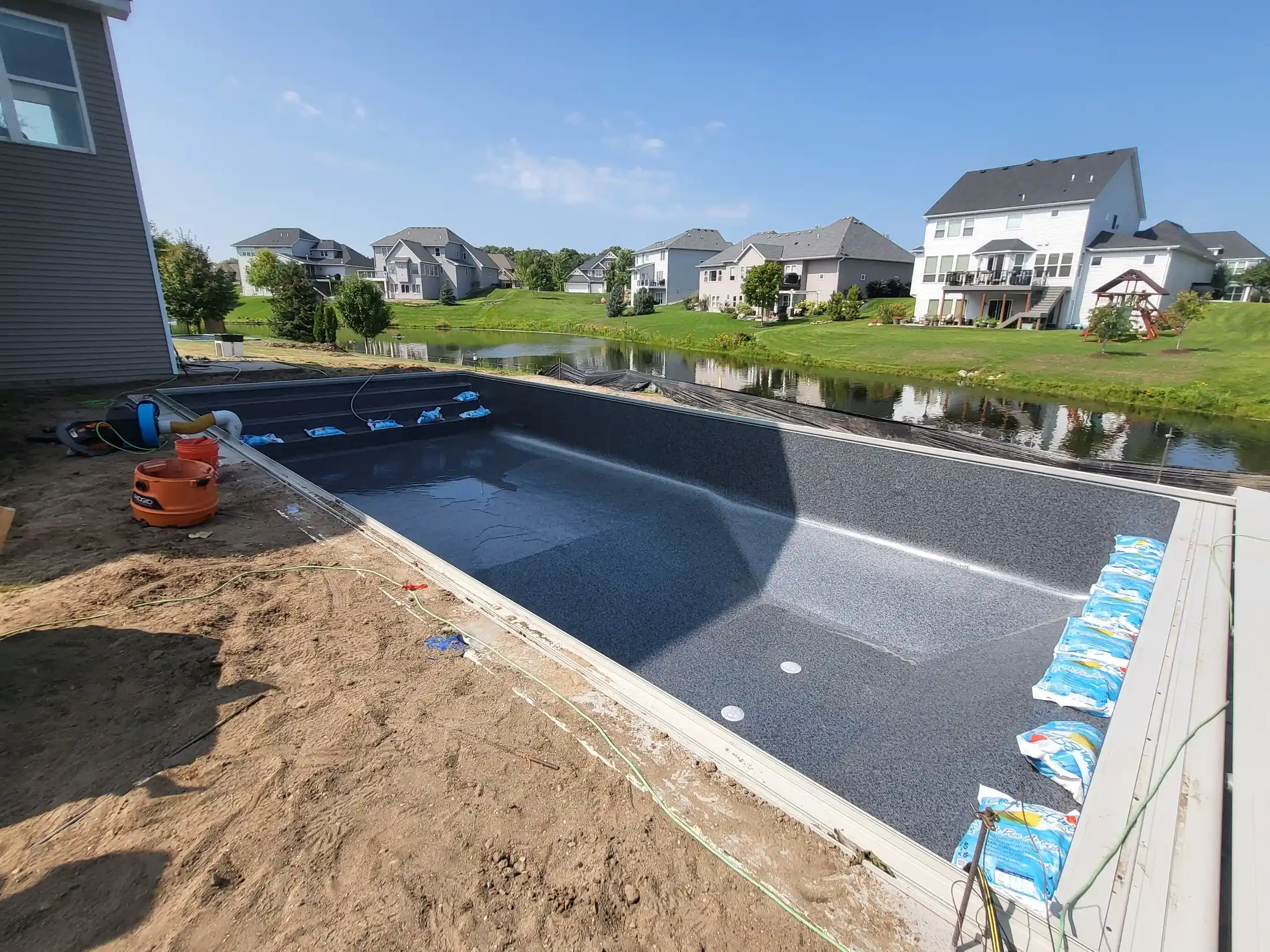
Vinyl liners maintain appearance throughout their 8-12 year service life. They don't fade progressively, spider crack, or become porous. They look good until physical damage occurs, then get replaced affordably.
Replacement is straightforward: When vinyl liners reach end-of-life, replacement takes 1-2 days and costs $4,000-$6,000. No grinding, refinishing, or extensive surface preparation. Remove old liner, install new one, refill pool.
Structural integrity independent of liner: The ICF structure provides waterproofing and strength. Vinyl liner is essentially decorative and protective—not structural. If a liner fails prematurely, pool structure remains perfect.
Modern liner durability exceeds 10-12 years with proper chemistry. Minnesota ICF pool owners routinely report 12-15 years between liner replacements, especially with salt chlorination systems that reduce chemical wear.
20-year comparison:
The liner replacement model simply makes more sense for Minnesota pool owners: predictable maintenance intervals, affordable costs, and independent of structural integrity.
Let's examine real experiences from Minnesota pool owners 10 years after installation, comparing fiberglass and ICF pool conditions:
Initial investment (2015): $128,000 including basic deckingCurrent condition:
Total additional costs through year 10: $11,400
Owner's perspective: "We spent $128,000 because the salesperson promised 'maintenance-free' ownership. Ten years in, we've spent another $11,400 on repairs and maintenance, chemistry is getting harder to balance, and we're facing $12,000-$15,000 refinishing costs in another 5-8 years. If we'd known, we would have chosen concrete construction and invested the $30,000 price difference in landscaping."
Initial investment (2015): $94,000 including comparable deckingCurrent condition:
Total additional costs through year 10: $6,200
Owner's perspective: "Best decision we made was choosing Plan Pools' ICF construction. We saved $34,000 upfront compared to fiberglass quotes, our heating bills are incredibly low, and except for one easy liner replacement, we've had zero problems. Our pool looks perfect, the structure is solid, and we know it'll last for generations. Neighbors with fiberglass pools are dealing with cracks, leaks, and expensive repairs. We're just swimming and enjoying our investment."
Fiberglass Pool (10 years):
ICF Pool (10 years):
Difference: $43,200 in favor of ICF construction—and the gap widens every year as fiberglass deterioration accelerates while ICF structure remains perfect.
When searching for swimming pool contractors in Minnesota, prioritize durability and long-term performance over flashy marketing claims about "quick installation" or "maintenance-free" surfaces.
If you're considering fiberglass despite the durability concerns, ask these critical questions:
How many fiberglass pools have you installed in Minnesota specifically? Experience in cold climates matters more than total installations in warm states.
What percentage of your fiberglass pools develop cracks within 10 years? Honest contractors will acknowledge some failure rate. Evasive answers suggest they know problems exist.
Can you show me 10-15 year old fiberglass pools you've installed? Visit older installations and inspect for spider cracking, gel coat deterioration, and repairs. Talk to those homeowners about their experience.
What's your warranty on gel coat? Understand coverage duration and exclusions. "Lifetime" often means 10-15 years with progressive limitations.
How do you address high water table concerns? Minnesota's water tables make floating pool issues common. What drainage systems do they install to prevent this?
Who handles repairs when cracks develop? If the installing company doesn't do repairs, you'll struggle to find qualified help when problems arise.
What's the realistic gel coat refinishing timeline? Get honest assessment of when refinishing becomes necessary and what it costs.
We could sell fiberglass pools if we wanted—manufacturers would love our business. But we don't because we've seen too many failures in Minnesota's climate, and we're committed to delivering pools that perform flawlessly for generations.
Our ICF construction specialization stems from understanding Minnesota's unique requirements and choosing construction methods engineered specifically for our conditions.
Lifetime structural warranties aren't marketing—they're genuine confidence that properly constructed reinforced concrete pools won't crack, leak, or fail regardless of freeze-thaw cycles, ground movement, or temperature extremes.
Our in-house construction teams ensure consistent quality, proper concrete mix designs, correct rebar placement, and attention to details that prevent problems. We don't subcontract to lowest bidders who cut corners.
Hundreds of satisfied customers throughout Lakeville, Eagan, Prior Lake, Shakopee, and the Twin Cities metro have trusted our ICF construction—and ten years later, they're swimming in perfect pools while neighbors with fiberglass deal with repairs.
We focus on value, not price. Yes, our ICF pools typically cost $30,000-$40,000 less than comparable fiberglass alternatives. But we recommend ICF because it's superior construction, not because it's cheaper. The cost savings are a bonus—the real value is decades of trouble-free performance.
Minnesota families deserve swimming pools engineered for our climate's demands. Fiberglass pools—designed for warm southern states where freeze-thaw cycles are rare—simply don't perform reliably in our harsh conditions. The progressive cracking, gel coat deterioration, and structural failures Minnesota fiberglass owners experience aren't anomalies—they're predictable outcomes of using inappropriate construction methods in extreme climates.
ICF pool construction from Plan Pools delivers the durability Minnesota homeowners need:
If you're in Lakeville, Eagan, Prior Lake, Shakopee, Apple Valley, Burnsville, or anywhere in the Twin Cities metro area, contact Plan Pools today to learn how ICF construction delivers superior durability for Minnesota conditions.
Text Joe at 952-994-6032 or visit our website to explore completed ICF pool projects and read customer reviews. Let's build your family's backyard oasis with construction methods that last generations, not construction methods that crack within years.
Learn more about ICF pool construction and discover why Plan Pools has become Minnesota's leading ICF pool contractor. Your family's pool investment deserves construction that performs flawlessly for decades—choose ICF, choose durability, choose Plan Pools.
Plan Pools serves Lakeville, Eagan, Prior Lake, Shakopee, Apple Valley, Burnsville, Savage, Farmington, Rosemount, and the entire Twin Cities metro area. We're Minnesota's ICF pool construction specialists, building pools engineered specifically for our harsh climate and backed by lifetime structural warranties.