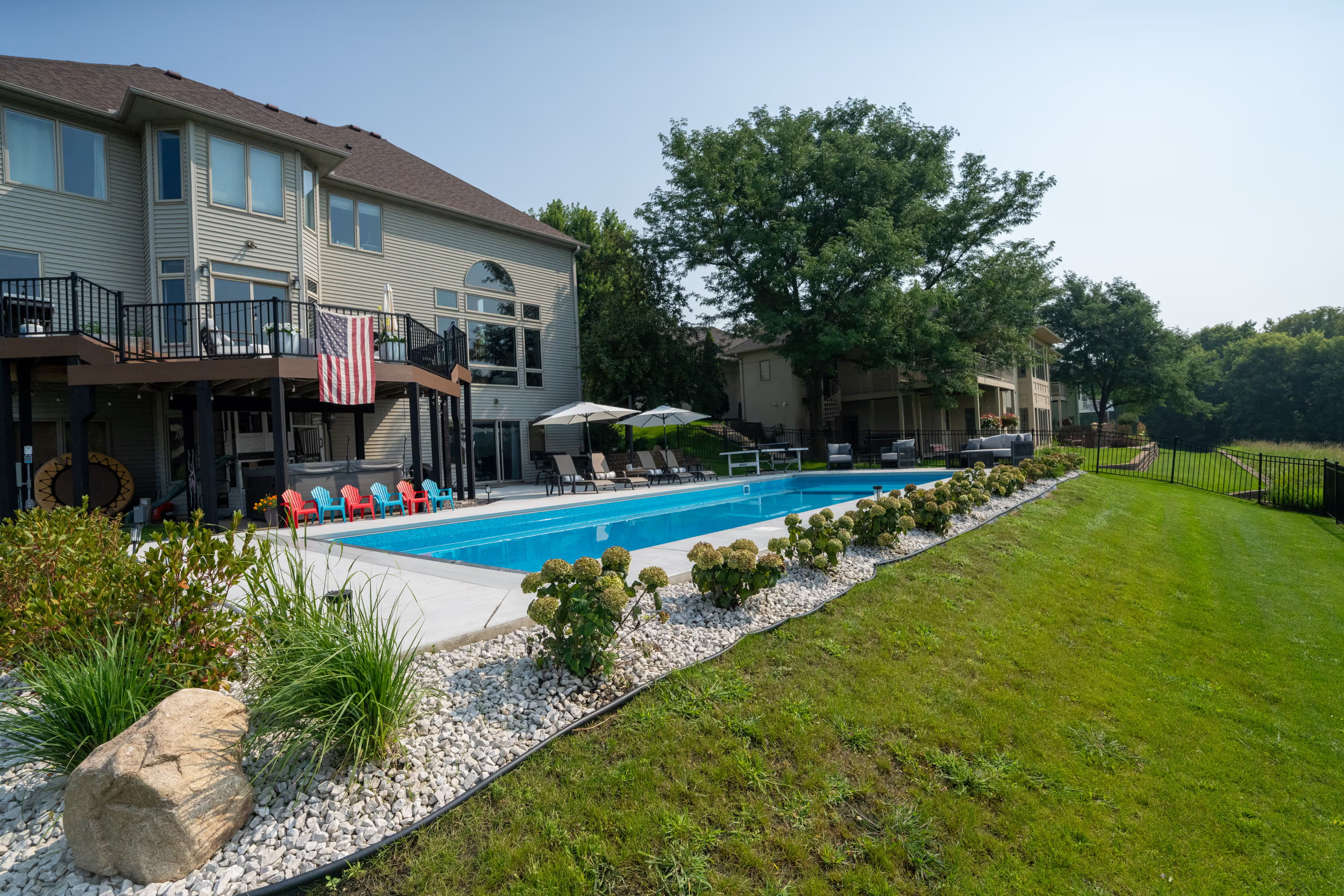
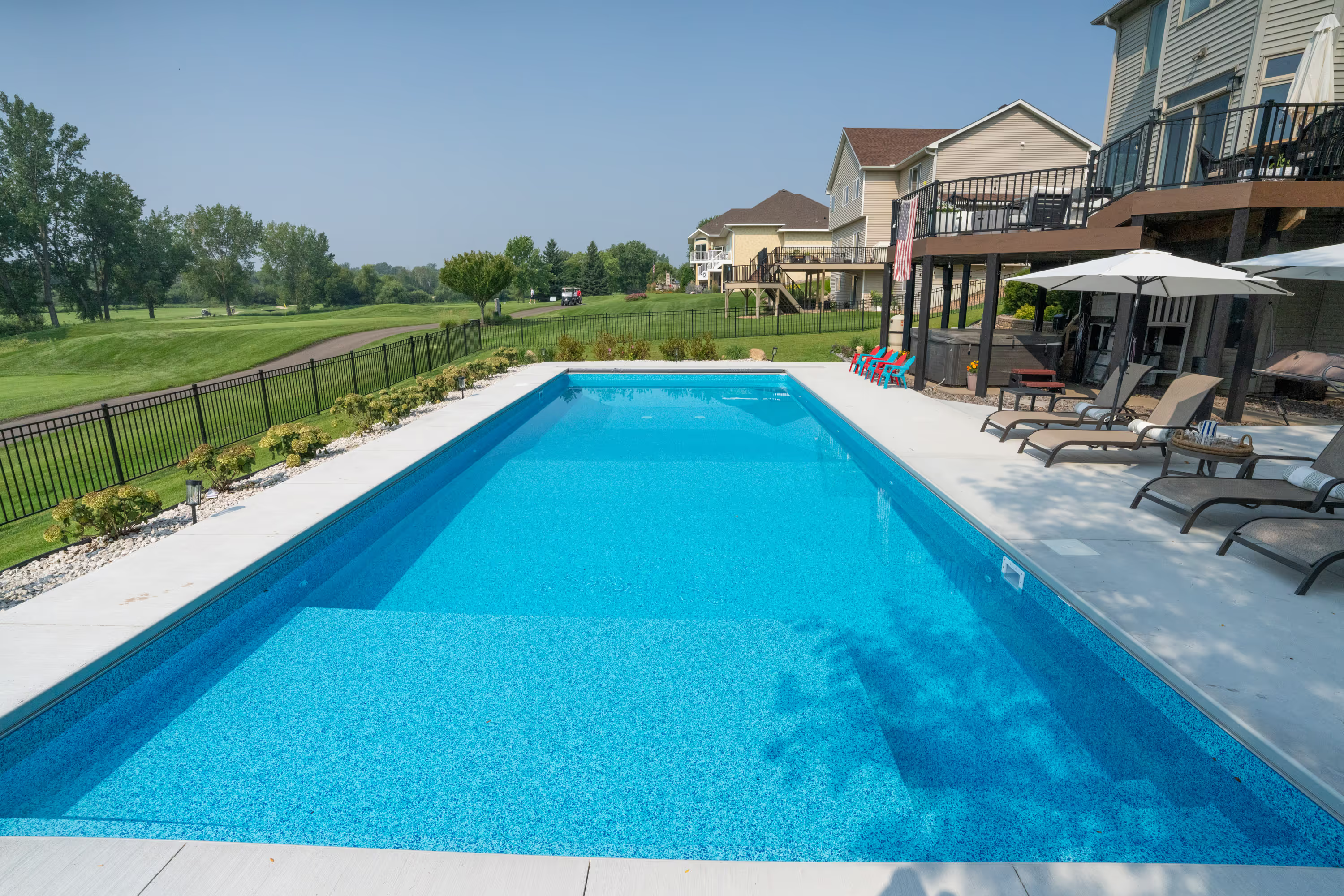
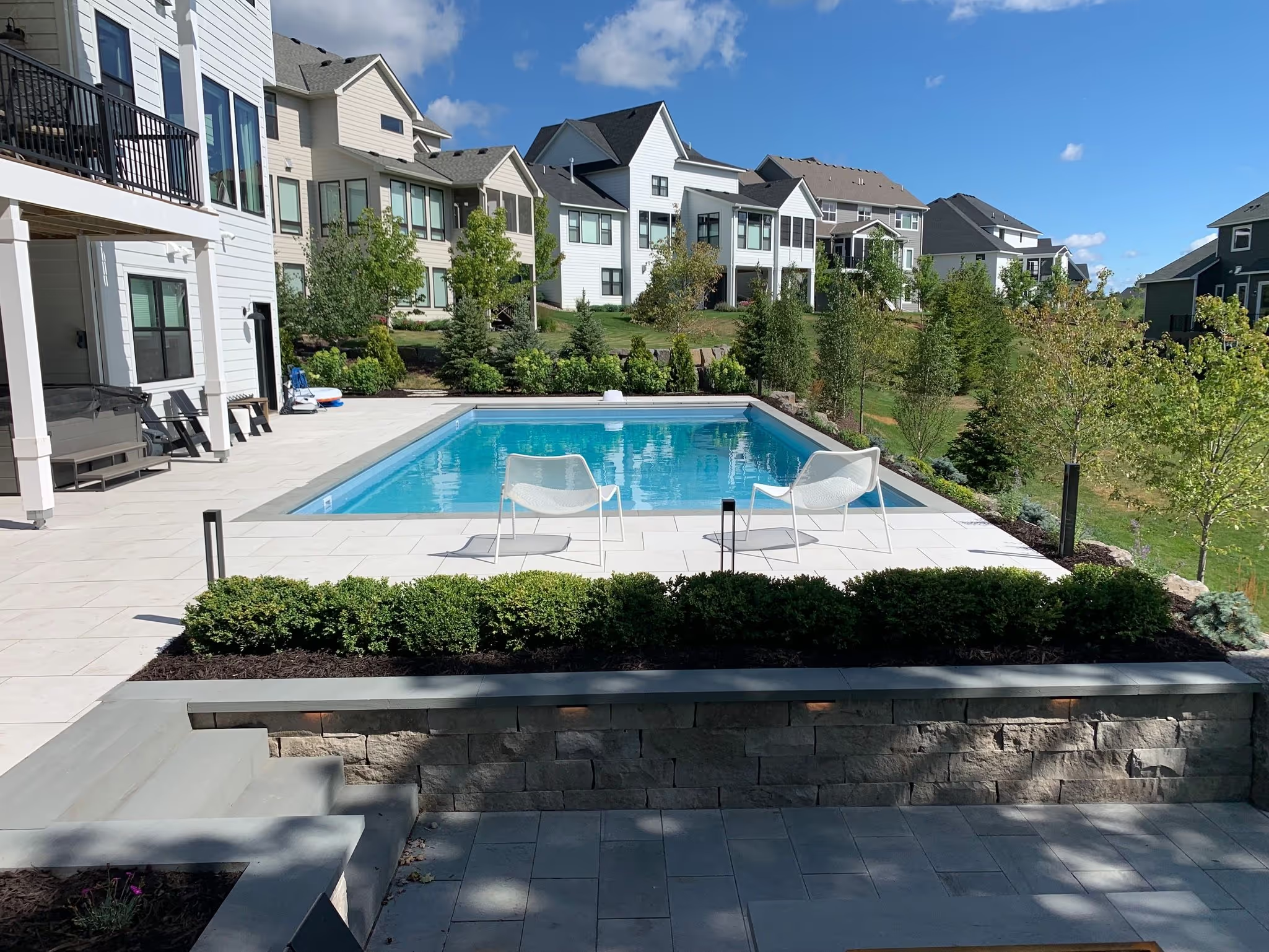
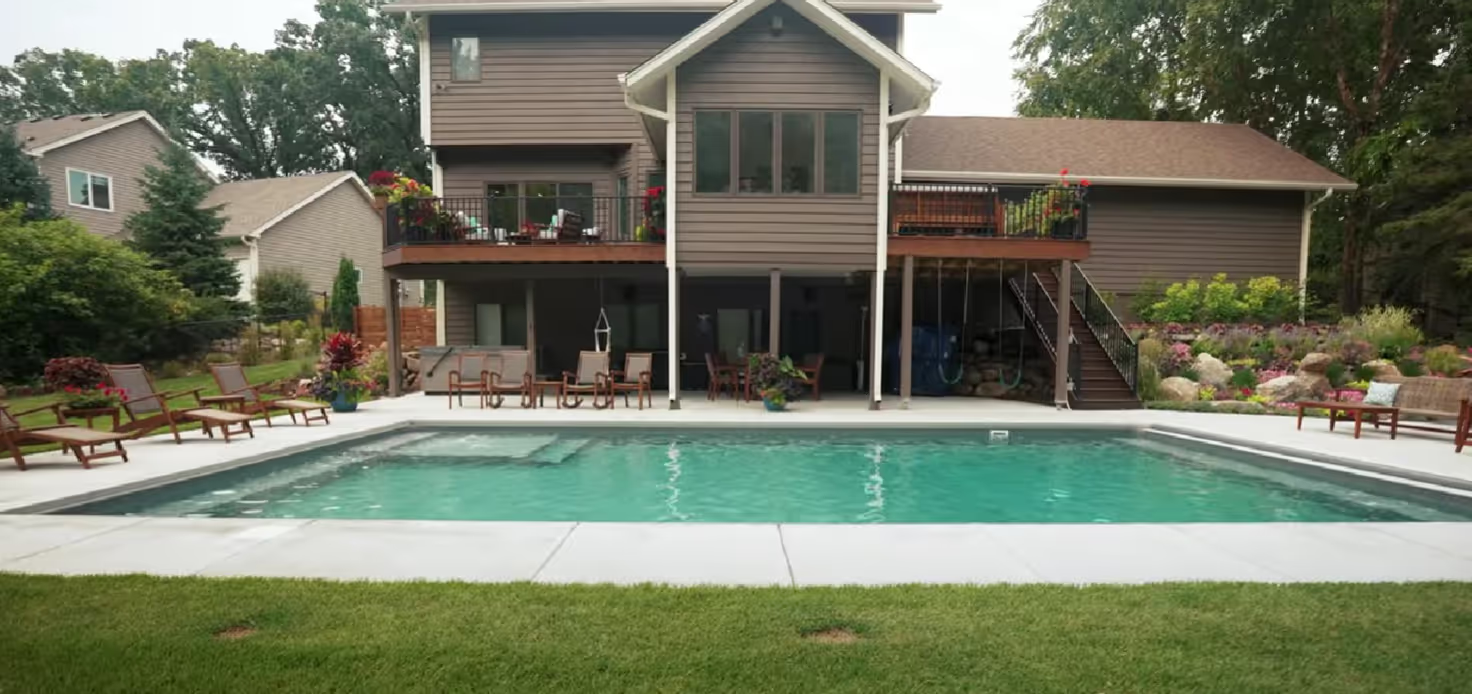
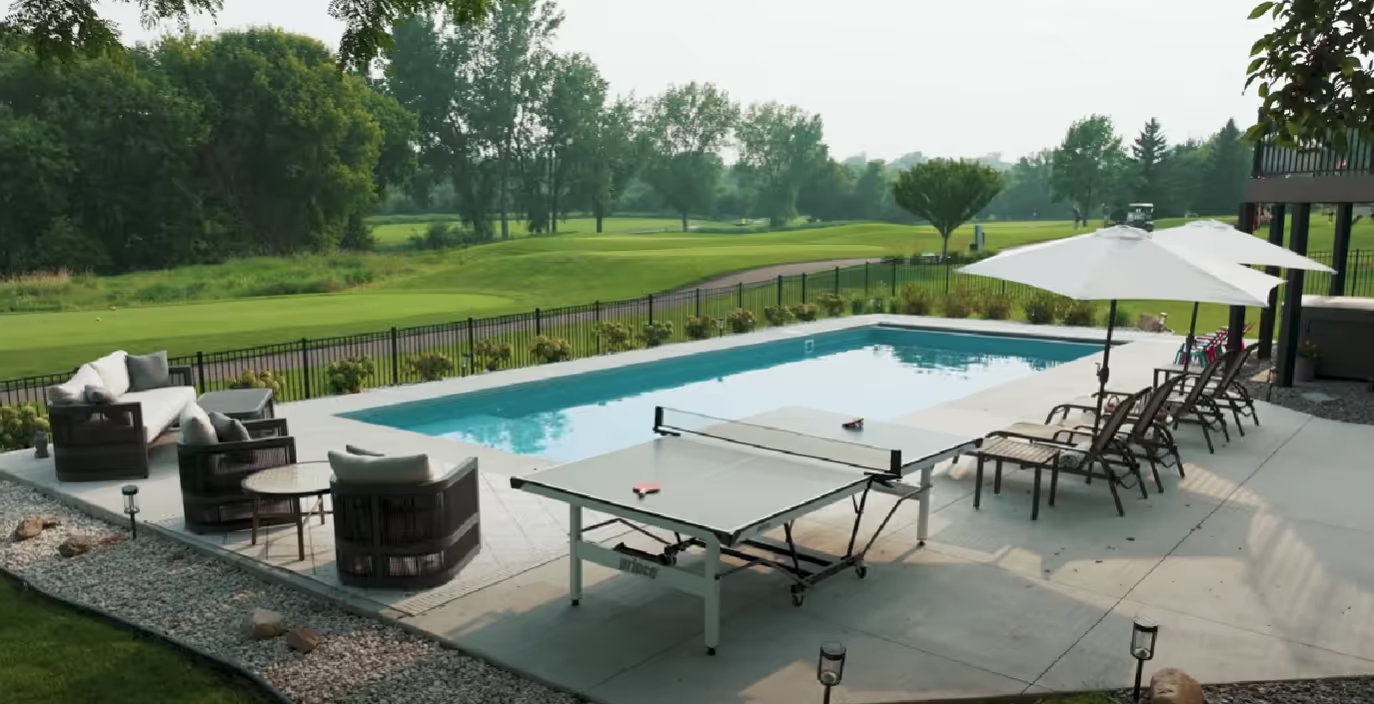
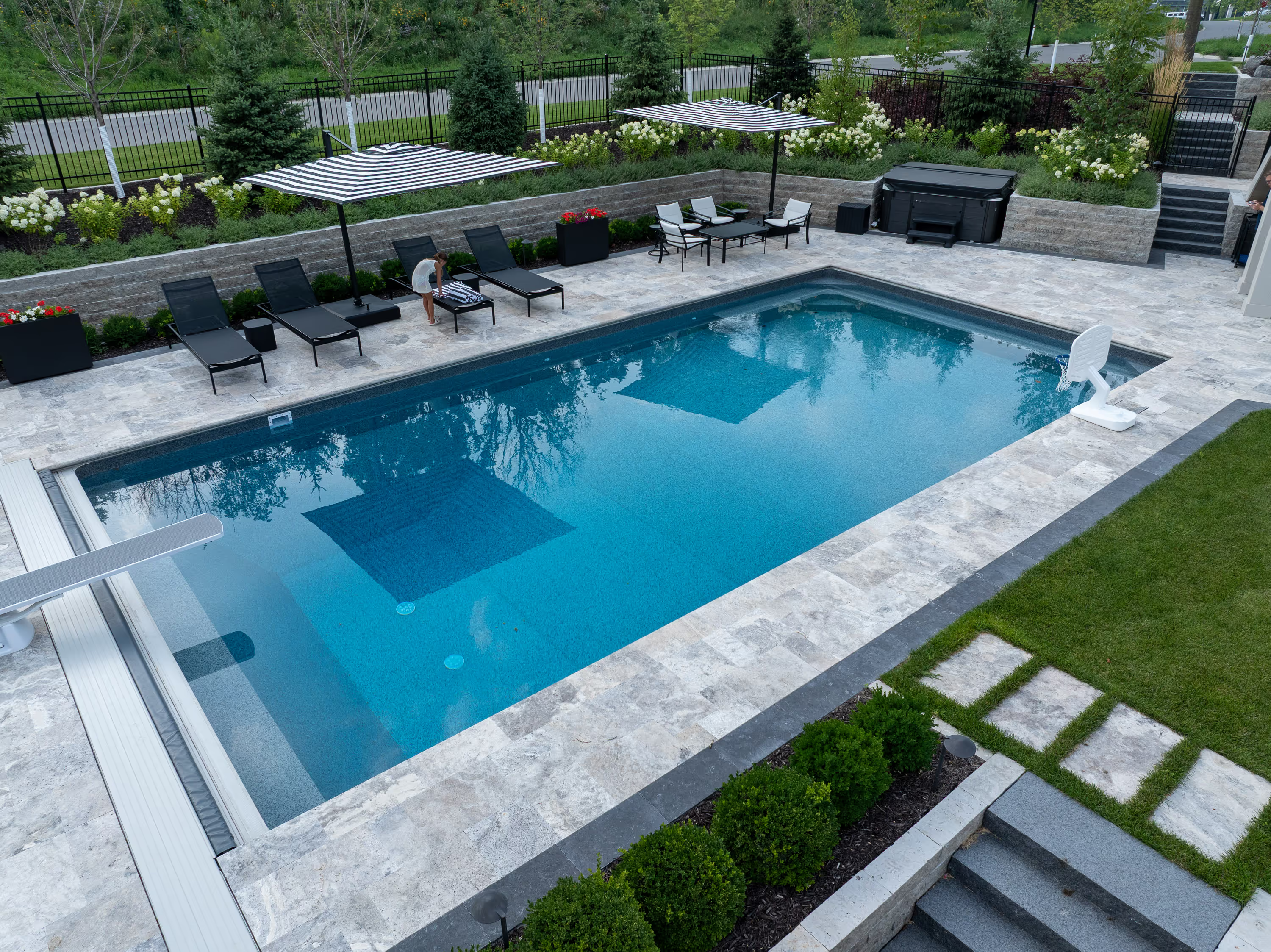
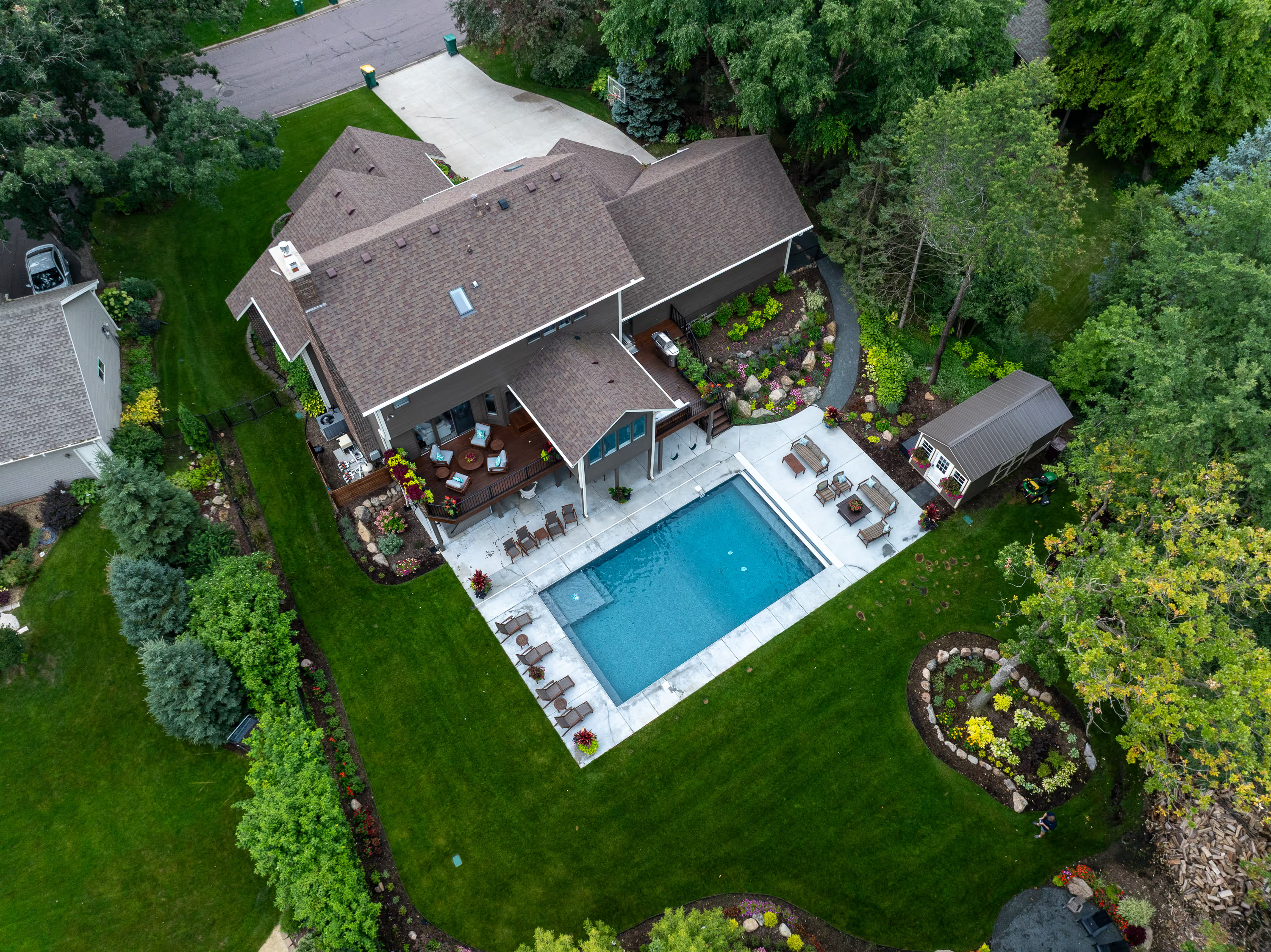
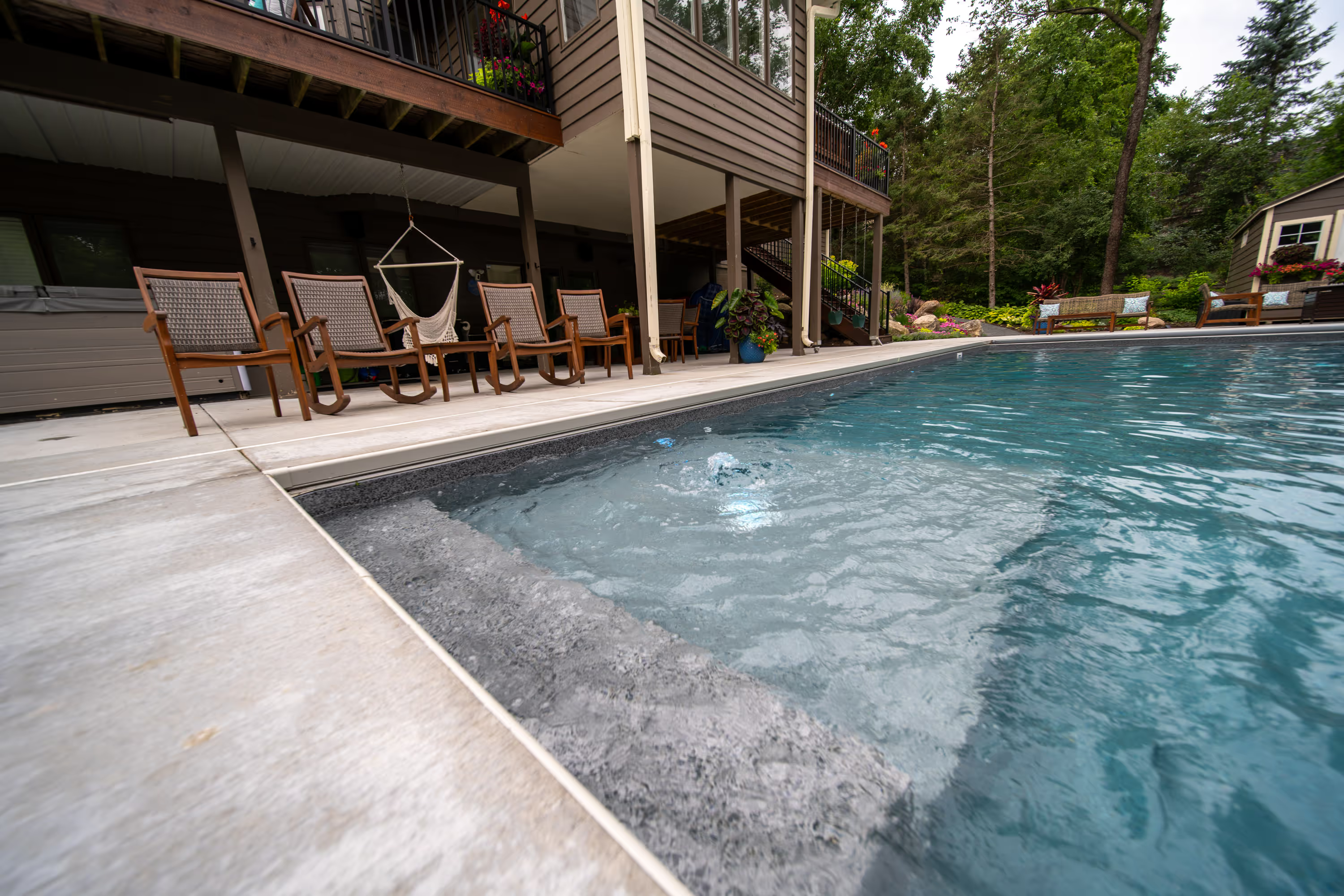
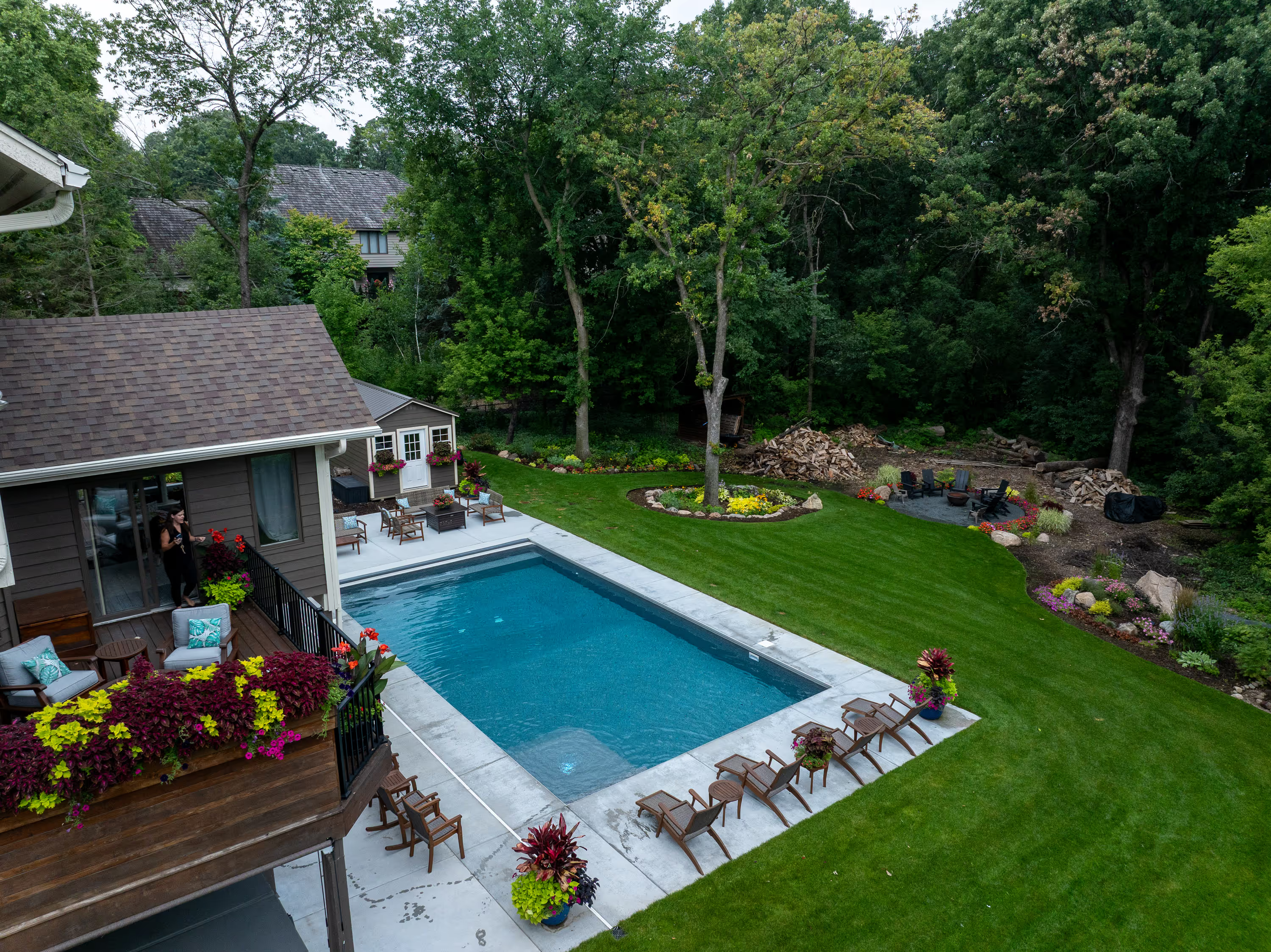
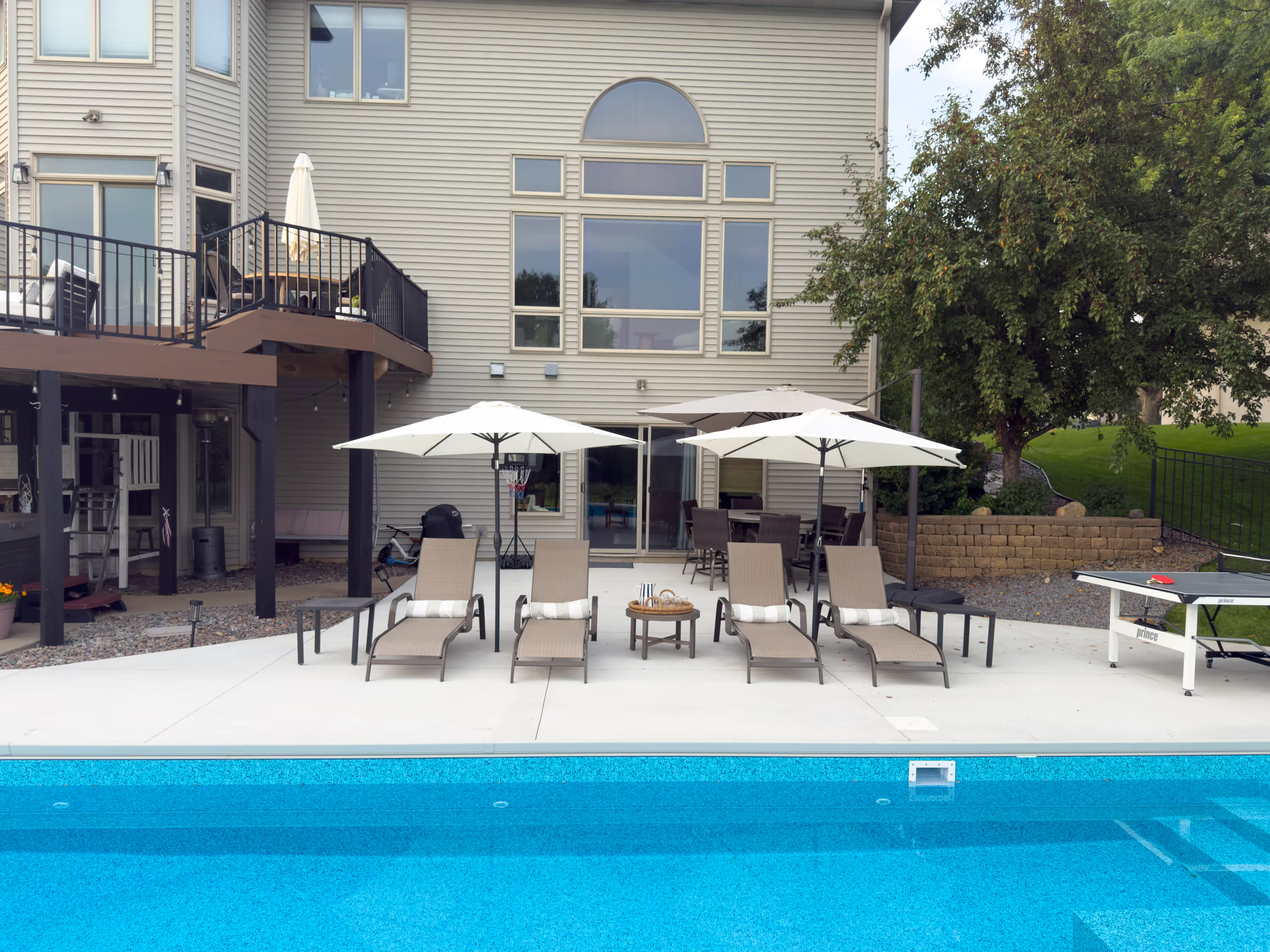
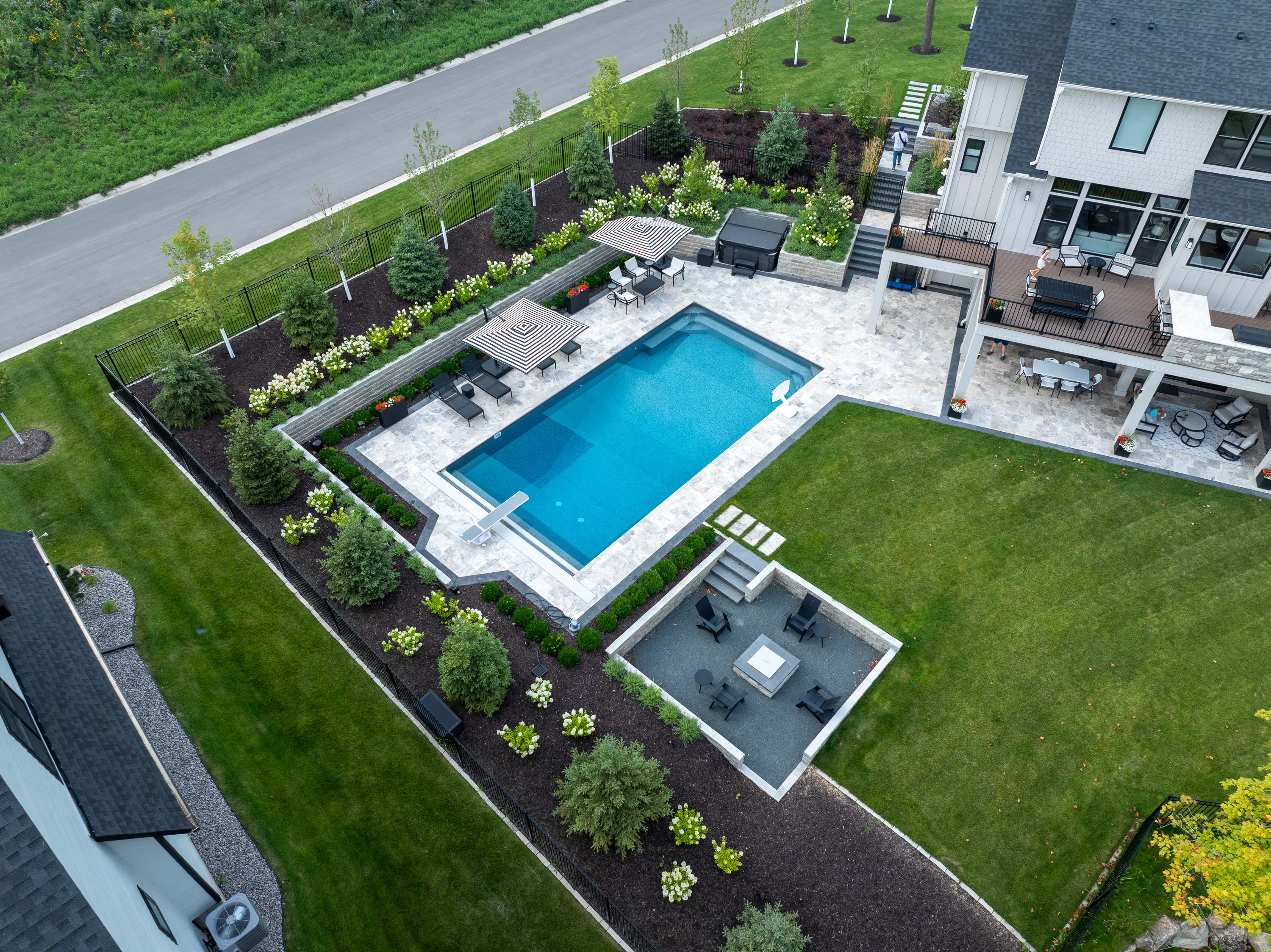
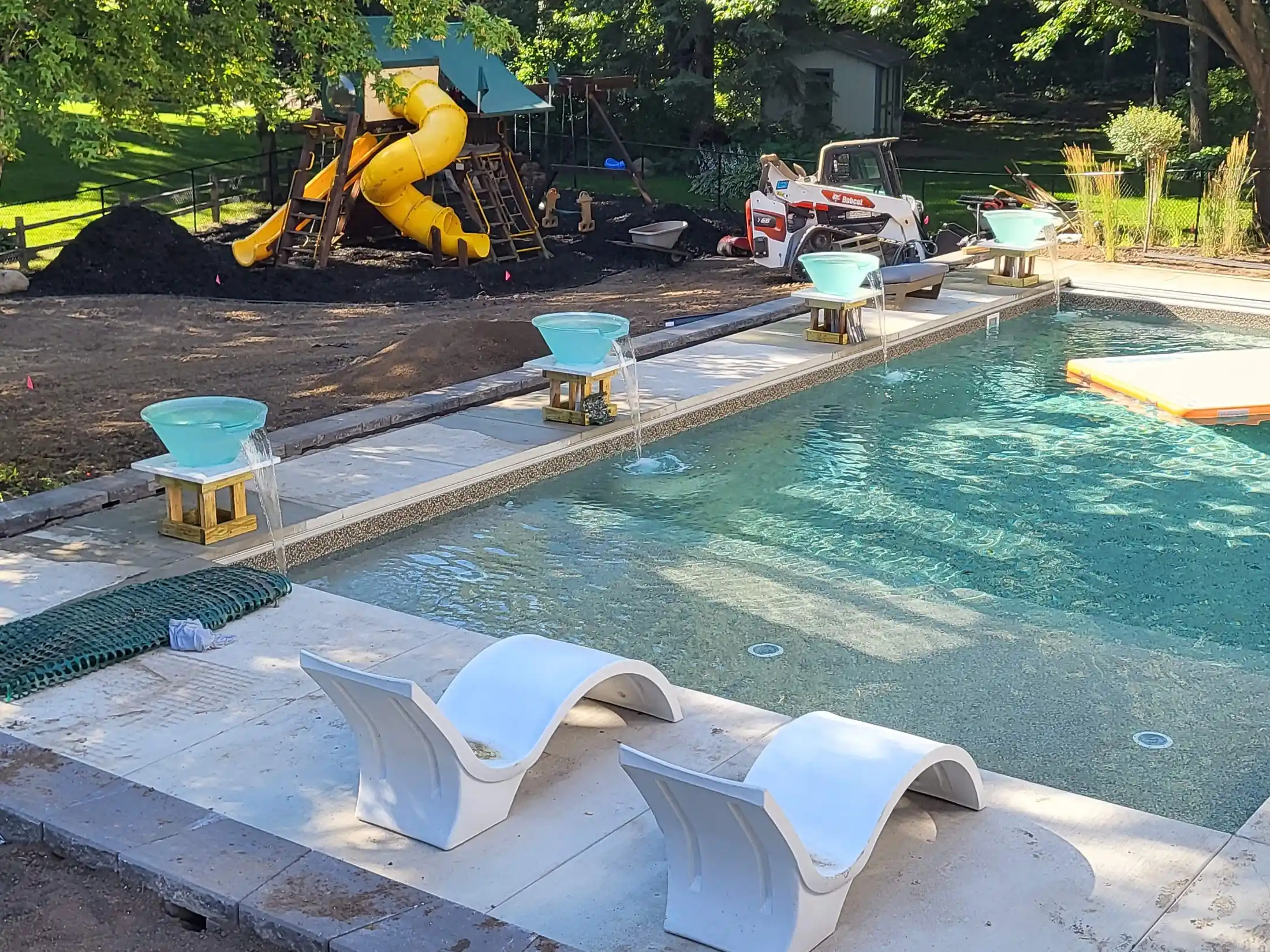
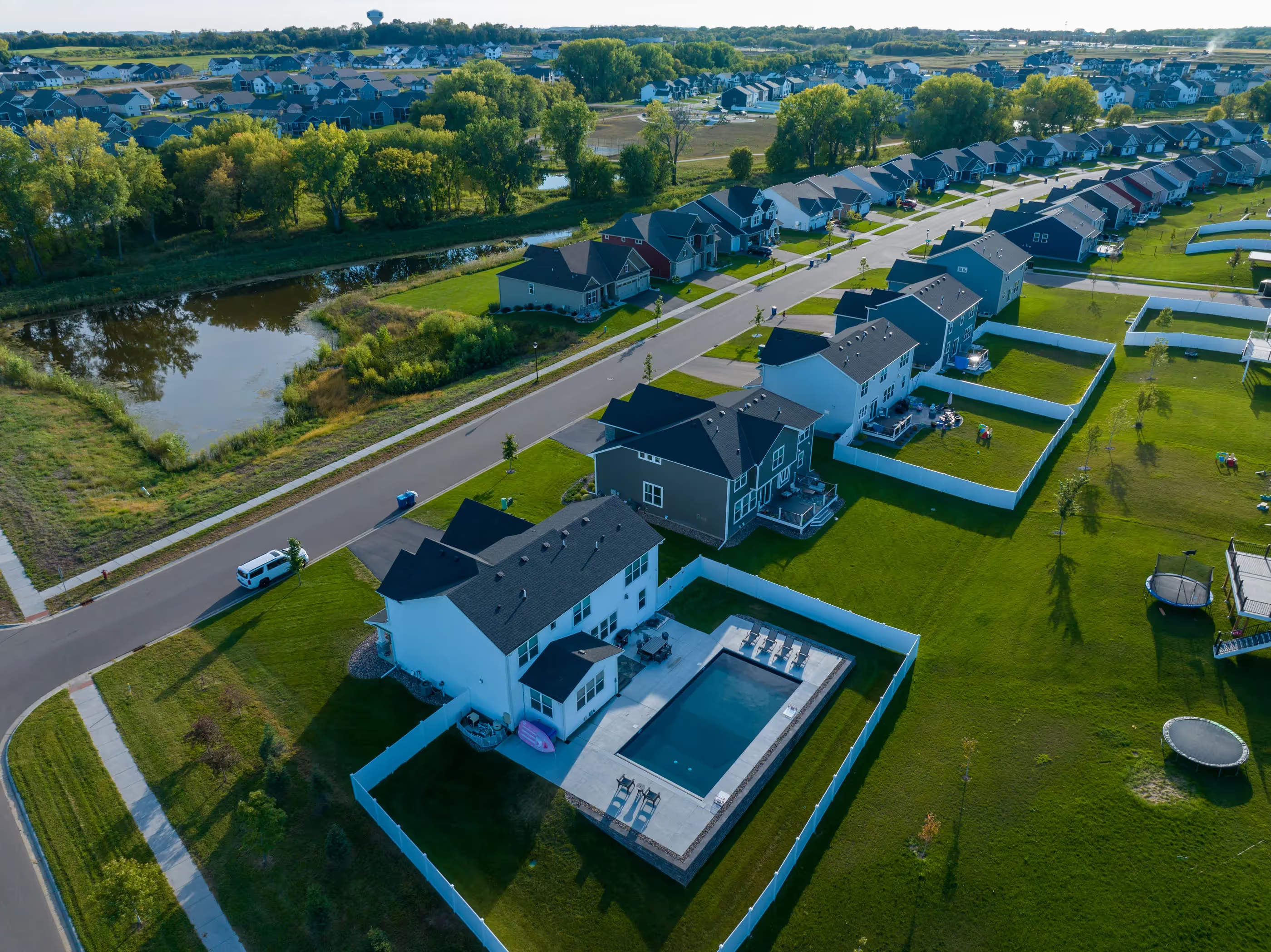
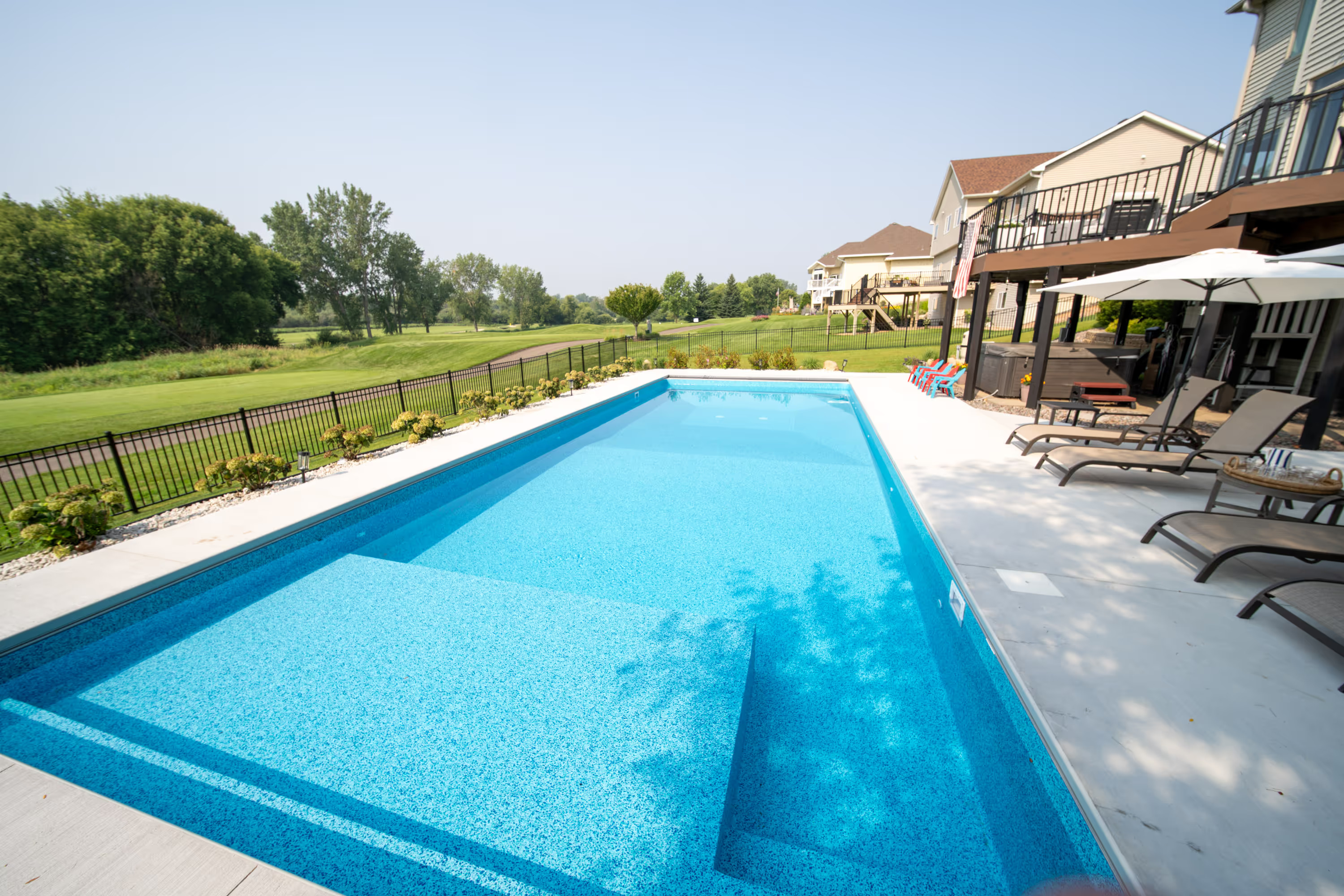
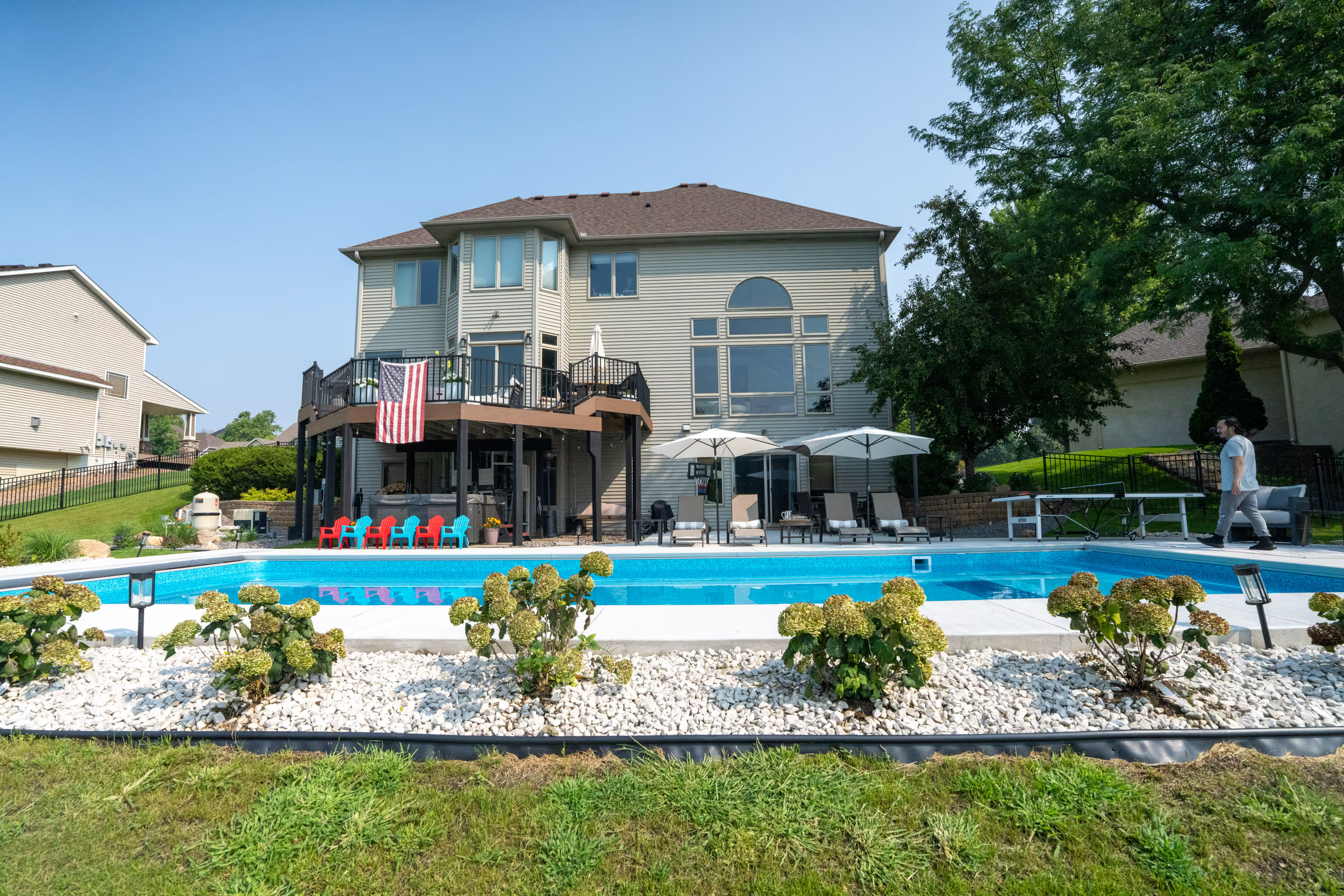
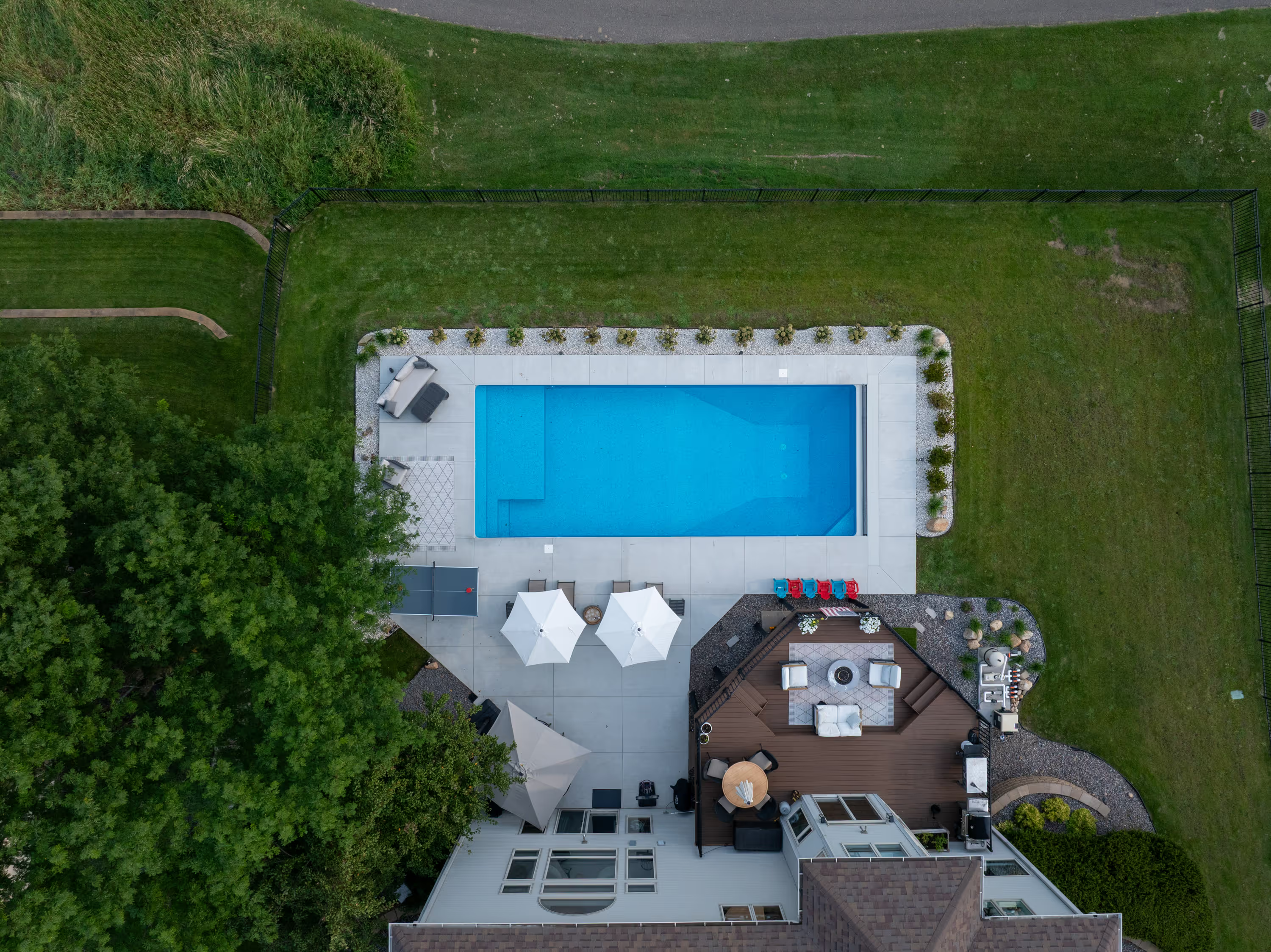
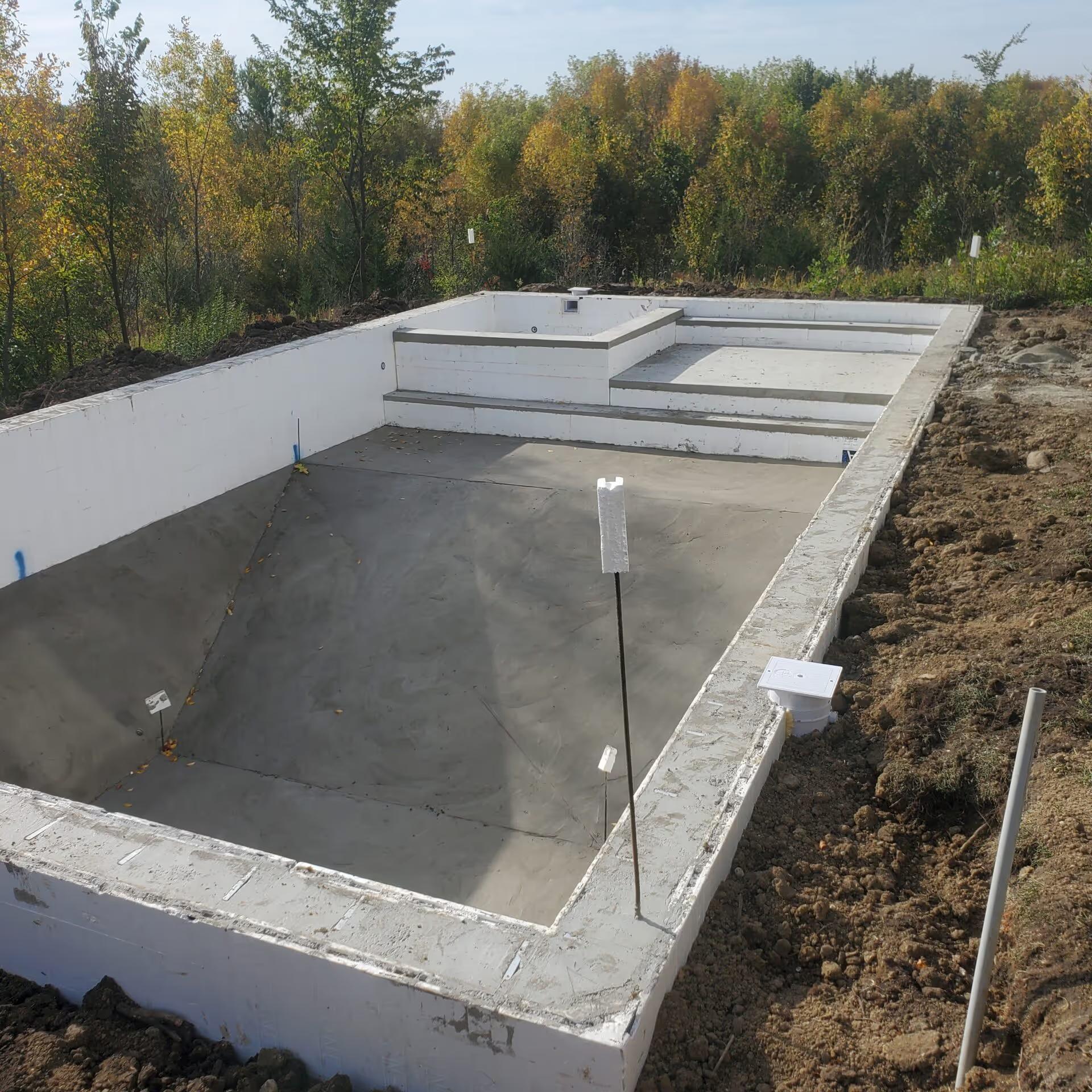
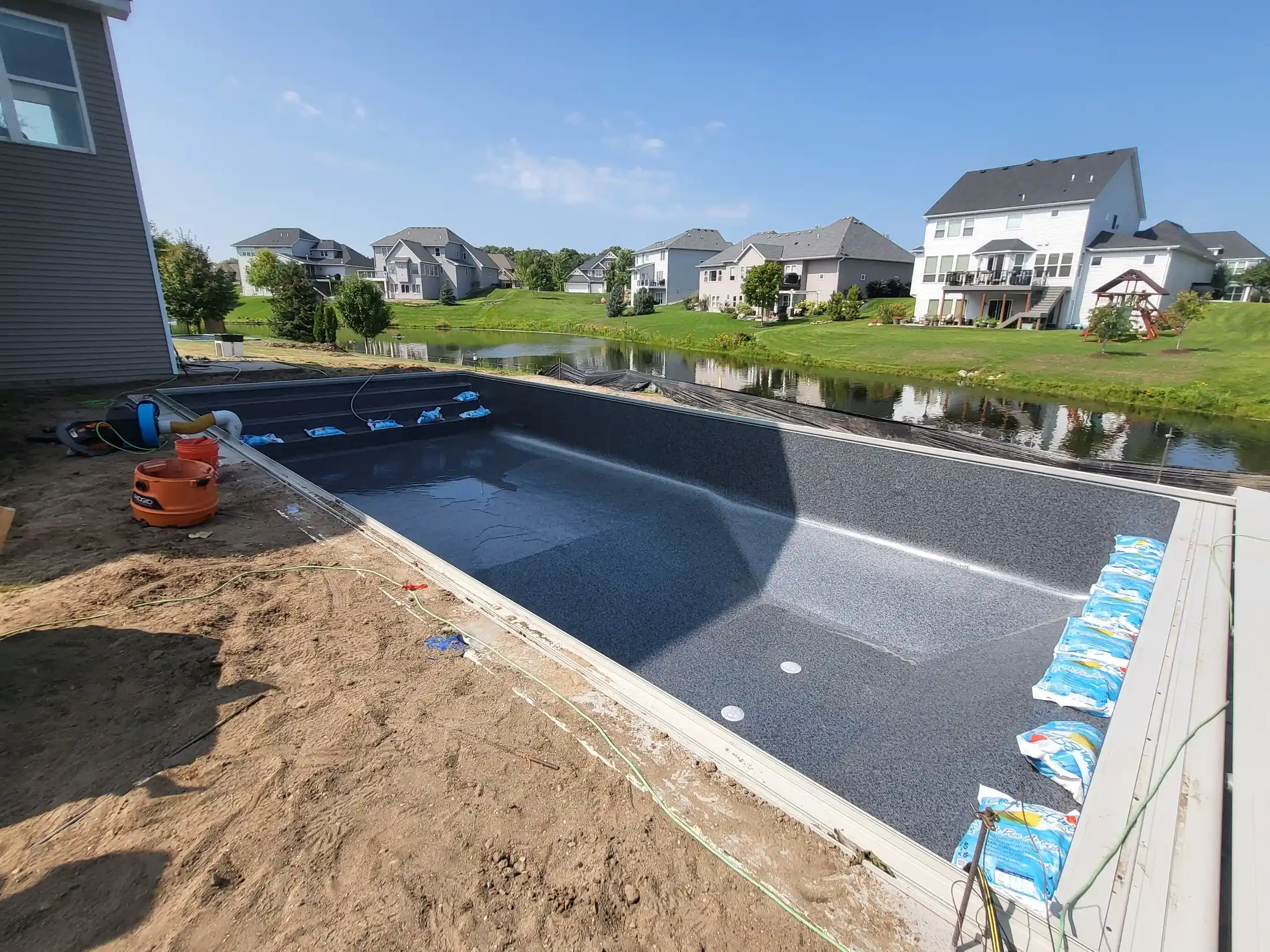
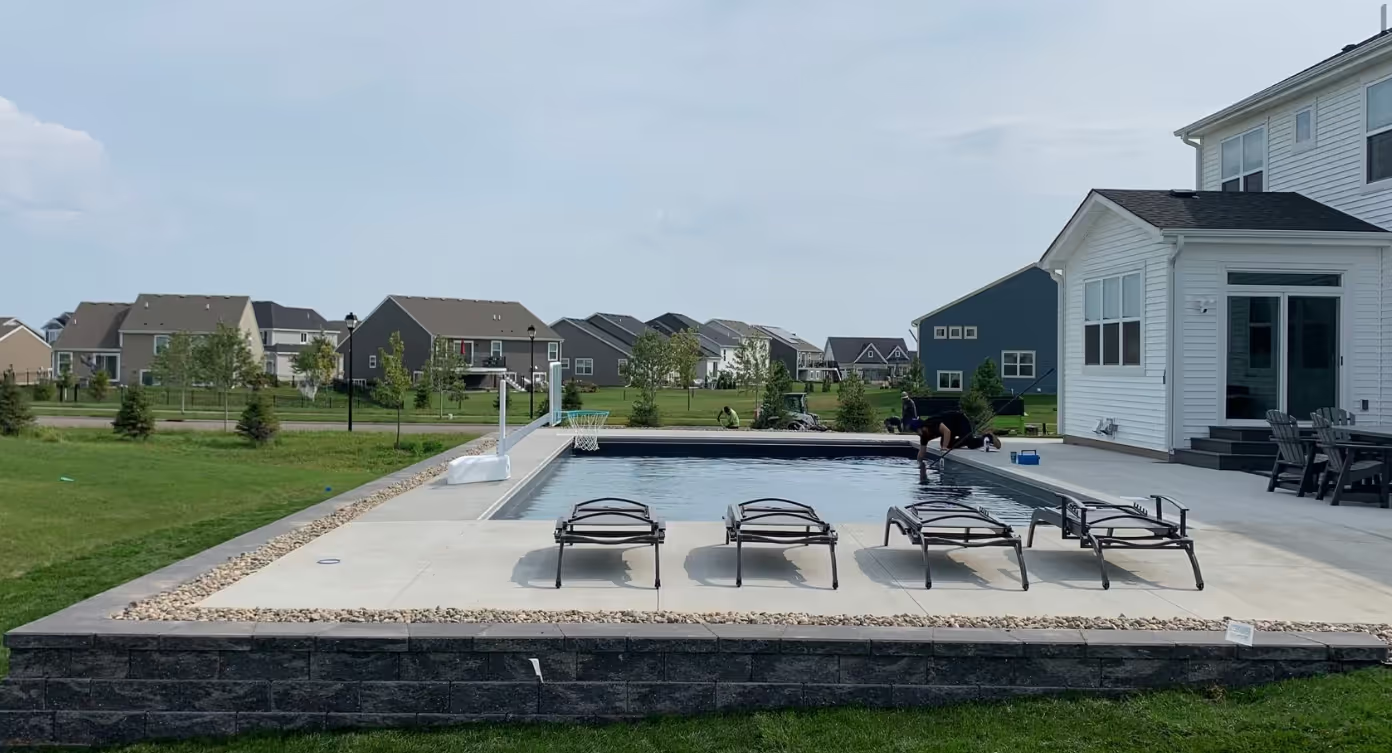
Get the flexibility you need with an ICF pool.
Are you searching for swimming pool contractors near Lakeville who can design the perfect pool for YOUR yard—not just drop in a pre-molded shell and hope it fits? If you've visited fiberglass pool showrooms and felt disappointed by limited size options, shallow depths, and predetermined shapes that don't quite match your vision, you're not alone.
At Plan Pools, we talk with frustrated Lakeville homeowners every week who discovered—after signing fiberglass pool contracts—that "customization" meant choosing between 8-10 predetermined models, none of which perfectly fit their yard dimensions, family needs, or design preferences. They compromised on size, accepted shallow depths unsuitable for diving, and positioned pools awkwardly because fiberglass manufacturers' catalogs didn't include the perfect option for their specific property.
This comprehensive guide explains exactly why fiberglass pools are so limited in customization, how transportation and manufacturing constraints dictate what you can buy, and why ICF (Insulated Concrete Form) construction from Plan Pools delivers unlimited design freedom without premium pricing.
Whether you're in Lakeville, Prior Lake, Savage, Burnsville, or anywhere in the Twin Cities metro area, understanding these customization limitations will help you avoid years of regret about choosing a pool that doesn't quite fit your needs.
Walk into any fiberglass pool showroom in Minnesota and you'll see impressive displays showing 8-12 different pool models with enticing names like "The Lagoon," "Family Fun," "Resort," or "Entertainer." Sales presentations emphasize beautiful colors, smooth surfaces, and "quick installation." What they don't emphasize is that you're choosing from a very limited catalog of predetermined sizes—and the limitations are more restrictive than most Lakeville families realize.
Transportation constraints are the fundamental limitation restricting fiberglass pool sizes. Your pool must travel from manufacturing facilities in Iowa, Wisconsin, or other distant states to your Lakeville property. Highway regulations strictly control oversized load dimensions.
The 16-foot width maximum exists because wider loads require special permits, pilot cars, route restrictions, and advance notice to state DOTs. These requirements add $3,000-$8,000 to transportation costs per pool. Manufacturers avoid this by limiting standard pool widths to 14-16 feet maximum.
The 40-foot length ceiling similarly stems from transportation logistics. Longer loads require special routing to avoid tight turns, low bridges, and overhead obstructions. Route restrictions often add 100-200 miles to transport distance, increasing costs and scheduling complexity dramatically.
Height restrictions matter too. Fiberglass pools deeper than 6-6.5 feet create transportation height issues when loaded on trailers. The combination of trailer height plus pool depth must stay under 13.5 feet to travel most routes without restrictions.
Weight considerations also limit size. Larger fiberglass pools weigh more, requiring heavier-duty trailers, specialized lifting equipment, and often multiple cranes for installation. These logistical challenges make large fiberglass pools economically impractical.
Manufacturing limitations compound transportation issues. Creating molds for large fiberglass pools requires enormous facilities, specialized equipment, and significant capital investment. Manufacturers focus on sizes with mass-market appeal rather than custom dimensions with limited demand.
Let's compare typical Lakeville family pool requirements with what fiberglass manufacturers offer:
Typical Lakeville family needs:
Closest fiberglass pool available:
The compromise reality: Lakeville families either accept a smaller pool than they wanted, abandon diving plans, position the pool awkwardly, or pay substantially more for earth moving to make the fiberglass pool "fit" their yard better.
When your Lakeville yard doesn't perfectly match available fiberglass pool dimensions, you face additional costs to make it work:
Extra excavation: $3,000-$8,000 if the pool requires more dirt removal than necessary because predetermined dimensions don't optimize your lot size. That northeast corner of your yard that could have been preserved with custom sizing? Now it's excavated because the fiberglass pool is 4 feet longer than optimal.
Tree removal: $800-$3,000 per mature tree if saving them would require custom pool sizing that fiberglass can't accommodate. Instead of designing around your beautiful oak trees, you remove them because the fiberglass catalog doesn't include a model that fits.
Retaining wall construction: $5,000-$15,000 if your yard's slope requires retaining walls because the fiberglass pool's predetermined depth doesn't work with natural grade. Custom ICF pools could adjust depth to minimize retaining walls, but fiberglass comes in fixed depths.
Deck expansion: $4,000-$10,000 in additional decking to fill awkward spaces created when predetermined pool shapes don't integrate naturally with your yard's dimensions and features.
Utility relocation: $2,000-$6,000 if underground utilities must be rerouted because the fiberglass pool can't be positioned to avoid them. Custom pools could adjust dimensions or shape to work around existing utilities.
Landscape redesign costs: The priceless frustration of abandoning carefully planned landscape designs because the fiberglass pool doesn't quite fit the way you envisioned.
Total unnecessary costs: $15,000-$40,000 that Lakeville families spend trying to make predetermined fiberglass dimensions work in yards designed for custom pools.
One of the most disappointing discoveries Lakeville families make after installing fiberglass pools is how shallow they really are. Marketing materials show families diving, jumping, and playing—but the reality is that most fiberglass pools max out at 6-6.5 feet deep, which is marginal for safe diving and limits many pool activities.
Structural requirements increase exponentially with depth. Fiberglass pools rely on the shell's structural integrity to resist hydrostatic pressure from surrounding soil and groundwater. Deeper pools require much thicker fiberglass layup, dramatically increasing weight, material costs, and manufacturing complexity.
Transportation weight limits restrict how thick manufacturers can make fiberglass pools. A 16' x 36' pool at 6 feet deep already weighs 2,500-3,500 pounds. Increasing depth to 8 feet would add 50-75% more weight, potentially exceeding trailer capacity or requiring specialized hauling equipment.
Manufacturing mold costs for deep pools are prohibitive. Creating molds for 8+ foot deep pools requires enormous facilities because the entire mold must be large enough to accommodate that depth. Most fiberglass manufacturers' facilities weren't designed for such large molds.
Crane requirements increase dramatically with depth. Setting a shallow pool requires one standard crane. Setting an 8-foot deep pool might require larger cranes with greater reach and lifting capacity—adding $3,000-$6,000 to installation costs.
Market demand hasn't justified deep pool production. Most fiberglass pool buyers prioritize "quick installation" over depth, so manufacturers focus on shallower pools that install faster and cheaper rather than deeper pools that command premium pricing but limited market.
Diving becomes marginal or impossible. Safe diving requires 8-9 feet of water depth. Fiberglass pools at 6-6.5 feet deep are technically "deep enough" only for very cautious diving from the pool deck—no diving boards possible, and even deck diving carries increased injury risk.
Teenager and adult enjoyment suffers. While young children love any pool, teenagers and adults often find 6-foot depths limiting. Underwater games, jumping contests, and free diving all work better with deeper water.
Pool volleyball and basketball are compromised in shallow water. Serious pool sports need 6.5-8 feet minimum for proper play without players touching bottom constantly.
Property value impact is measurable. Deep pools appeal to broader buyer demographics when you sell your Lakeville home. Many families with older children specifically seek pools deep enough for diving—and they'll pass on your property if pool depth is insufficient.
Resale flexibility decreases. Shallow pools limit your buyer pool (pun intended) to families with young children who don't prioritize depth. Families wanting diving capabilities won't consider your property.
The psychological factor: Lakeville families consistently report that deeper pools "feel" more substantial, more resort-like, and more valuable. The psychological satisfaction of a proper deep end shouldn't be underestimated.
ICF pool construction from Plan Pools has no depth limitations. We routinely build pools with:
8-foot deep ends for safe diving from pool decks or low diving boards. These depths accommodate diving, underwater games, and teenage entertainment without safety concerns.
9-10 foot depths for families who want dedicated diving wells or serious underwater activities. While these depths cost slightly more due to additional excavation and concrete, they're completely achievable.
Variable depth profiles that transition smoothly from 3-foot shallow ends perfect for toddlers to 8-foot deep ends for teenagers. We design depth transitions to match your family's specific needs and activity preferences.
Custom depth positioning based on your yard's natural grade. If your lot slopes, we can design depth profiles that minimize retaining walls and work with existing elevation changes rather than fighting them.
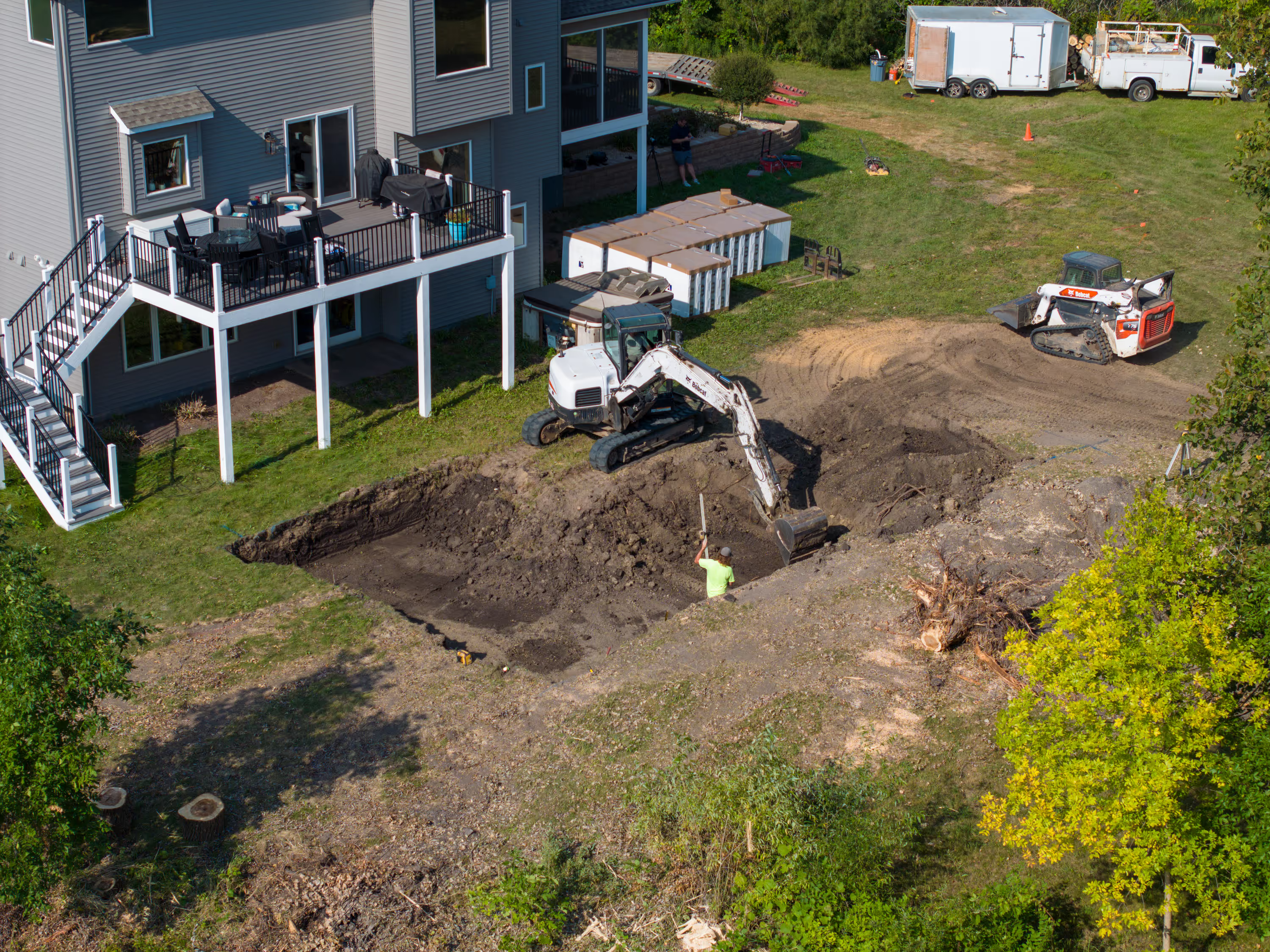
No transportation limitations because we're building on-site. Depth decisions are based on your needs and budget, not on what fits on a flatbed trailer.
Lakeville family example: "We wanted our kids to have a pool deep enough for diving as they got older. Every fiberglass pool we looked at maxed out at 6 feet. Plan Pools designed an 18' x 40' ICF pool with an 8.5-foot deep end. Our teenagers now safely dive, our younger kids have a 3.5-foot shallow end, and the smooth transition between depths works perfectly. We couldn't have gotten this with fiberglass."
Fiberglass pool showrooms display their available shapes prominently: rectangles, kidney shapes, lazy-L designs, and perhaps a few freeform options. These shapes look appealing in showrooms, but Lakeville families quickly discover that what works in a controlled display environment doesn't necessarily fit real-world yards with trees, slopes, utilities, and existing landscape features.
Mold investment requirements mean manufacturers only create shapes with mass-market appeal. Each new pool shape requires creating an enormous manufacturing mold costing $50,000-$150,000. Manufacturers can't justify these investments for shapes that might sell only 10-20 units annually.
Geometric limitations of fiberglass manufacturing restrict what's physically possible. Sharp corners, extreme curves, and irregular shapes are difficult or impossible to manufacture in fiberglass. The material wants to create smooth, flowing shapes—which is why you see so many kidney beans and ovals.
Structural engineering for unusual shapes is complex in fiberglass. Unlike reinforced concrete that can be engineered for any shape, fiberglass shells develop stress concentration points in unusual geometries. Manufacturers avoid shapes that might create warranty problems.
Transportation considerations again limit options. L-shaped or highly irregular pools have awkward dimensions that complicate loading, securing, and transporting. Manufacturers stick to shapes that ship reliably.
Installation challenges with unusual shapes increase costs and complexity. Oddly-shaped excavations are harder to dig accurately, unusual shapes require more careful backfilling, and atypical configurations need specialized installation procedures.
The result: Lakeville families choose from 8-12 predetermined shapes and hope one of them happens to work well in their unique yard.
Corner lot properties often benefit from L-shaped or corner-oriented pool designs that maximize usable space while maintaining privacy from two street frontages. Fiberglass catalogs rarely include designs optimized for corner lots.
Pie-shaped lots common in some Lakeville developments have wide frontages tapering to narrow rear yards. These lots cry out for custom pool shapes that optimize the space—shapes fiberglass manufacturers don't produce.
Mature tree preservation often requires working around existing trees with asymmetric pool shapes that dodge root zones while maintaining attractive proportions. Custom shapes solve these challenges; predetermined shapes force you to remove trees or accept awkward pool positioning.
Elevation changes across yards benefit from pools designed with specific depth transitions positioned to minimize retaining walls and work with natural grade. Fiberglass pools come with predetermined depth profiles regardless of your site conditions.
Existing hardscape integration is easier when pool shapes complement existing patios, decks, or architectural features. Custom shapes create seamless integration; predetermined shapes create awkward transitions requiring expensive additional hardscape to bridge gaps.
Privacy and view considerations often suggest specific pool orientations and shapes that maximize desirable views while screening undesirable ones. Custom design solves these challenges; catalog selection compromises.
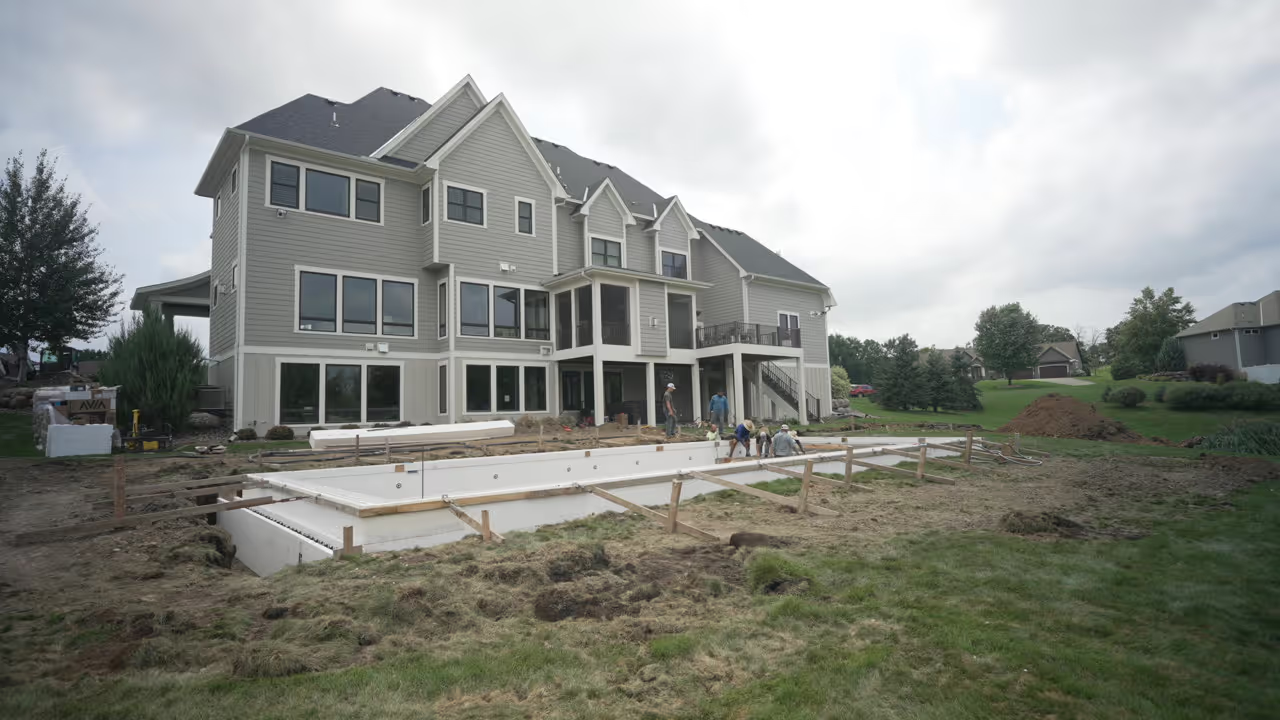
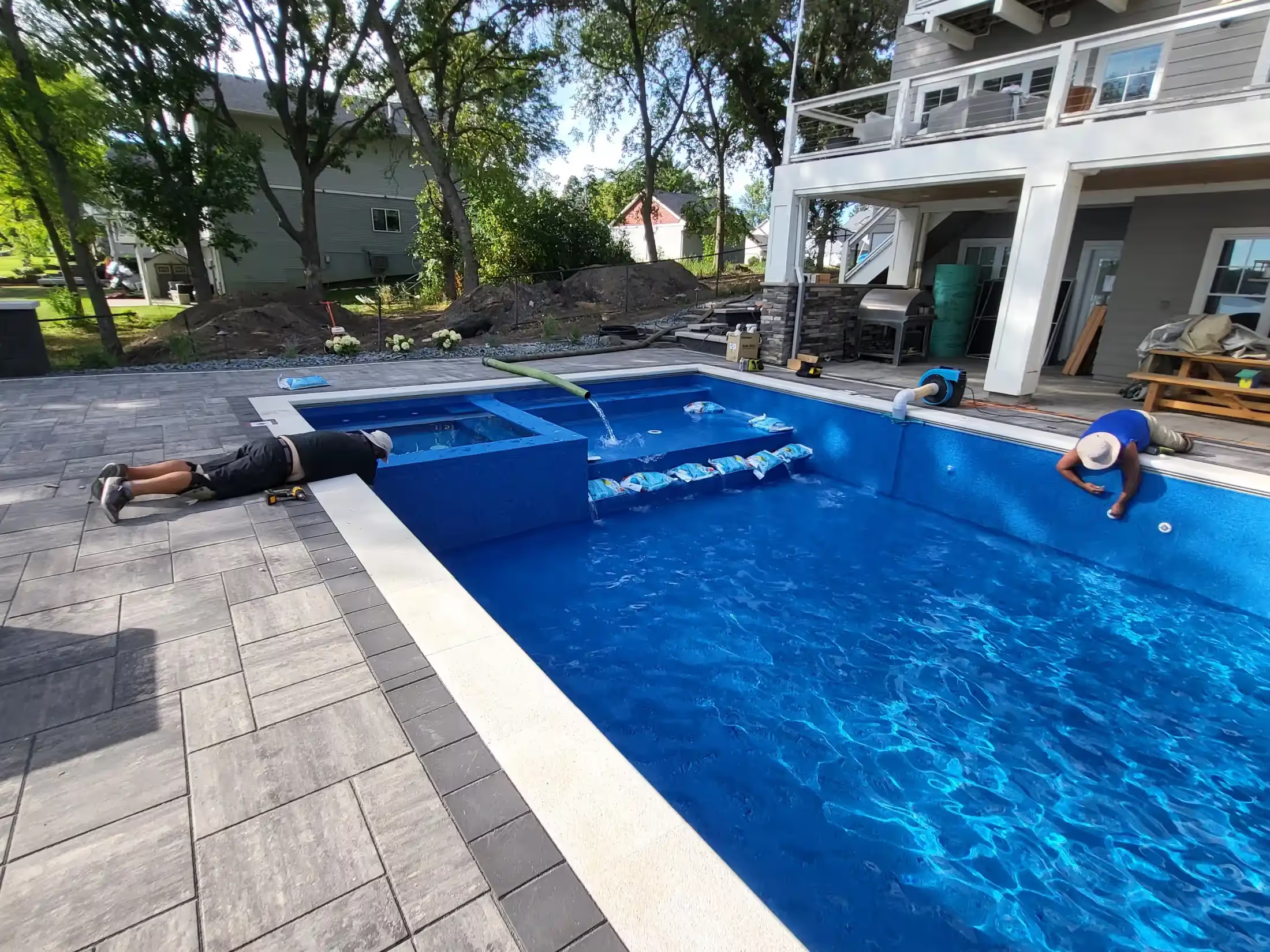
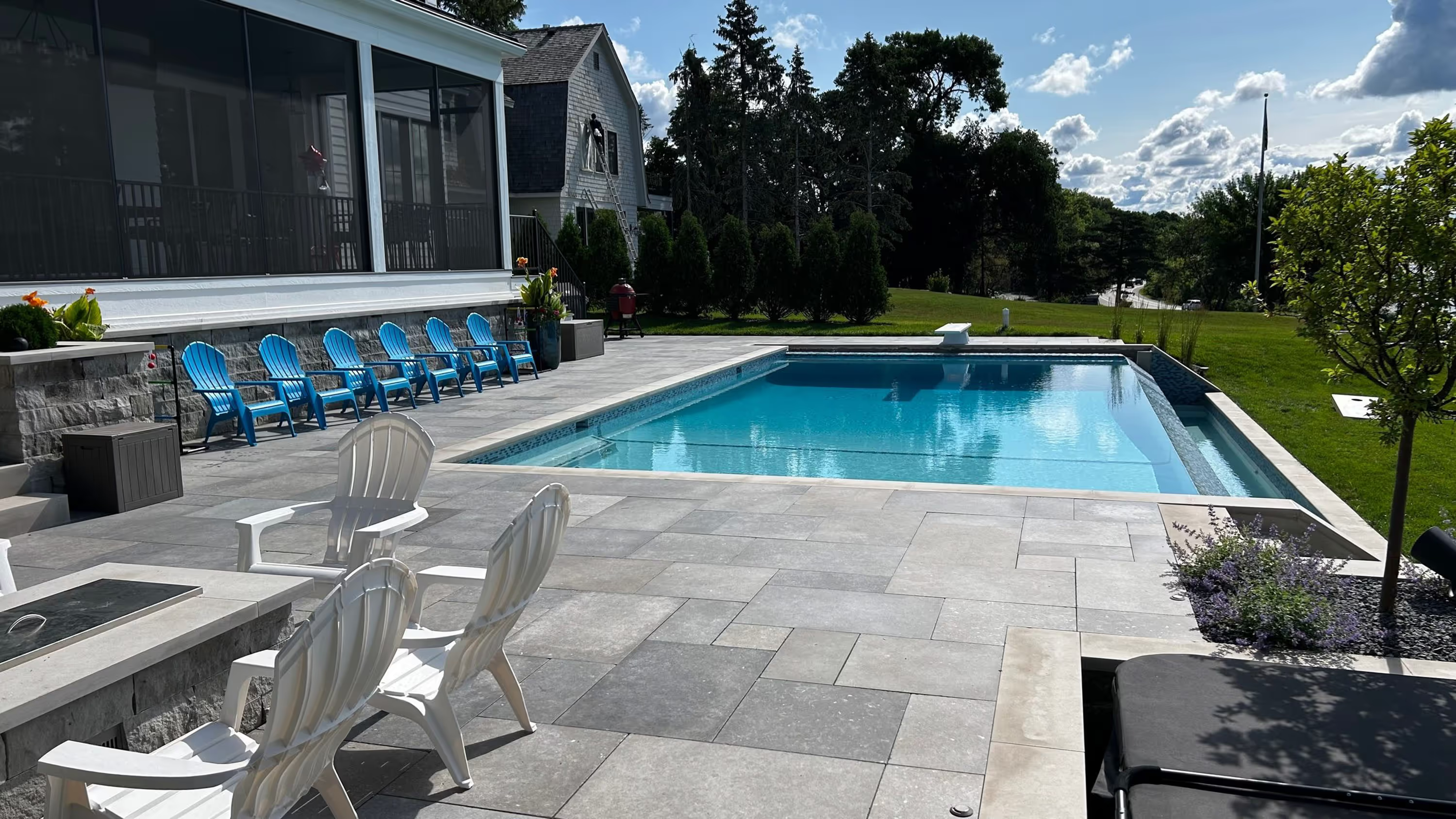
Plan Pools' ICF construction delivers complete shape freedom because we're building your pool on-site from the ground up. Recent Lakeville projects include:
Modified L-shape with angled legs designed to preserve three mature oak trees while creating distinct swimming and entertaining zones. The pool's custom angles follow property lines naturally, maximize sun exposure, and integrate perfectly with the homeowners' existing deck. This shape doesn't exist in any fiberglass catalog.
Curved natural freeform with a beach entry on one end and an integrated spa on the opposite end, positioned to create a visual centerpiece visible from the home's main living areas. The curves follow natural landscape contours and create interesting sight lines. Impossible with fiberglass limitations.
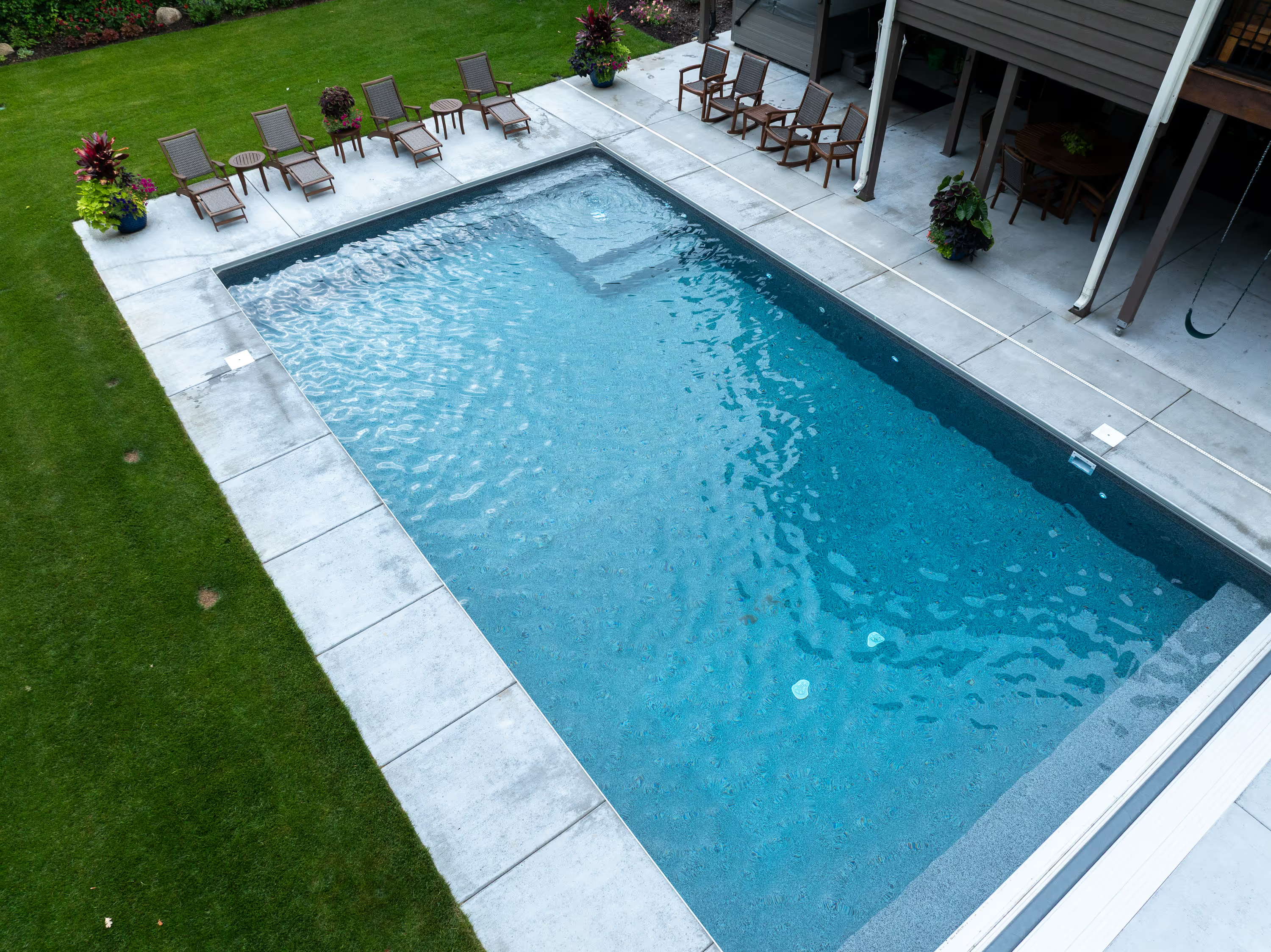
Geometric rectangle with corner spa and perpendicular tanning ledge, designed for a narrow yard where traditional rectangular pools would have been too short. The custom proportions optimize the available space while providing all desired features. No fiberglass equivalent exists.
Asymmetric kidney shape with one rounded end and one angular end, positioned to work around existing retaining walls, underground utilities, and a mature birch tree. The custom shape turned site constraints into design assets. Fiberglass catalog shapes would have required removing the tree and rebuilding retaining walls.
True custom freeform with multiple curves, varying depths, and integrated rock features, designed to look like a natural pond. This artistic design reflects the homeowners' vision—a vision that couldn't be expressed through catalog selection.
Even if you find a fiberglass pool whose overall size and shape work for your Lakeville yard, you'll likely discover that specific features—tanning ledges, steps, benches, and swim-outs—are positioned in less-than-ideal locations. With fiberglass pools, feature positioning is predetermined during manufacturing and can't be adjusted for your specific yard orientation, sun exposure, or traffic patterns.
Minnesota sun angles change dramatically across the swimming season. Late May sun tracks lower in the sky than July sun, affecting which pool areas receive optimal warming. Experienced Minnesota pool contractors understand these nuances and position features accordingly.
Afternoon sun is premium for tanning ledges in Minnesota. Our summer evenings stay light until 9pm, making afternoon sun (2pm-7pm) the most valuable time for tanning ledge enjoyment. Smart positioning captures this sun angle.
Tree shadows shift throughout the day and season. That perfect tanning ledge location in May might be heavily shaded by July when tree foliage fills in. Custom positioning accounts for seasonal canopy changes.
Wind exposure varies by location. Some yard areas are protected from prevailing northwest winds; others are exposed. Tanning ledges positioned in wind-protected zones stay warmer and more comfortable.
Lakeville fiberglass example: "Our fiberglass pool came with a tanning ledge on the east side—perfect for morning sun but shaded by 2pm. Our family's pool time is 4pm-8pm after work and activities. The tanning ledge sits unused because it's cold and shaded when we're actually swimming. With custom design, we would have positioned it for afternoon sun."
Plan Pools ICF solution: "We designed our client's tanning ledge on the southwest corner of their pool, capturing afternoon sun from 2pm until sunset. It's the most-used feature of their pool, staying warm even on cooler Minnesota days. The 10-year-old loves it for lounging, the parents love it for supervising younger siblings, and guests always gravitate there. Proper positioning made this feature valuable rather than ornamental."
Natural traffic patterns exist in every yard based on how families move between home, deck, and pool. Custom pool design positions entries where traffic naturally flows; predetermined designs force traffic to adapt to the pool's fixed entry locations.
Deck placement considerations include where you'll position furniture, grilling areas, and entertainment spaces. Pool entries should align with these activity zones—not force awkward circulation patterns.
Safety sight lines matter for families with young children. Positioning stairs where parents naturally supervise from deck seating improves safety and peace of mind.
Accessibility for elderly family members or guests with mobility limitations benefits from strategic entry positioning. Custom design accommodates these needs; catalog selection might not.
Future addition compatibility should be considered. If you might add a spa, outdoor kitchen, or pool house later, smart entry positioning maintains good circulation as your backyard evolves.
Lakeville ICF example: "We positioned pool steps adjacent to our main deck access point where we always enter the backyard. It feels natural—you walk onto the deck and the pool entry is right there. Friends with fiberglass pools often have steps positioned awkwardly, forcing you to walk halfway around the pool to enter. These circulation inefficiencies create daily frustrations that add up over years."
Benches, barstools, and swim-up seating become focal points in custom ICF pool designs. We position these features where they make sense for your family's entertainment and relaxation patterns.
Lakeville custom example: "We built a swim-up bar area on the pool's north side where we'd already planned an outdoor kitchen and bar area on the deck above. The integration is seamless—bartender on deck, swimmers at pool-level seating. This required custom pool design to position the swim-up bar exactly where needed. Fiberglass pools couldn't accommodate this integration."
Tanning shelves at varying depths accommodate different family members' preferences. Custom design creates multiple shelf depths—one at 6 inches for toddlers, another at 12 inches for adults. Fiberglass tanning ledges come at predetermined depths regardless of your family's needs.
Custom step configurations can include corner steps, Roman end steps, beach entries, or combinations. We position these where they enhance rather than impede pool circulation.
Spa integration works beautifully when positioned based on your specific views, privacy considerations, and circulation patterns. Predetermined fiberglass spa-pool combinations might not align with your ideal spa location.
Lakeville properties range from compact townhome lots to expansive estate properties. Optimal pool sizing varies dramatically across this range, but fiberglass pool catalogs don't—they offer the same 8-12 sizes regardless of whether you have 0.25 acres or 2 acres to work with.
Compact urban lots (0.15-0.25 acres) benefit from pools sized precisely to maximize usable pool area while maintaining required setbacks and preserving functional yard space. Custom sizing means not one square foot is wasted.
Recent Lakeville townhome project: 14' x 32' ICF pool designed for a 0.18-acre lot. This size preserved 10-foot setbacks, left room for required fence and gate, maintained side yard access, and still provided excellent swimming area. The closest fiberglass pool was 16' x 36'—which would have eliminated side yard access and required variance requests from the city.
Narrow lot applications benefit from pools slightly longer and narrower than standard fiberglass offerings. A 15' x 42' pool works perfectly on narrow lots where 16' x 36' would be too wide and too short.
HOA compliance is easier with custom sizing. Many Lakeville subdivisions restrict pool sizes based on lot dimensions. Custom ICF design hits maximum allowable size precisely; fiberglass catalog selection forces you to either exceed limits (requiring variances) or choose pools smaller than allowed (wasting opportunity).
Estate properties (1+ acres) deserve pools sized appropriately for the property scale. Fiberglass pools max out at 16' x 40' regardless of whether you have 1 acre or 10 acres—creating pools that look undersized on large properties.
Recent Lakeville estate project: 24' x 50' ICF pool with integrated spa, beach entry, and extensive shallow play area. Total water surface area exceeded 1,200 square feet—more than double what the largest fiberglass pools offer. The pool's scale matches the property's grandeur. This is impossible with fiberglass size limitations.
Resort-style designs with multiple zones—lap swimming area, family play zone, spa area, beach entry—require size flexibility that fiberglass can't provide. Custom ICF construction creates distinct zones within a cohesive design.
Entertainment-focused layouts benefit from larger pools that don't feel crowded when hosting gatherings. Fiberglass pools host 8-12 people comfortably; larger custom ICF pools accommodate 20-30 guests without congestion.
Slope and elevation common throughout Lakeville benefit from pools designed to work with rather than fight natural grade. Custom designs minimize retaining walls and earth moving by adapting to existing conditions.
Soil conditions vary across Lakeville from clay to sandy loam. Plan Pools adjusts designs based on soil reports, optimizing drainage and structural requirements for your specific site conditions rather than using one-size-fits-all approaches.
Water table variations across Lakeville require different drainage strategies. High water table areas near wetlands need different design approaches than well-drained upland sites. Custom design accommodates these variations; predetermined fiberglass installations use standard procedures regardless.
Existing landscape integration is easier when pool dimensions, shape, and positioning can adjust to work with mature trees, existing hardscape, and architectural features you want to preserve.
What's the real cost of choosing a predetermined fiberglass pool instead of custom ICF design? Beyond the $30,000-$40,000 price premium fiberglass pools command, there's a significant opportunity cost to living with a pool that doesn't quite fit your needs.
Walking extra distance because pool entries aren't positioned optimally. Three extra steps every time you enter the pool equals 1,000+ unnecessary steps per summer equals meaningful inconvenience over 20 years of ownership.
Avoiding unused features like tanning ledges positioned in shaded areas or awkwardly located benches. You paid for these features but don't use them because positioning is wrong.
Making excuses to guests about pool limitations. "Sorry it's not deeper—we couldn't find a fiberglass pool with an 8-foot deep end." Or "The steps are in a weird spot—the pool came that way."
Compromising activities because depth, size, or shape doesn't quite support what you want to do. Can't safely dive. Pool volleyball doesn't work well. Lap swimming requires too many turns. Each compromise diminishes enjoyment.
Landscape frustrations from awkward transitions between predetermined pool shapes and your yard's natural features. Extra hardscape to fill gaps. Trees removed that could have been preserved. Views blocked that better positioning would have captured.
Lakeville homeowners with fiberglass pools frequently express regret about customization limitations:
"I wish we'd insisted on an 8-foot deep end so our teenagers could dive safely."
"The tanning ledge is in constant shade—it would have been perfect on the pool's west side where it would get afternoon sun."
"Our lot could have accommodated a larger pool, but the fiberglass catalog didn't offer the size we needed."
"We removed two beautiful maple trees to fit the fiberglass pool. With custom design, we probably could have saved them."
"The pool feels small when we have guests over. We should have built larger, but fiberglass options topped out at 16' x 36'."
Plan Pools' ICF construction eliminates compromise through complete customization:
Size precisely optimized for your lot, family size, entertainment plans, and budget. Not too big, not too small—exactly right for YOUR situation.
Depth designed for your activities. Want diving? We build 8-9 foot deep ends. Want consistent depth for lap swimming? We create that. Want gradual slope from 0" beach entry to 6-foot deep end? Perfect.
Shape fits your yard naturally, working with existing features rather than requiring you to adapt your property to accommodate a predetermined pool shape.
Features positioned exactly where sun exposure, traffic flow, and sight lines dictate. Tanning ledges capture afternoon sun. Steps align with natural circulation. Swim-up bars integrate with deck entertainment areas.
No regrets because you specified everything. If you want it larger later, you'll wish you'd built larger—but you won't be frustrated that catalog limitations prevented you from building what you truly wanted.
One of the biggest misconceptions Lakeville families have about custom pools is that "custom" means "expensive." The reality is that Plan Pools' ICF custom design typically costs $30,000-$40,000 LESS than comparable fiberglass pools while delivering unlimited customization.
No mold investment required means we're not amortizing $100,000+ mold costs across limited production runs. We buy concrete, steel, foam, and liner—commodity materials priced competitively.
No transportation markup exists because materials come directly to your site rather than shells traveling 300-500 miles from distant factories through dealer networks.
No dealer markup structure layering costs from manufacturer to distributor to dealer to customer. You work directly with the builder, eliminating middleman markups.
No size-change penalties increase costs when you want something larger or differently proportioned. With fiberglass, deviating from standard sizes means custom mold charges or settling for ill-fitting alternatives. With ICF, every pool is "custom" so there's no cost penalty.
Efficiency through experience means Plan Pools builds ICF pools efficiently because we've perfected the process over hundreds of installations. We're not less expensive because we cut corners—we're less expensive because we've eliminated inefficiencies.
Fiberglass Pool (Lakeville Installation):
ICF Pool (Plan Pools Lakeville):
The difference: $25,000-$35,000 in favor of Plan Pools ICF construction—and you get MORE pool, BETTER customization, SUPERIOR depth, and PERFECT feature positioning.
Smart Lakeville families invest their ICF savings in features that enhance enjoyment:
Landscape upgrades: $15,000-$25,000 creates professional landscaping with mature plantings, irrigation, lighting, and design that transforms your entire backyard into a resort-style retreat.
Extended hardscape: $10,000-$20,000 adds patio areas, fire pits, outdoor kitchens, seating walls, and entertainment spaces that make your pool the centerpiece of comprehensive outdoor living.
Pool feature upgrades: $8,000-$15,000 adds waterfalls, grottos, LED lighting systems, bubblers, deck jets, and spa features that create the "wow factor" you envisioned.
Premium covers and automation: $6,000-$10,000 upgrades to top-tier automatic covers, advanced automation systems, and premium equipment that reduce maintenance and operating costs for decades.
Savings and investment: Put $25,000 in college savings or retirement accounts where it grows to $65,000+ over 20 years at 7% returns.
The point is clear: choosing ICF construction from Plan Pools doesn't mean accepting less—it means getting MORE pool and having budget remaining for the amenities that complete your backyard transformation.
Minnesota families deserve pools designed specifically for their unique yards, family needs, and lifestyle preferences—not pools chosen from limited catalogs based on transportation constraints and manufacturing limitations.
Fiberglass pool limitations are real:
Plan Pools ICF construction delivers unlimited customization:
Lakeville families throughout established neighborhoods and new developments have trusted Plan Pools for custom ICF pool design and construction. We'd be honored to earn your business and show you what's possible when customization isn't limited by catalog selection.
Contact Plan Pools today to schedule your free consultation. Text Joe at 952-994-6032 or visit our website to explore custom pool designs we've created for Lakeville families. Let's design YOUR perfect pool—not the closest approximation available in a fiberglass catalog.
Read customer reviews from Lakeville homeowners who chose custom ICF construction and learn more about our design process. Your family's backyard oasis deserves design freedom, not design limitations.
Plan Pools serves Lakeville and surrounding communities including Prior Lake, Savage, Burnsville, Apple Valley, Farmington, Elko New Market, and the entire Twin Cities metro. We're Minnesota's custom ICF pool specialists, delivering unlimited design freedom at prices lower than predetermined fiberglass alternatives.